
YouTube Tests AI-Driven Radio Feature and Rolls Out Sound Search Tool
- Written by Shipra Sanganeria Cybersecurity & Tech Writer
- Fact-Checked by Justyn Newman Former Lead Cybersecurity Editor
YouTube Music (YTM) confirmed this week that its testing a new AI-generated conversational radio feature and rolling out a sound search tool, according to Techcrunch .
The AI-driven radio feature, currently accessible to select YouTube Premium users in the US, enables users to create personalized radio stations using voice or text-based prompts. Initially reported last week by 9to5Google and one Reddit user , the feature is currently in its testing phase.
Users who have access to this feature will initially see an “Ask for music any way you like” card prominently displayed in their app/device/account Home feed. This card is quite similar to the existing “Create a radio: Your music tuner” card found in the Library tab.
Upon clicking this card, a chat-based user interface is activated. Here users have the option to enter a personlized prompt or choose from a selection of YTM-suggested options such as “Catchy pop choruses,” “Epic soundtracks,” “Upbeat pop anthems,” “Moscow rock scene,” or “Surprise Me,” as reported by 9to5Google.
After receiving the prompt, YouTube Music (YTM) AI feature generates a radio station presented in the familiar playlist card format. Each station bears the name of the prompt and is tagged as “Created for you,” accompanied by a corresponding description.
YouTube has indicated that the feature, currently in beta testing, will become available to more users in the future.
Another official update from YouTube this week involves rolling out of the new “sound search” feature in its Music category.
As revealed in early screenshots by 9to5Google , users can access this feature by clicking on the magnifying glass icon located in the top-right corner of YouTube Music, which reveals a waveform button next to the existing microphone for voice search. Clicking on this button launches an interface that allows users to search for songs by singing, humming, or playing a segment of the song.
The feature is being rolled out to all Android and iOS users starting July 15, 2024.
Ryan Truby/Taekyoung Kim from Northwestern University
Artificial Muscles that Mimic Human Anatomy
- Written by Kiara Fabbri Former Tech News Writer
- Fact-Checked by Justyn Newman Former Lead Cybersecurity Editor
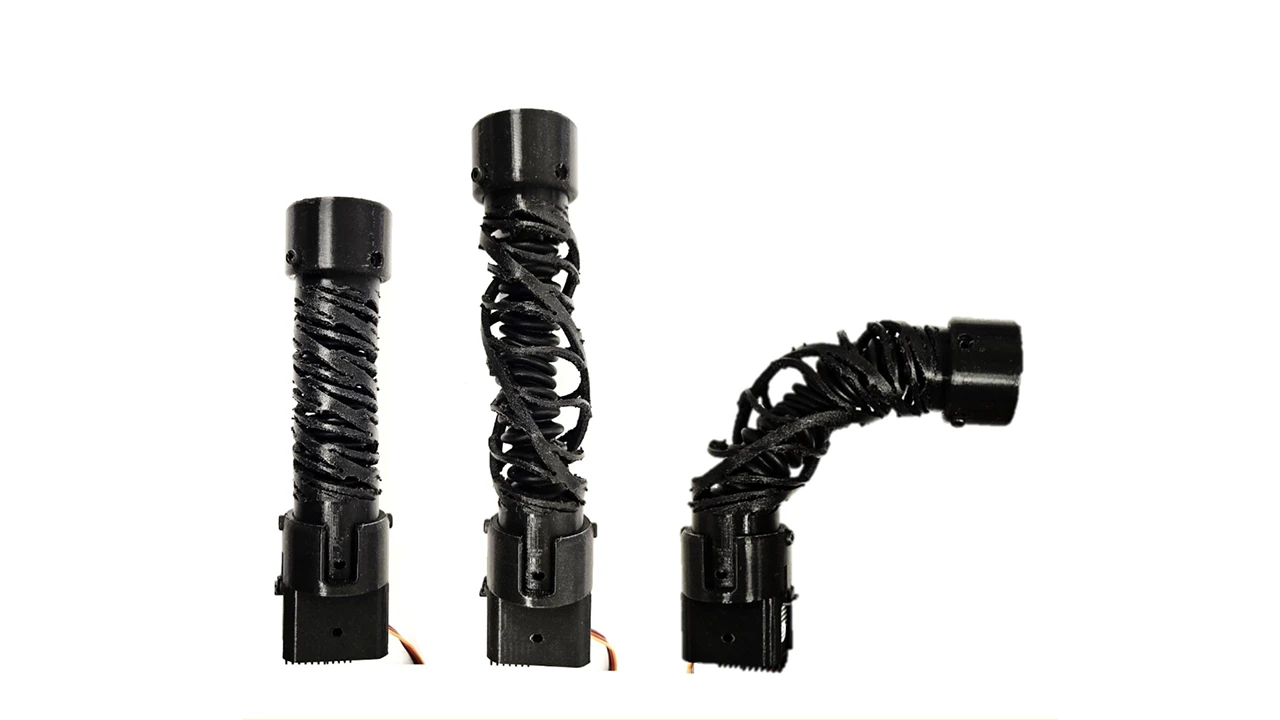
Researchers at Northwestern University have created a soft and flexible device that enables robots to mimic human muscle movement. This new technology, called a soft actuator, represents a significant advancement in the field of robotics.
In their recently published study , the research team explains how conventional robotic actuators are typically stiff and expensive. These characteristics can limit their safety, especially in environments where humans and robots interact. The newly developed soft actuator, on the other hand, is 3D-printed from a common rubber, making it inexpensive (approximately $3).
Ryan Truby, the lead researcher, stated “If a soft robot were to collide with a person, the impact would be significantly less painful compared to a hard, rigid robot. Our actuator makes robots more suitable for environments focused on human interaction. Additionally, their low cost allows for broader applications that were previously too expensive to consider.”
The design of the new actuator draws inspiration from human muscles, which contract and stiffen simultaneously to facilitate movement and exert force.
Truby added, “When you twist the lid off a jar, your muscles tighten and stiffen to apply the necessary force. This aspect of muscle function has been overlooked in soft robotics. Most soft actuators become more pliable when in use, but our design actually stiffens during operation.”
The new actuator achieves this by utilizing 3D-printed “handed shearing auxetics” (HSAs) made from rubber. These HSAs expand and extend when twisted, providing the actuator with the ability to transmit force effectively. This feature was lacking in previous soft robots.
To showcase the actuator’s capabilities, the researchers created a worm-like crawling robot and an artificial bicep. The crawling robot, measuring just 26 centimeters, adeptly navigated confined spaces, while the artificial bicep successfully lifted a 500-gram weight 5,000 times in succession.
Researchers are optimistic about future enhancements. While the current prototype demonstrates the feasibility of the concept, future research will focus on improving the actuator’s performance. Researchers aim to enhance its speed and strength to broaden its range of potential applications
