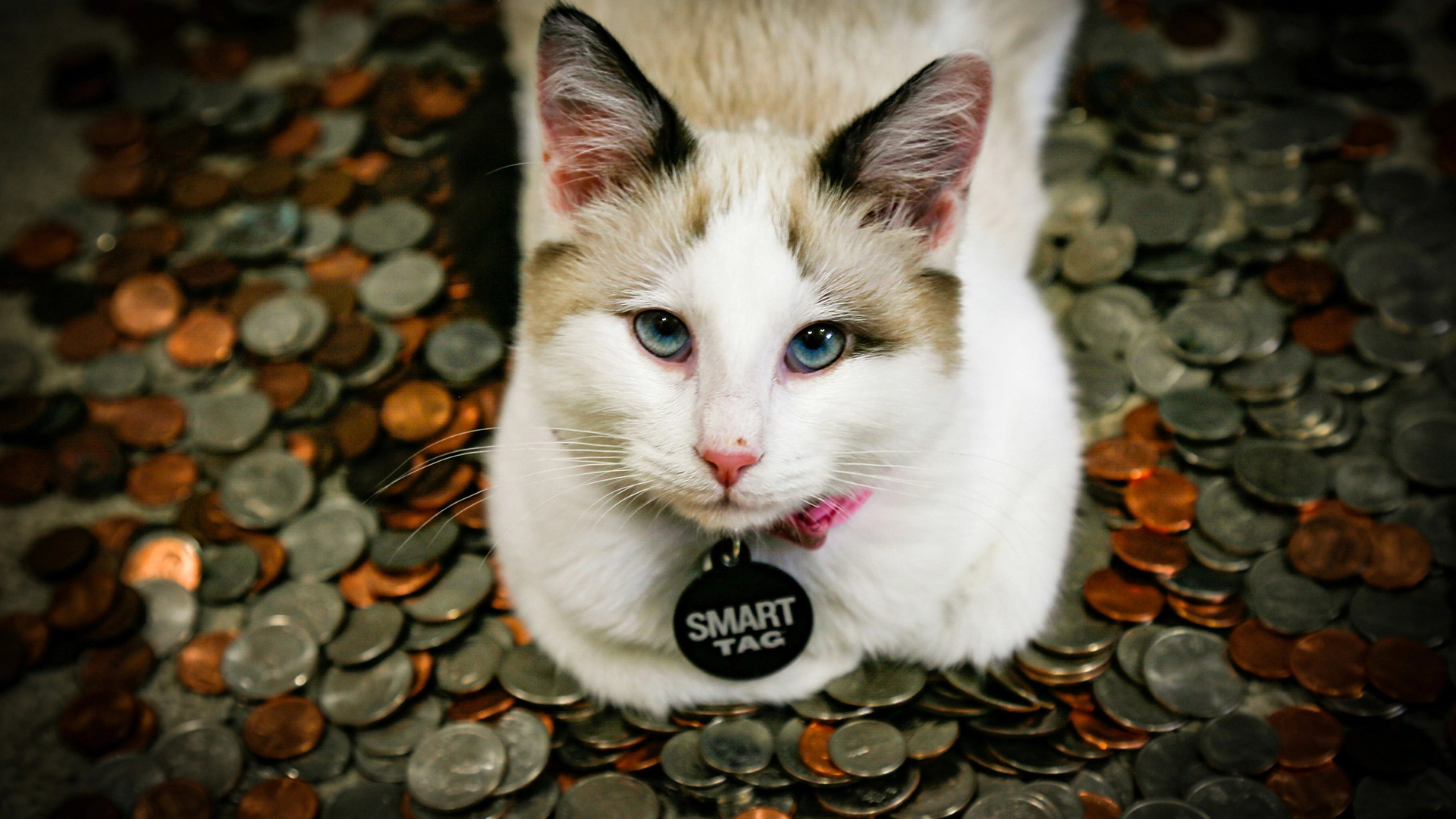
Image by Syed F Hashemi, from Unsplash
Your Cat’s Microchip Could Spread Malware, Researchers Warn
- Written by Kiara Fabbri Former Tech News Writer
- Fact-Checked by Sarah Frazier Former Content Manager
A cat’s microchip could carry malware that infects systems during scans, spreading through RFID networks without needing an internet connection, researchers warn.
In a rush? Here are the quick facts:
- RFID pet tags can carry malware that infects backend systems.
- Attacks spread offline, needing only a scan, with no internet needed.
- Infected tags can spread across supply chains and industries.
Cybernews reports that researchers from Vrije University in Amsterdam have issued a strange warning: the microchip in your pet could one day be used to deliver malware.
RFID tags, commonly implanted in pets or attached to collars, contain basic information like ID numbers and contact details. Veterinary professionals use RFID scanners to retrieve medical records instantly. Experts now warn that the same technology could become a cyberattack tool.
A typical RFID tag holds about 1 kilobit of data, which is tiny. Still, researchers showed that this small space can carry malicious code that targets weak spots in the systems reading the tag.
According to Cybernews, the attack begins when a hacker gains access to the RFID system’s backend, which manages tag information. During a write operation, they inject malware onto a tag. That tag could be on a pet, a shipping crate, or a medical device. When it’s scanned by another RFID reader, the malware is triggered and spreads.
Since RFID systems are used in retail, hospitals, toll booths, warehouses, and even government buildings, the risk extends far beyond the vet’s office.
Cybernews reports that the malware doesn’t need an internet connection to spread. It moves between devices through direct contact, just like viruses spread through physical touch. It also doesn’t require emails, downloads, or any human interaction to propagate.
In one scenario, a supermarket receives a pallet with infected tags. The warehouse system reads and writes back the malware onto the tags. As containers move to other stores, they carry the virus with them. A similar attack could happen in a hospital or secure government site, as noted by Cybernews.
To prove it’s possible, researchers even built working malware to test RFID infections. They warn that “RFID phishing” (tricking people into scanning bad tags), “RFID wardriving” (hunting for weak RFID readers), and “RFID honeypots” (bait systems used to catch hackers) are all becoming real threats.
“People will never have the luxury of blindly trusting the data in their cat again,” the researchers said, as reported by Cybernews.

Photo by AbsolutVision on Unsplash
The Washington Post and OpenAI Announce Strategic Partnership
- Written by Andrea Miliani Former Tech News Expert
- Fact-Checked by Sarah Frazier Former Content Manager
The Washington Post and OpenAI announced this Tuesday a strategic partnership to feature the newspaper’s content on the startup’s chatbot. Now, ChatGPT users will see more links, quotes, and summaries from The Post.
In a rush? Here are the quick facts:
- The Washington Post and OpenAI announced a strategic partnership.
- ChatGPT will now feature more content from The Post, including summaries, links, and quotes.
- OpenAI’s head of Media said ChatGPT has more than 500 million active users every week.
According to the announcement shared by The Washington Post , the new partnership goes in line with both companies’ commitment to share reliable information across multiple topics covered by the journal.
“ChatGPT will highlight The Post’s journalism across politics, global affairs, business, technology, and more, always with clear attribution and direct links to full articles so people can explore topics in greater depth and context,” states the document.
Both companies expect to share more reliable and engaging content for users, allowing them to explore further and interact with the technology and the content of their interest, including “fast-moving” and complex topics.
“More than 500 million people use ChatGPT each week to get answers to all kinds of questions,” said Varun Shetty, Head of Media Partnerships at OpenAI. “By investing in high-quality journalism by partners like The Washington Post, we’re helping ensure our users get timely, trustworthy information when they need it.”
The Washington Post added that it is committed to expanding critical journalism and well-reported news through modern AI tools, highlighting its own technologies such as Climate Answers and Ask The Post AI. “The Post continues to be LLM-agnostic as it embraces and builds its own range of AI-powered solutions for both its business and its users,” states the document.
The Washington Post joins a list of newspapers collaborating with OpenAI. According to The Verge , OpenAI has now partnered with more than 20 news publishers.
In 2024, the startup signed a deal with Time , gaining access to over 101 years of documents to enhance the chatbot’s responses. It also partnered with News Corp —a mass media corporation that includes publications such as The Daily Telegraph, The Wall Street Journal, and The New York Post—as well as with Condé Nast , whose portfolio includes Vogue, Vanity Fair, and Wired.
