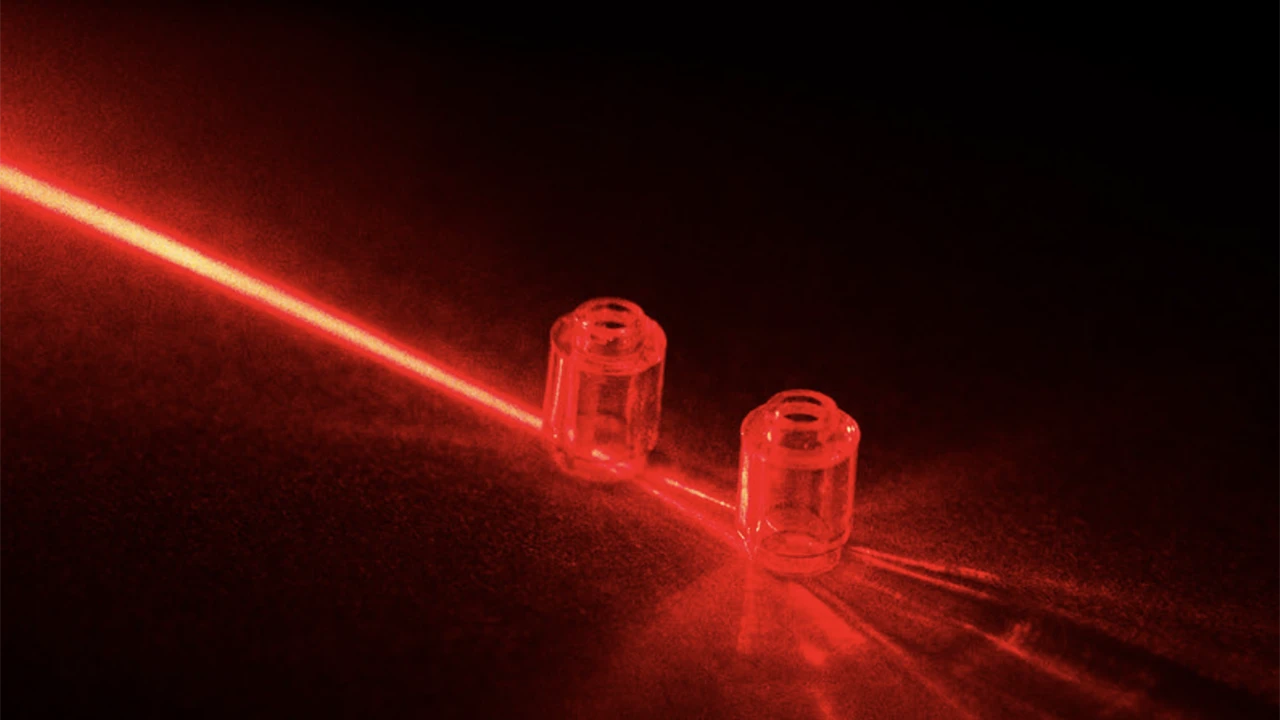
Image by Martin Kenny, from Flickr
World’s First Laser Weapon System Against Drones
- Written by Kiara Fabbri Former Tech News Writer
- Fact-Checked by Justyn Newman Former Lead Cybersecurity Editor
Dubbed the “ Star Wars Project “, South Korea plans to deploy laser weapons to counter drones from North Korea. Authorities highlight that laser weapons are quiet, invisible, effective, and cost-efficient. While some experts question the effectiveness against large-scale drone attacks, this technology marks a significant step forward for laser weapons and defense strategies.
South Korea is poised to become the world’s first country to deploy laser weapons in the military as early as this year ( Reuters ). Their program involves mass production of a low-cost laser weapon called Block-I (costing around $1.50 per shot), effective against small drones at close range. According to the procurement organization, the laser weapon will be invisible and silent, operating solely on electricity without the need for additional ammunition. The laser is expected to melt the drone’s body and fry its internal electronics ( Aljazeera ).
Block-I will see its deployment by the end of 2024 with plans for more systems in the future. Additionally, South Korea’s Defense Acquisition Program Administration (DAPA) is developing a more powerful Block-II system with improved range and output, although its deployment date remains undisclosed ( CNN ).
AP reports that some experts have questioned the technology. Lee Illwoo, an expert with the Korea Defense Network in South Korea, expressed doubts about the effectiveness of South Korea’s laser weapons, citing the inadequacy of the country’s anti-air radar systems to detect North Korean drones accurately. He also noted that the range of laser weapons is relatively short and suggested that high-power microwave weapons might be more effective when dealing with large numbers of enemy drones simultaneously.
The Block-I system itself has yet to be used in real-world scenarios. However, its development comes amidst the growing prevalence of cheap drones on active battlefields around the world, from the war in Ukraine to Israel’s conflicts in Gaza and Lebanon ( Aljazeera ).
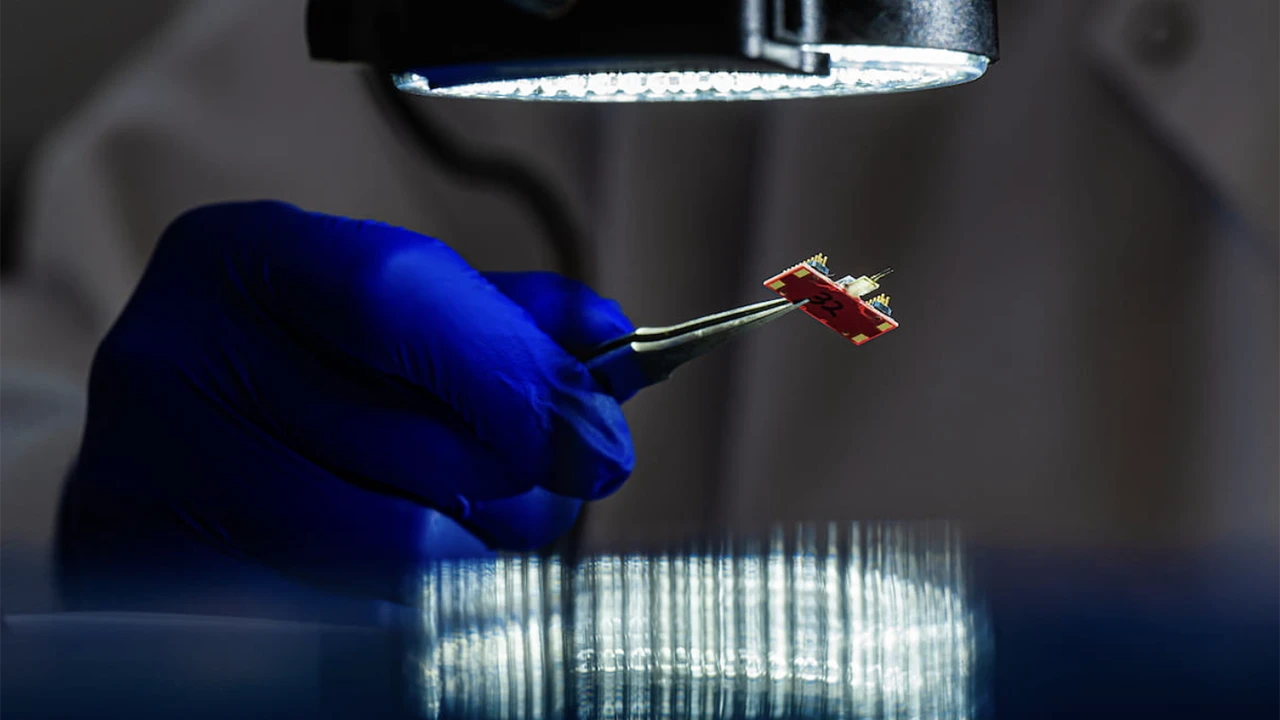
Photo by Jeff Fitlow for Rice University
Flexible Electrodes Allow Recording of Spinal Activity During Movement
- Written by Kiara Fabbri Former Tech News Writer
- Fact-Checked by Justyn Newman Former Lead Cybersecurity Editor
This week, Cell Reports published a study on a new technology for recording the activity of neurons in the spinal cord of mice during movement. This technology, called a spinalNET , is a flexible electrode that can be implanted in the mouse’s spine. Because the spinalNET is flexible, it can move with the spinal cord during movement. This allows researchers to record neural activity in freely behaving animals.
Traditionally, studying the activity of spinal cord neurons has been difficult because the spinal cord moves during movement. Existing techniques based on implanted rigid sensors either damage the spinal cord or cannot capture the activity of individual neurons during movement.
“Up until now, the spinal cord has been more or less a black box […] The issue is that the spinal cord moves so much during normal activity. Every time you turn your head or bend over, spinal neurons are also moving.” Said , Lan Luan, a corresponding author on the study and an associate professor of electrical and computer engineering.
To solve this issue, the research team at Rice University, led by Yu Wu, developed the spinalNET. The electrodes in this method are over a hundred times thinner than a human hair and are almost as soft and flexible as the neural tissue itself. Because of this, they can move with the spinal cord during movement.
With spinalNET, researchers were able to record neuronal activity in the spinal cord for prolonged periods and with great resolution, even tracking the same neuron over multiple days .
This technology has the potential to significantly improve our understanding of how the spinal cord controls movement. By studying the activity of spinal cord neurons during natural behaviors, researchers can gain insights into how these neurons work together to generate coordinated movements. This knowledge could lead to the development of new treatments for spinal cord injuries and diseases that impair movement.
“Being able to extract such knowledge is a first but important step to develop cures for millions of people suffering from spinal cord diseases,” said Yu Wu on Rice University News.
The researchers also acknowledge some current limitations of spinalNet. For instance, the number of neurons that can be recorded is limited by the number of electrodes. Additionally, the recordings can degrade over time.
Future studies should focus on improving the long-term stability of the recordings and increasing the number of recording channels.
