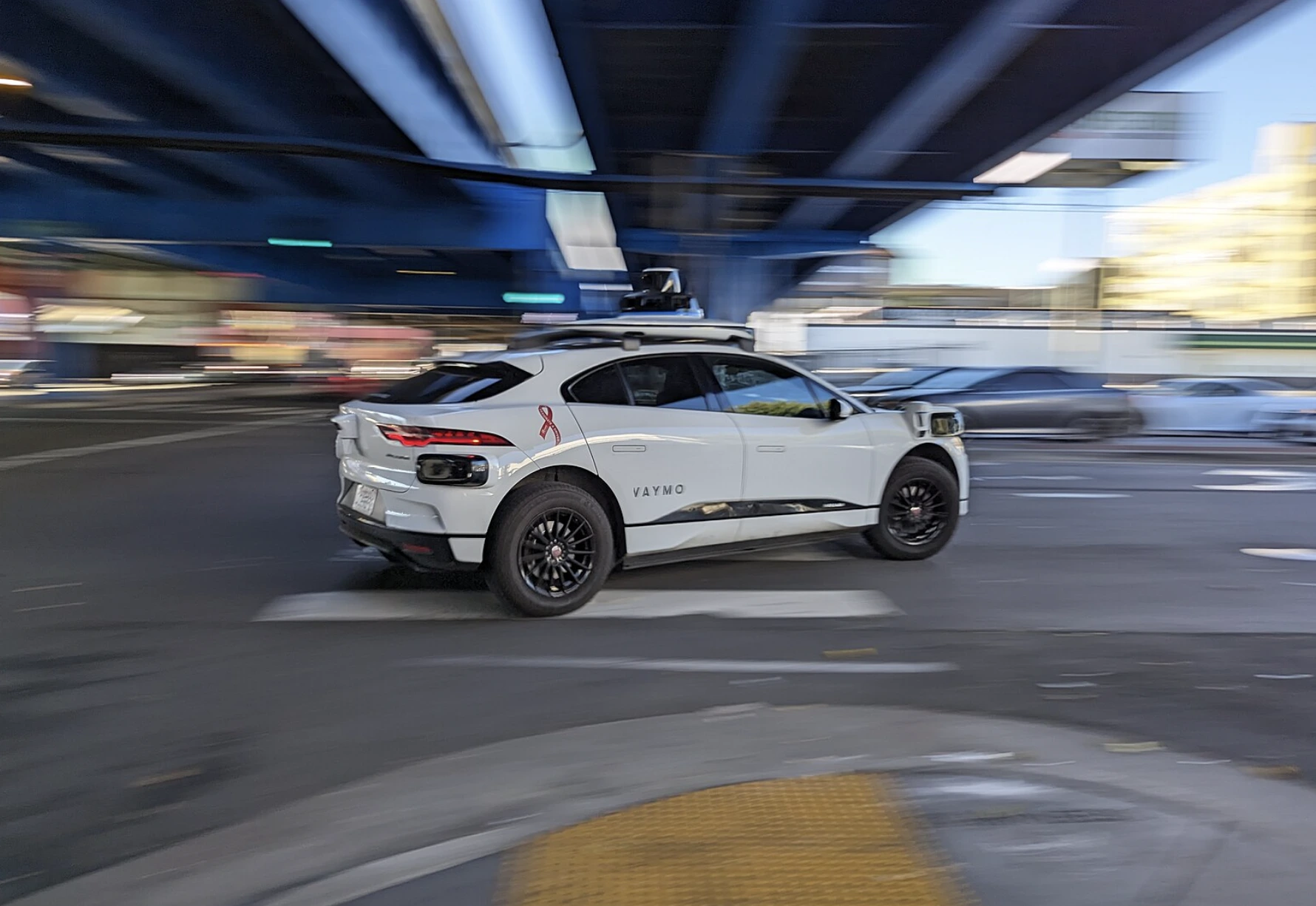
Image by Mliu92, from Wikimedia Commons
Waymo Robotaxi And Serve Delivery Robot Collide In Los Angeles
- Written by Kiara Fabbri Former Tech News Writer
- Fact-Checked by Justyn Newman Former Lead Cybersecurity Editor
On December 27, 2024, a collision occurred between a Waymo robotaxi and a Serve Robotics sidewalk delivery robot at a West Hollywood intersection, as first Reported by TechCrunch .
In a Rush? Here are the Quick Facts!
- The incident occurred at a West Hollywood intersection; no significant damage was reported.
- The collision happened when the delivery bot moved into the Waymo robotaxi’s path.
- Waymo’s system detected the robot and applied brakes before contact, hitting it at 4 mph.
The incident was captured in a video that quickly spread on social media, sparking questions about the safety and liability of autonomous vehicles.
Food Delivery Robot Hit By Waymo by u/mingoslingo92 in waymo
The footage shows the Serve bot crossing a street at night, attempting to climb onto the sidewalk. After backing up to correct its course, it moved toward the curb ramp, but as it did, a Waymo robotaxi making a right turn struck the delivery robot.
TechCrunch says that the person who posted the video claimed the Serve bot ran a red light, though the footage doesn’t clearly support this assertion.
When asked about the incident, a Waymo spokesperson explained to TechCrunch that its Driver system classified the Serve delivery robot as an inanimate object, failing to recognize it as a potential hazard.
The system is designed to prioritize safety by choosing the safest driving path based on available information. For example, it is programmed to be cautious around pedestrians and children.
According to the spokesperson, When the Serve bot moved into the taxi’s path, the Waymo system applied the brakes, but the collision happened due to a misjudgment in timing, as reported by TechCrunch.
Neither vehicle sustained damage, and both robots briefly remained locked before continuing on their way. This incident raises important questions about what happens when autonomous vehicles collide and how liability is determined.
Waymo’s protocol in such cases involves notifying its Fleet Response and Rider Support teams, with the latter contacting first responders if necessary. In this case, no passengers were inside the robotaxi, said TechCrunch.
Serve confirmed to TechCrunch that the delivery robot was under remote supervision at the time of the incident, as that is standard procedure for crossing intersections.
Neither Waymo nor Serve provided specific details about liability for future collisions, but both companies stated they are working together to prevent similar issues, says TechCrunch.
The collision between the Waymo robotaxi and Serve delivery robot raises concerns for pedestrian safety. If autonomous vehicles fail to accurately recognize hazards, they could inadvertently cause accidents, especially in busy urban environments where unpredictability is common.
Questions surrounding the companies’ responsibility in these cases will likely prompt regulatory scrutiny and a push for clearer laws regarding liability in autonomous vehicle collisions.
As autonomous technology evolves, legal frameworks will need to adapt to ensure accountability and the protection of public safety.

Image from Freepik
AI Could Forecast And Influence Decisions, Selling Your Intentions To Companies
- Written by Kiara Fabbri Former Tech News Writer
- Fact-Checked by Justyn Newman Former Lead Cybersecurity Editor
AI could soon lead to a marketplace where companies buy and sell your intentions before you even make a decision, researchers from the University of Cambridge warn.
In a Rush? Here are the Quick Facts!
- AI assistants could forecast and sell user intentions in real-time, researchers warn.
- Cambridge researchers call this new market for digital intent signals the “Intention Economy.”
- AI agents could use intimate psychological data to manipulate decisions at a large scale.
This emerging “Intention Economy” would allow AI assistants to predict and influence your choices, from buying movie tickets to voting in elections, often before you realize your own preferences.
AI ethicists from Cambridge’s Leverhulme Centre for the Future of Intelligence (LCFI) suggest that the growing use of generative AI and chatbots could pave the way for a new type of persuasive technology.
These AI agents, which range from chatbot assistants to digital tutors, will have access to vast amounts of personal psychological and behavioral data gathered through everyday conversations, including informal dialogues.
This data, combined with advanced algorithms, will enable AI to anticipate users’ desires and influence their decisions on a large scale, argue the researchers.
“Tremendous resources are being expended to position AI assistants in every area of life, which should raise the question of whose interests and purposes these so-called assistants are designed to serve,” said Dr. Yaqub Chaudhary, Visiting Scholar at LCFI, as reported on Eurekalert .
AI tools would not only collect data from users’ online habits but also interpret subtle cues such as the way people speak and the inferences that can be drawn from real-time interactions. According to the researchers, these tools could soon forecast and influence our decisions, manipulating them to serve corporate, political, and commercial interests.
Dr. Jonnie Penn, a historian of technology at LCFI, explains that attention has long been the currency of the internet, with platforms like Facebook and Instagram profiting from user engagement. However, in the emerging intention economy, human motivations will become the new currency.
“Unless regulated, the intention economy will treat your motivations as the new currency. It will be a gold rush for those who target, steer, and sell human intentions.” said Dr. Penn, as reported on Eurekalert.
The researchers warn that this market could have serious consequences, from undermining free and fair elections to affecting the integrity of the media and market competition. They argue that while the intention economy is still in its infancy, early signs of its development are already visible.
For instance, major tech companies like OpenAI, Meta, and Apple have begun investing in AI systems that predict human intentions, according to Eurekalert. OpenAI, for example, called for data that expresses human intention in various formats, while Apple’s 2024 “App Intents” framework is designed to predict users’ future actions.
Despite the risks, Penn and Chaudhary emphasize that these developments are not inherently negative. However, they stress the importance of public awareness and regulation to ensure that the intention economy does not cross ethical boundaries.
“We should start to consider the likely impact such a marketplace would have on human aspirations, including free and fair elections, a free press, and fair market competition, before we become victims of its unintended consequences.” Penn cautioned, as reported by Eurekalert.
In this rapidly evolving digital landscape, the researchers urge society to carefully examine the implications of AI tools that not only influence what people want, but what they “want to want.”
