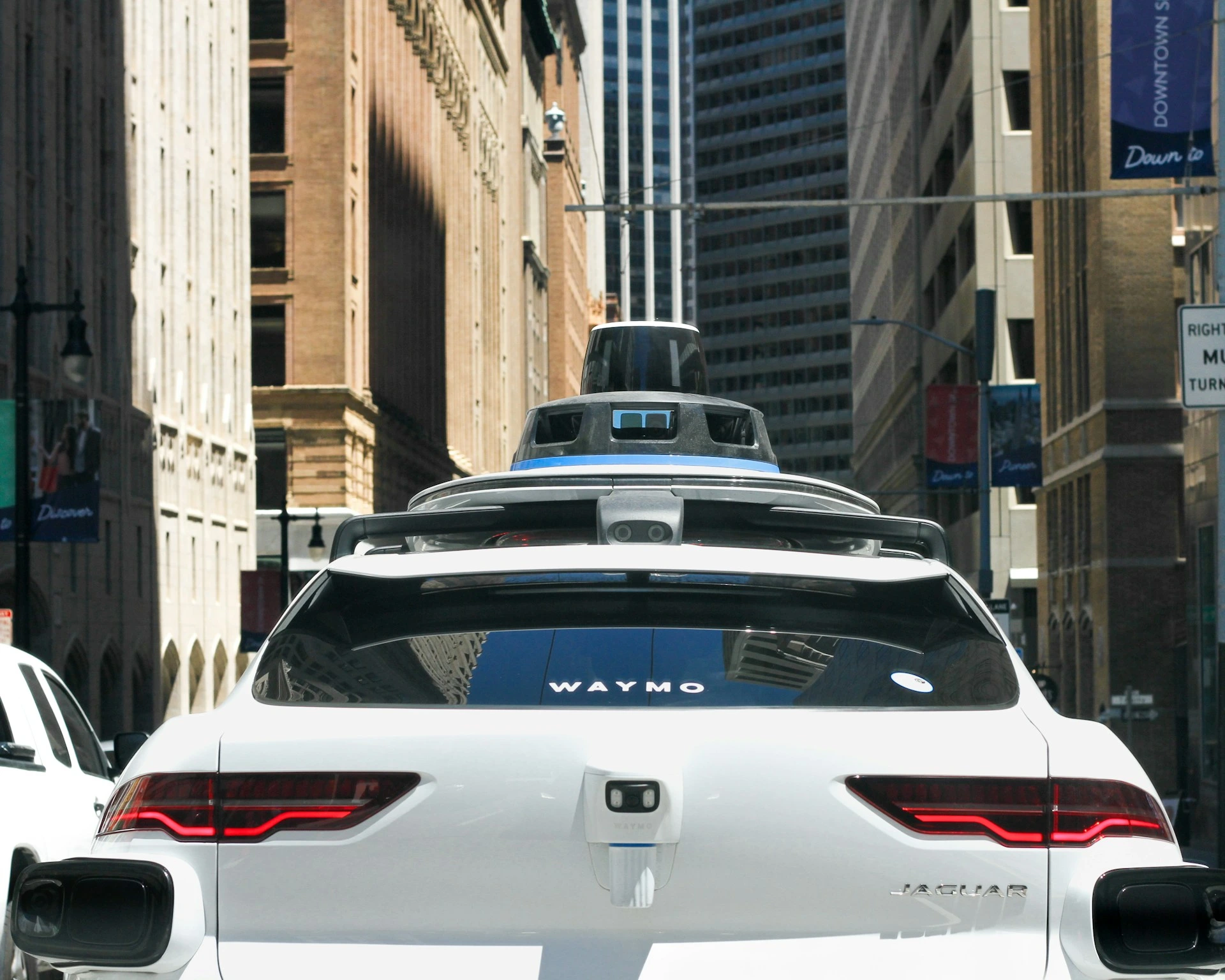
Photo by gibblesmash asdf on Unsplash
Waymo Partners with Hyundai to Add EV Robotaxis to Its Fleet
- Written by Andrea Miliani Former Tech News Expert
- Fact-Checked by Justyn Newman Former Lead Cybersecurity Editor
In a Rush? Here are the Quick Facts!
- Waymo and Hyundai announced a multi-year partnership to build and deploy robotaxis
- Hyundai’s all-electric IONIQ 5 SUV will be added to the Waymo One fleet within the next few years
- The vehicles will be built in Georgia and the testings will begin next year
The American autonomous driving technology company Waymo announced this Friday a multi-year partnership with the South Korean automaker Hyundai to integrate Waymo Driver and add Hyundai’s all-electric IONIQ 5 SUV to the Waymo One fleet.
“We are thrilled to partner with Hyundai as we further our mission to be the world’s most trusted driver,” said Tekedra Mawakana, co-CEO, of Waymo. “Hyundai’s focus on sustainability and strong electric vehicle roadmap makes them a great partner for us as we bring our fully autonomous service to more riders in more places.”
The agreement involves multiple phases, including manufacturing and testing. The companies will assemble the robotaxis in the United States, in Georgia, at the manufacturing facility of Hyundai Motor Group Metaplant America (HMGMA) for multiple years with “significant volume.” The first testing for the brand-new vehicles will begin by the end of next year.
“Waymo’s transformational technology is improving road safety where they operate, and the IONIQ 5 is the ideal vehicle to scale this further,” said José Muñoz, president and global COO of Hyundai Motor Company, and president and CEO of Hyundai Motor North America. “The team at our new manufacturing facility is ready to allocate a significant number of vehicles for the Waymo One fleet as it continues to expand.”
Waymo also recently announced a new partnership with Uber to order robotaxis through the ridesharing app in Austin, Texas, and Atlanta, Georgia. Waymo has been quickly expanding across the United States and has deployed its autonomous vehicles in other cities like San Francisco , Phoenix, and Los Angeles.
Photo by Jonathan Kemper on Unsplash
OpenAI’s Valuation Reaches $157 Billion with New Deal
- Written by Andrea Miliani Former Tech News Expert
- Fact-Checked by Justyn Newman Former Lead Cybersecurity Editor
In a Rush? Here are the Quick Facts!
- OpenAI raised $6.6bn in its latest funding and is now valued at $157 billion
- The startup expects a revenue of $3.7 billion in sales this year
- Over 1,700 people are currently working for the company
OpenAI raised $6.6bn in its latest funding, raising the company’s value to $157 billion and turning it into one of America’s most valuable startups.
According to the New York Times, OpenAI has now nearly doubled its value from just 9 months ago, when it was valued at $80 billion. The initial discussion of the new deal was revealed a few weeks ago , and the expected value of the company was surpassed this week—it was previously predicted to reach around $100 billion.
People with knowledge of this new deal reported that a few of the companies involved in the investing process were Nvidia, SoftBank, investment firm MGX, and Microsoft—which recently added OpenAI to its list of competitors and has been one of the startup’s largest investors.
OpenAI expects a revenue of $3.7 billion in sales this year, but also to lose $5 billion in costs developing technologies like ChatGPT and other expenses. The company leaders and its investors remain interested and hopeful about its future, and restructuring into a for-profit company is also in discussion.
“Every week, over 250 million people turn to ChatGPT regardless of the scale of the challenge—whether it’s communicating with someone who speaks another language or solving the toughest research problems,” said Sarah Friar, OpenAI’s chief financial officer.
OpenaAI now has about 1,700 employees. The start-up added about 1,000 of these employees during the past 9 months. However, OpenAI’s Chief Technology Officer Mira Murati resigned last week along with researchers Bob McGrew and Barret Zoph, adding to the list of the main talents leaving the company, especially after substantial changes in the structure and purpose of the startup.
