
Image by Anthony DELANOIX, from Unsplash
UK Boosts AI Safety, Signs Partnership With Singapore To Grow Trusted AI Market
- Written by Kiara Fabbri Former Tech News Writer
- Fact-Checked by Sarah Frazier Former Content Manager
In a Rush? Here are the Quick Facts!
- UK’s AI assurance market could grow six-fold by 2035.
- Expansion aims to unlock £6.5 billion in economic growth.
- New AI assurance platform launched to support responsible AI use.
The UK government announced yesterday new measures to support the safe and responsible use of AI, aiming to unlock £6.5 billion in economic growth by 2035. The UK’s AI assurance sector—which focuses on ensuring AI systems are fair, transparent, and secure—is expected to expand six-fold in the next decade.
This growth is seen as essential to the government’s broader strategy to incorporate AI in public services and boost economic productivity, while maintaining public trust in these technologies.
Peter Kyle, Secretary of State for Science, Innovation, and Technology, emphasized that public trust is essential to fully harness AI’s potential to improve services and productivity. He noted that these steps aim to position the UK as a leader in AI safety.
To aid this expansion, the Department for Science, Innovation, and Technology (DSIT) and the UK’s AI Safety Institute have introduced a new AI assurance platform, designed to help British businesses manage the risks associated with AI use.
The platform will centralize resources for assessing data bias, conducting impact evaluations, and monitoring AI performance. Small and medium-sized enterprises (SMEs) will also have access to a self-assessment tool to implement responsible AI practices within their organizations.
The UK is also strengthening its international efforts on AI safety by signing a partnership with Singapore.
The Memorandum of Cooperation, signed by Secretary Kyle and Singapore’s Minister for Digital Development Josephine Teo, aims to promote joint research and establish common standards for AI safety.
This agreement builds on discussions held at last year’s AI Safety Summit and aligns with the goals of the International Network of AI Safety Institutes (AISI), a global initiative to coordinate AI safety efforts.
Josephine Teo emphasized that both countries are committed to advancing AI for public benefit while ensuring it remains safe.
“The signing of this Memorandum of Cooperation with an important partner, the United Kingdom, builds on existing areas of common interest and extends them to new opportunities in AI,” Teo said.
Hyoun Park, CEO of Amalgam Insights—a firm specializing in financially responsible IT decisions—points out that, although marketed as a tool for building trust in AI, the platform’s main purpose is to provide businesses with a government-aligned framework for evaluating AI, reports CIO .
Park raised concerns about the platform’s current capabilities. “The platform is still fairly rudimentary, with plans for an essential toolkit that has yet to be fully developed,” he said, as reported by CIO.
“This assessment relies on human responses rather than direct integration with the AI itself, and the scale used by the assessment tool is vague, offering only binary yes/no options or responses that are difficult to quantify,” he added.
Park also pointed out that bias assessments could be especially challenging. “Every AI has a bias, and the notion that bias can be eliminated is both a myth and potentially dangerous,” he noted to CIO.
For smaller businesses, new compliance requirements like risk assessments and data audits may pose additional burdens, potentially stretching limited resources, says CIO.
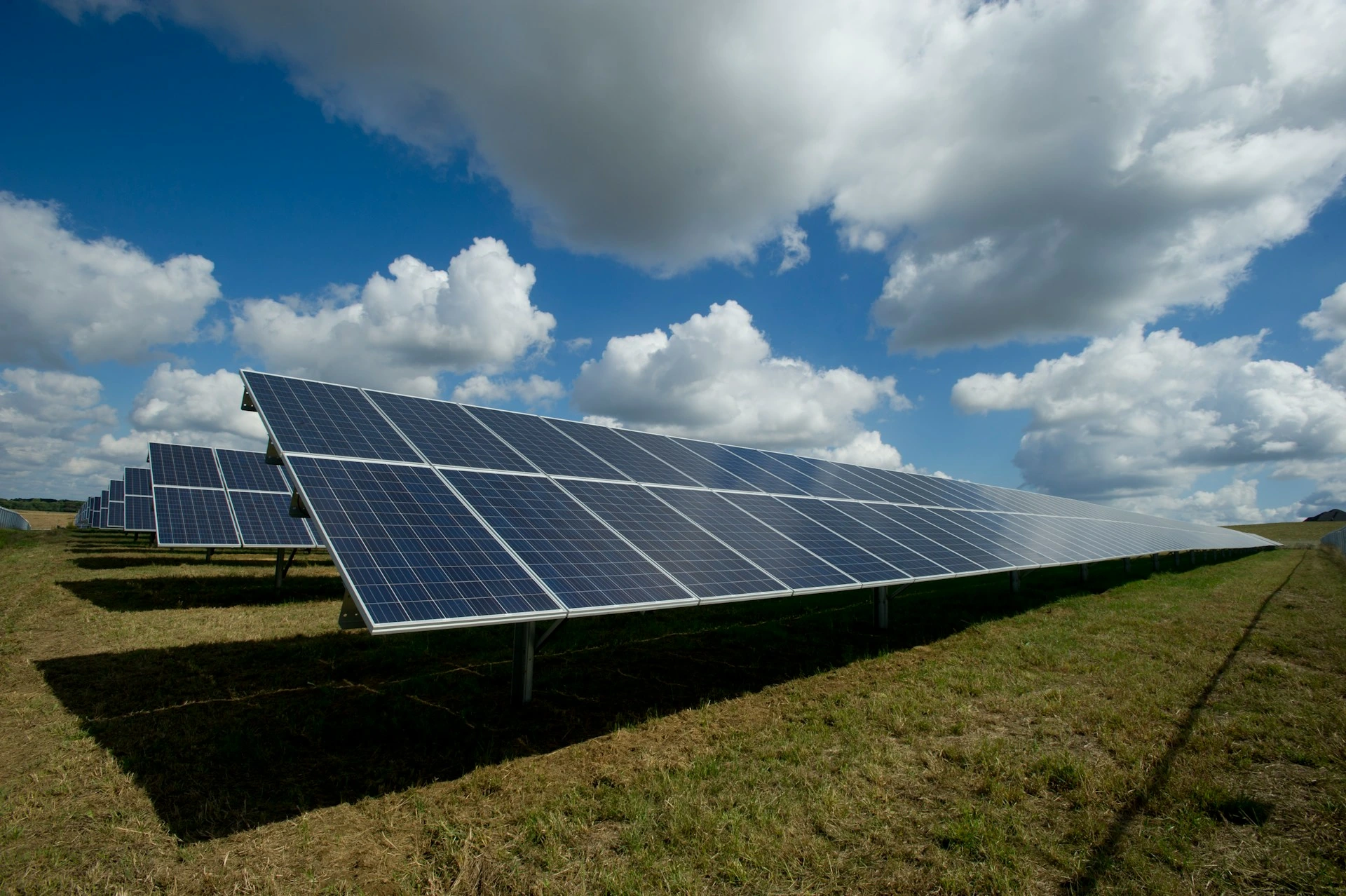
Photo by American Public Power Association on Unsplash
Norwegian Startup Glint Solar Raises $8 Million To Accelerate Solar Energy Adoption In Europe
- Written by Andrea Miliani Former Tech News Expert
- Fact-Checked by Sarah Frazier Former Content Manager
In a Rush? Here are the Quick Facts!
- Glint Solar raised $8 million in a Series A round
- Its customers are in Germany, the UK, France, and the Nordics, and the startup wants to expand to Italy and Spain
- Their software optimizes solar installations from planning to deployment using Geographic Information System (GIS) data
The Norwegian startup Glint Solar raised $8 million in a Series A round to expand into more regions in Europe and develop its software.
According to Tech Crunch , Glint Solar had previously closed a $3 million deal in June during a seed round. After the initial investment, the customer base grew 10 times its original size. The recent round was led by London’s Smedvig Ventures.
The future’s bright for Glint Solar! We’ve just secured an $8M funding round led by London’s Smedvig Ventures and with participation from Momentum, Futurum Ventures, and Antler! Read more in TechCrunch’s latest article: https://t.co/3Zp5Vx1Zo0 #renewableenergy pic.twitter.com/yLdJgM0ePE — Glint Solar (@GlintSolar) November 7, 2024
The startup, founded in 2020, developed software that helps its clients identify, analyze, and build optimal solar installations, integrating Geographic Information System (GIS) data.
“Through effective use of technology and research collaboration, we can deliver high-precision insight into user-friendly software for the development team,” states the Software-as-a-Service (SaaS) company on its website .
Glint Solar is currently working with solar developers from large companies like Recurrent Energy, E.ON, and Statkraft to optimize processes. The company’s focus is on large-scale installations, for utility, and not residential or rooftops.
The startup’s current customers are in the UK, France, Germany, and the Nordic countries. Harald Olderheim, Glint Solar’s CEO and co-founder, explained to Tech Crunch that, with the new funding, they expect to expand to more countries like Spain and Italy.
Olderheim added that they are also optimizing its software and including services like battery integrations. One of the challenges in the industry is the time it takes for permits, delivery, and deployment, and they are working on reducing this time
“We are making it very user-friendly so everyone in a team can use one software together and work on this problem to make [project delivery] much faster,” said Olderheim. “And you can share everything — with the land owner, with the grid, with the municipality — so they can easily take decisions much faster with the lower risk.”
Robinhood’s co-founder Baiju Bhatt recently launched a new space-based startup called Aetherflux to “commercialize space solar power.”
