
Photo by Joy Armani on Unsplash
UCLA Introduces Literature Course Designed by AI
- Written by Andrea Miliani Former Tech News Expert
The University of California, Los Angeles (UCLA) announced last week the first AI course in humanities, a new AI-designed Comparative Literature class that will be taught next winter 2025.
In a Rush? Here are the Quick Facts!
- Professor Zrinka Stahuljak will teach a new Comparative Literature course designed by AI next winter 2025
- UCLA and Stahuljak are using the AI Platform Kudu to generate the textbook, assignments, and teaching resources
- It’s the first AI course launched in Humanities, but not the first AI class in the institution
According to the official information shared by the university, the course—coded Comp Lit 2BW by the institution—will be taught by professor Zrinka Stahuljak as she had done in previous years, but the textbook, the assignments, and the teaching resources will all be generated by AI.
Professor Stahuljak—who teaches European languages and transcultural studies, and comparative literature—is using Kudu, an AI platform developed by UCLA professor Alexander Kusenko that generates textbooks, animations, tests, and more based on the material provided for the training.
The institution clarified that AI will focus on acting as an educational assistant, allowing the professor more time to focus on lectures and reviewing and editing the content provided by Kudu.
“Because the course is a survey of literature and culture, there’s an arc to what I want students to understand,” said Professor Stahuljak in the document shared by UCLA. “Normally, I would spend lectures contextualizing the material and using visuals to demonstrate the content. But now all of that is in the textbook we generated, and I can actually work with students to read the primary sources and walk them through what it means to analyze and think critically.”
To design the course and generate the material, the professor provided Power Point presentations, videos—including those recorded during the COVID-19 pandemic for remote teaching—and other material she had previously used for the compared literature class. Kudu used the information to design the course and saved Stahuljak around three months of work, and required instead only 20 hours of her time to revise the content generated.
AI is also being used to generate textbooks in South Korea and Google recently launched a new AI tool for learning called Learn About.
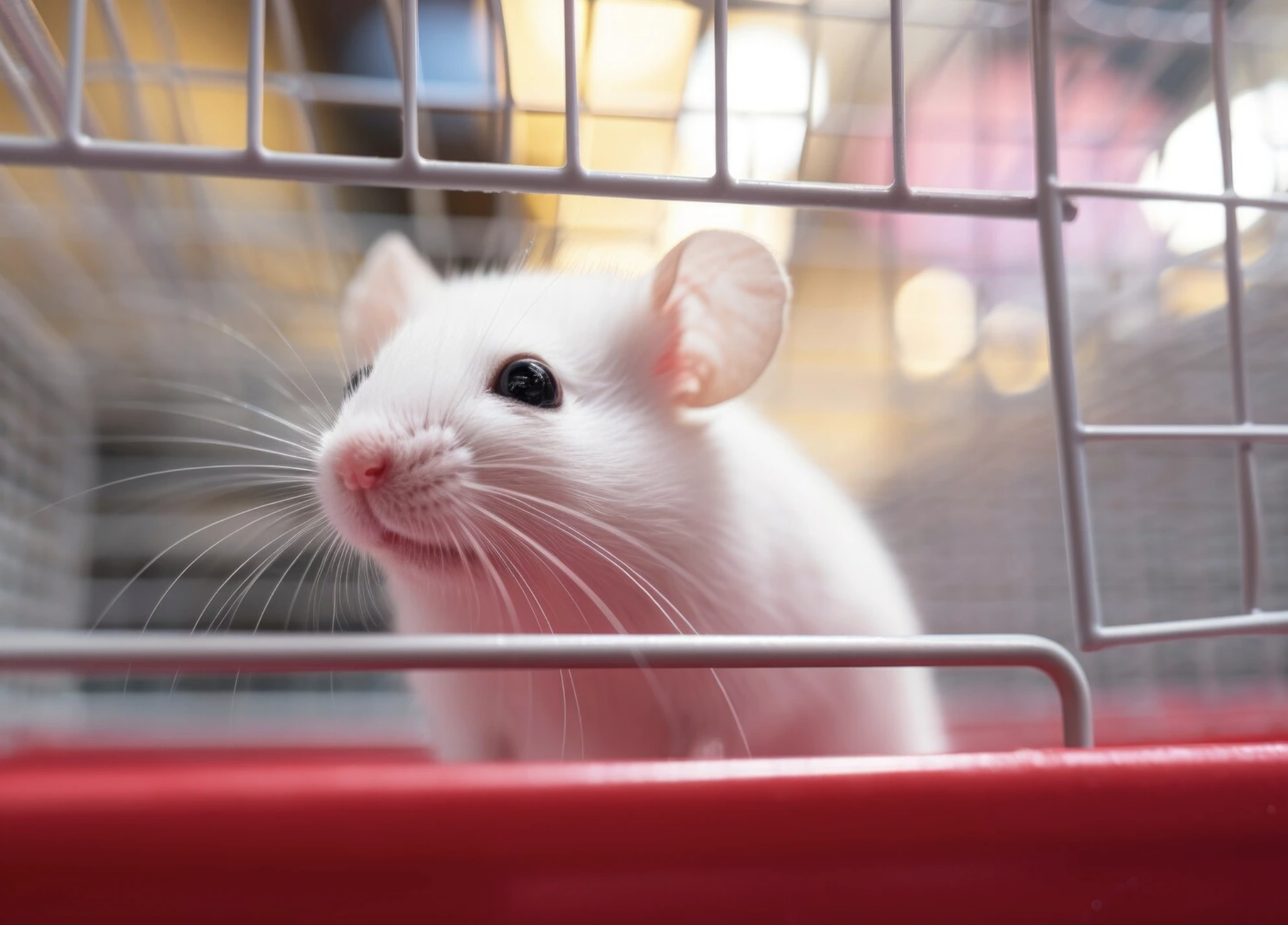
Image from Freepik
AI-Powered Robotic Rats Successfully Blend Into Real Rat Communities
- Written by Kiara Fabbri Former Tech News Writer
- Fact-Checked by Justyn Newman Former Lead Cybersecurity Editor
Roboticists at the Beijing Institute of Technology, in partnership with colleagues from the Technical University of Munich, have developed a robotic rat capable of social interaction with live rats for a continuous half hour.
In a Rush? Here are the Quick Facts!
- Robotic rats mimic social behaviors, fooling real rats into accepting them during interactions.
- AI-driven training taught robots to wrestle, nuzzle, and display aggression like real rats.
- Robotic rats enable long-term studies of social dynamics, overcoming biological limitations.
In a study published in Nature Machine Intelligence , the team details how AI was utilized to train the robot to replicate real rat behavior.
Tech Xplore reports that Thomas Schmickl from the University of Graz explained how the researchers employed feedback loops and AI-based reinforcement learning to equip the robotic rats with social skills convincing enough to engage live rats.
The goal of the project was to create a robot that could convincingly mimic the behavior of a real rat to the point that lab rats would accept it as one of their own. It appears that the researchers have succeeded.
Studies have shown that rats display a range of social behaviors, from aggression during stress to playfulness when content.
For the robot to be accepted, it had to accurately perform these behaviors, including wrestling and nuzzling during positive interactions or showing aggression when appropriate, as reported by Tech Xplore.
To achieve this, the team designed the robotic rat with AI-driven deep learning capabilities and trained it using video recordings of rats interacting.
To enhance the robot’s social acceptance, the researchers coated it with rat urine, which masked its artificial scent and made it seem more familiar and less threatening to the real rats, as reported by Interesting Engineering .
Over time, the robot refined its responses and learned to behave appropriately in real-time interactions with rats, receiving positive reinforcement when it succeeded. This allowed it to adapt and develop what could be described as a “rat personality,” noted Tech Xplore.
While the robot differed from a biological rat in having a wheeled, cart-like body instead of legs, it retained several lifelike characteristics, reports Tech Xplore. Its spine could bend and twist like a real rat’s, its head movements were realistic, and its forelimbs were functional enough to physically engage with real rats.
Tests demonstrated that the robot was not only accepted but elicited expected responses. Real rats reacted fearfully when the robot displayed aggression and engaged in playful wrestling or nuzzling during calm moments, just as they would with other rats, as reported by Tech Xplore.
The researchers suggest these robots could be valuable tools for studying social dynamics and influencing the emotional states of lab rats.
The researchers highlight that one key advantage of these robotic rats lies in their ability to engage in long-term and repetitive interactions, overcoming the inherent limitations of natural social behaviors in biological systems.
This extended interaction capability opens new opportunities for conducting more in-depth and prolonged studies on social dynamics and behavioral patterns. The team believes that this particular robotic rat, equipped with advanced AI training, represents a significant leap forward in robot-animal interaction.
Its ability to adapt to various scenarios positions it as a valuable tool for studying animal behavior and potentially improving the welfare of laboratory animals, as reported by Interesting Engineering.
