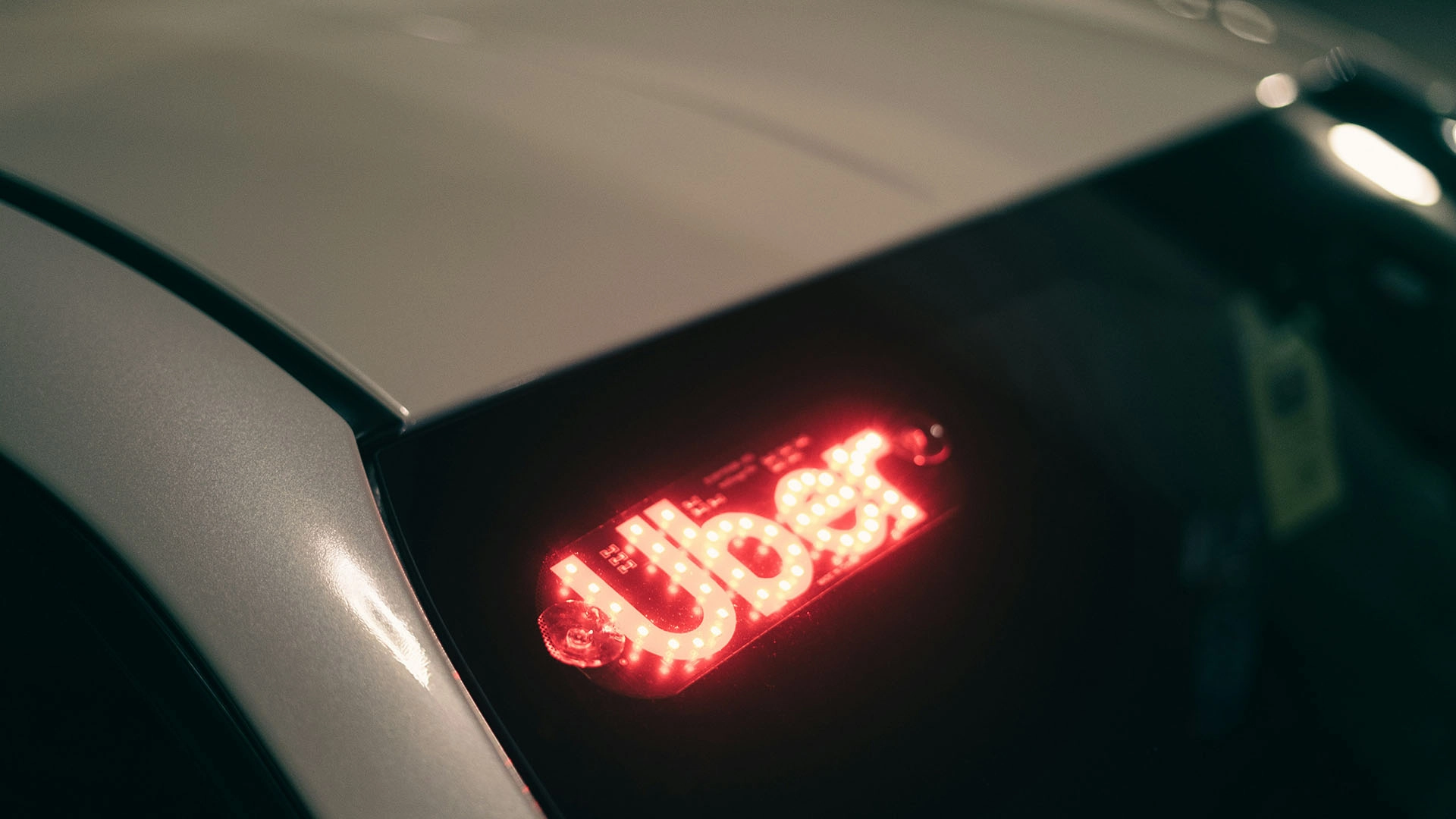
Image by Erik Mclean, from Unsplash
Uber CEO To Workers: Return To Office Or Leave
- Written by Kiara Fabbri Former Tech News Writer
- Fact-Checked by Sarah Frazier Former Content Manager
Uber is cracking down on remote work as its self-driving cars quietly outperform human drivers.
In a rush? Here are the quick facts:
- Uber enforces return-to-office policy starting June, requiring three office days weekly.
- CEO Khosrowshahi tells unhappy workers they can find jobs elsewhere.
- Paid sabbaticals now require more years at Uber to qualify.
Uber CEO Dara Khosrowshahi has a message for employees unhappy with returning to the office: there’s the door, as noted by Business Insider .
In a recent CNBC interview , he brushed off concerns that tightening work policies could push workers away. “The good news is the economy is still really strong. The job market is strong,” he said. “People who work at Uber, they have lots of opportunities everywhere.”
Business Insider reports that the new rules, taking effect in June, require employees to be in the office three days a week, including those who had previously worked remotely. Paid sabbaticals will now take longer to earn.
But Khosrowshahi made it clear these changes aren’t going anywhere. “We want them, obviously, to take the opportunity with us, to take the opportunity to learn,” he said, as reported by Business Insider. “We want more people in the office,” adding that the hybrid setup still allows working from home on Mondays and Fridays.
Business Insider reports that a Uber spokesperson claimed the policy isn’t intended to drive people out. But the tone from the top echoes a growing shift in Big Tech: scale back perks, raise expectations, and let dissenters walk.
All this comes as Uber’s autonomous ambitions are quietly accelerating. The Verge reports that in Austin, Uber’s robotaxi fleet—run by Waymo—is outperforming almost every human driver in the city. “So far, this launch has exceeded our expectations,” Khosrowshahi said in the company’s Q1 earnings call , adding that Waymo’s vehicles are “busier than over 99% of all drivers in Austin.”
As Uber tightens the leash on its human workforce, its self-driving cars are thriving. The timing raises a chilling question: is pushing workers out part of the plan?
Image by Tingey Injury Law Firm, from Unsplash
In Courtroom First, AI Revives Voice Of Road Rage Victim
- Written by Kiara Fabbri Former Tech News Writer
- Fact-Checked by Sarah Frazier Former Content Manager
An AI-generated video allowed a road rage victim to deliver a statement at his killer’s sentencing in an Arizona courtroom.
In a rush? Here are the quick facts:
- The video expressed forgiveness and moved the Arizona judge.
- The AI video used real images, voice clips, and hand-written script.
- Experts say AI in court is new and controversial.
A grieving sister used artificial intelligence to bring her murdered brother’s voice and image back to life. Stacey Wales played a video of her brother, Christopher Pelkey—killed in a 2021 road-rage incident—during the May 1 sentencing of his killer, Gabriel Horcasitas.
The AI-generated video showed Pelkey’s face and voice reconstructed from family photos and old recordings. “Just to be clear for everyone seeing this,” the video said, “I am a version of Chris Pelkey re-created through AI.”
It went on to address the man who shot him: “In another life, we probably could have been friends. I believe in forgiveness, and a God who forgives. I always have and I still do.”
The video left many in the courtroom moved. Judge Todd Lang, who handed Horcasitas the maximum sentence of 10 and a half years for manslaughter, praised the impact. “I loved that AI,” Lang said, as reported by The Washington Post . “I feel that that was genuine,” he added.
Stacey wrote the speech herself, aiming to reflect the kind of person her brother was. “What if Chris could make his own impact statement?” she said, as the Post reported. Her husband, Tim, a tech entrepreneur, used AI tools to animate Pelkey’s face and voice.
Experts were divided. While some say it’s a powerful, ethical use of technology, others worry about future misuse. “Are we always going to get fidelity to what the person would’ve wanted?” asked ethics professor Derek Leben, as reported by the BBC .
But for Stacey, it was worth it. “We approached this with ethics and morals,” she said, as reported by the BBC. “Just like a hammer, AI can build or destroy. We chose to build,” she added.
The case marks one of the first uses of AI in U.S. victim impact statements and could shape how technology is used in courtrooms ahead.
