Image published by Michael David Mitchell, from EPFL
Tiny Brain Chip Converts Thoughts To Text With 91% Accuracy
- Written by Kiara Fabbri Former Tech News Writer
- Fact-Checked by
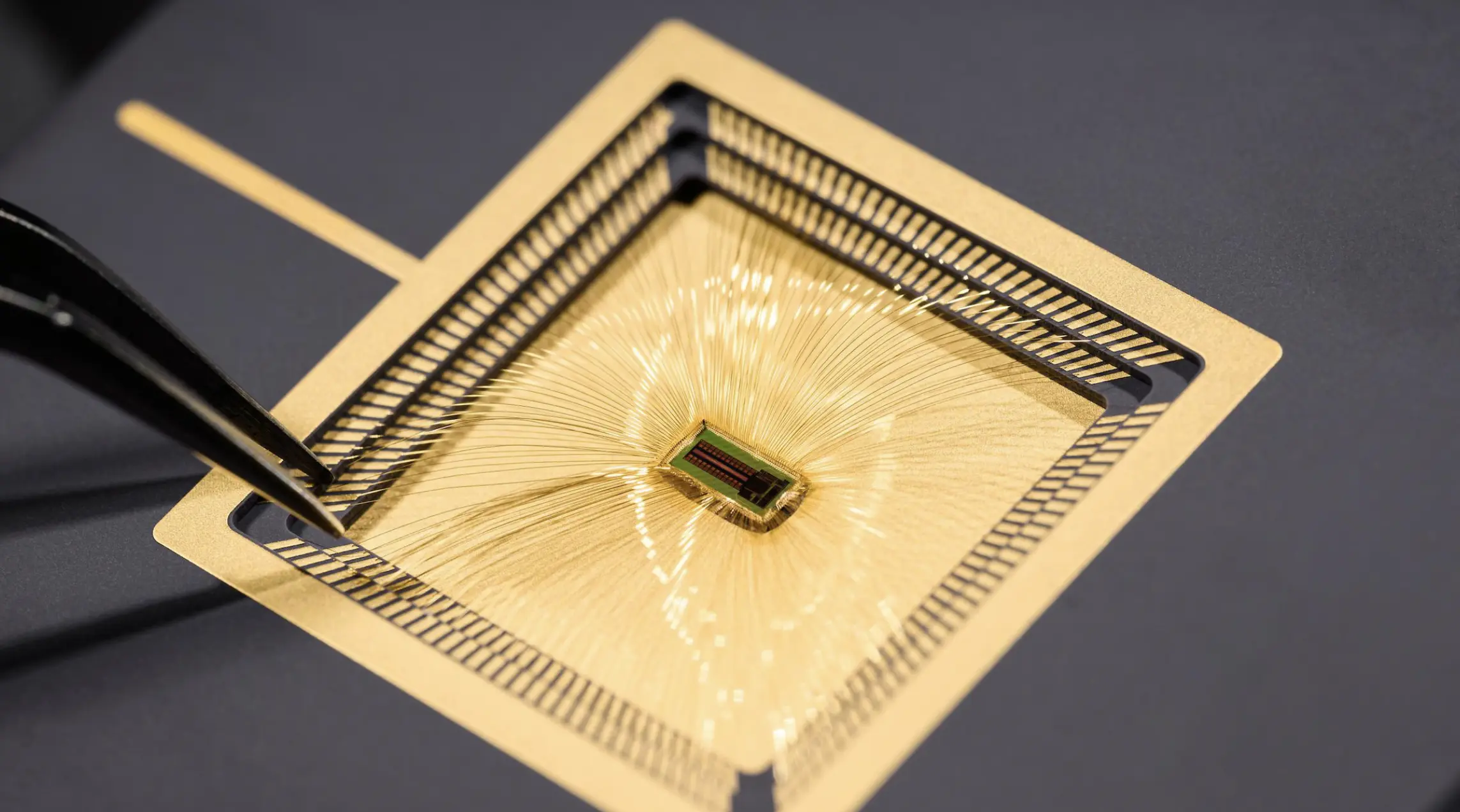
Researchers at EPFL announced yesterday they’ve developed a new brain-machine interface (BMI) that can translate brain activity into text using a compact and energy-efficient system.
This device, called the Miniaturized Brain-Machine Interface (MiBMI), is designed to help individuals with severe motor impairments, such as those with amyotrophic lateral sclerosis (ALS) or spinal cord injuries, to communicate by thinking about writing.
These chips decode the brain’s intended hand movements into corresponding text, achieving an accuracy rate of 91% for 31 different characters.
The MiBMI represents a significant improvement over existing BMI systems, which are often bulky and power-intensive. The technology, which was published in the last issue of IEEE Journal of Solid-State Circuits, processes neural signals in real-time using tiny silicon chips.
Lead author Mohammed Ali Shaeri explains that although the chip has not yet been integrated into a fully operational BMI, it has successfully processed data from previous live recordings,
The report explains that unlike current BMIs, which require data from implanted brain electrodes to be sent to an external computer for decoding, the MiBMI integrates both data recording and real-time processing on the same chips.
New Atlas notes that this differs from Neuralink , which uses 64 electrodes implanted in the brain and performs data processing through an external device via an app. Furthermore, MiBMI is extremely small, with a total area of just 8 mm². In comparison, Neuralink is significantly larger, measuring approximately 23 x 8 mm.
To be able to process the massive amount of information picked up by the electrodes on the miniaturized BMI, the researchers had to take a new approach to data analysis.
They discovered that the brain activity for each letter, when the patient imagines writing it by hand, contains very specific markers, which the researchers have named Distinctive Neural Codes (DNCs).
Instead of processing thousands of bytes of data for each letter, the microchip only needs to process the DNCs, which are around a hundred bytes. This makes the system faster and lowers power consumption.
This represents a significant advance in miniaturization, combining expertise in integrated circuits, neural engineering, and artificial intelligence. As neurotech startups increasingly focus on integration and miniaturization, EPFL’s MiBMI stands out as a promising development.
Lead author Mohammed Ali Shaeri notes: “Our goal is to develop a versatile BMI that can be tailored to various neurological disorders, providing a broader range of solutions for patients.”
Image by Mohamed Hassan, from Stock Vault
New Android Malware Targets Contactless Payment Data
- Written by Kiara Fabbri Former Tech News Writer
Cybersecurity experts have discovered a new Android malware named “NGate” capable of stealing contactless payment data from physical credit and debit cards, as reported yesterday by Android Headlines (AH).
Analysts explain that NGate tricks users into installing a malicious app disguised as a legitimate one. Once installed, the app can capture NFC data from the victim’s physical payment card and relay it to an attacker-controlled device. This allows attackers to clone the card and withdraw funds from ATMs.
The Hacker News reports that the malware has been observed targeting financial institutions in Czechia, but it could potentially target users in other regions as well. The malware is believed to be spread through phishing attacks, where victims are sent messages or links that appear to be from legitimate sources.
The attackers’ approach includes phishing websites, fake banking apps, and even direct phone calls to deceive victims. Once the malicious app is installed, it can steal the victim’s payment card data without their knowledge.
This malware, rooted in a legitimate NFCGate tool , was originally software intended for security purposes but was then repurposed for malicious activities. This software has been active since November 2023 and has evolved through social engineering tactics.
Google has confirmed that NGate is not found on any apps on the Google Play Store. However, the malware can still be distributed through third-party distributors.
These findings, along with recent research identify a critical flaw in digital wallet security: stolen card details remain usable even after a stolen or lost card is replaced.
To protect from NGate and other similar threats, users should be cautious about downloading apps from unfamiliar sources and avoid clicking on suspicious links or opening attachments from unknown senders.
