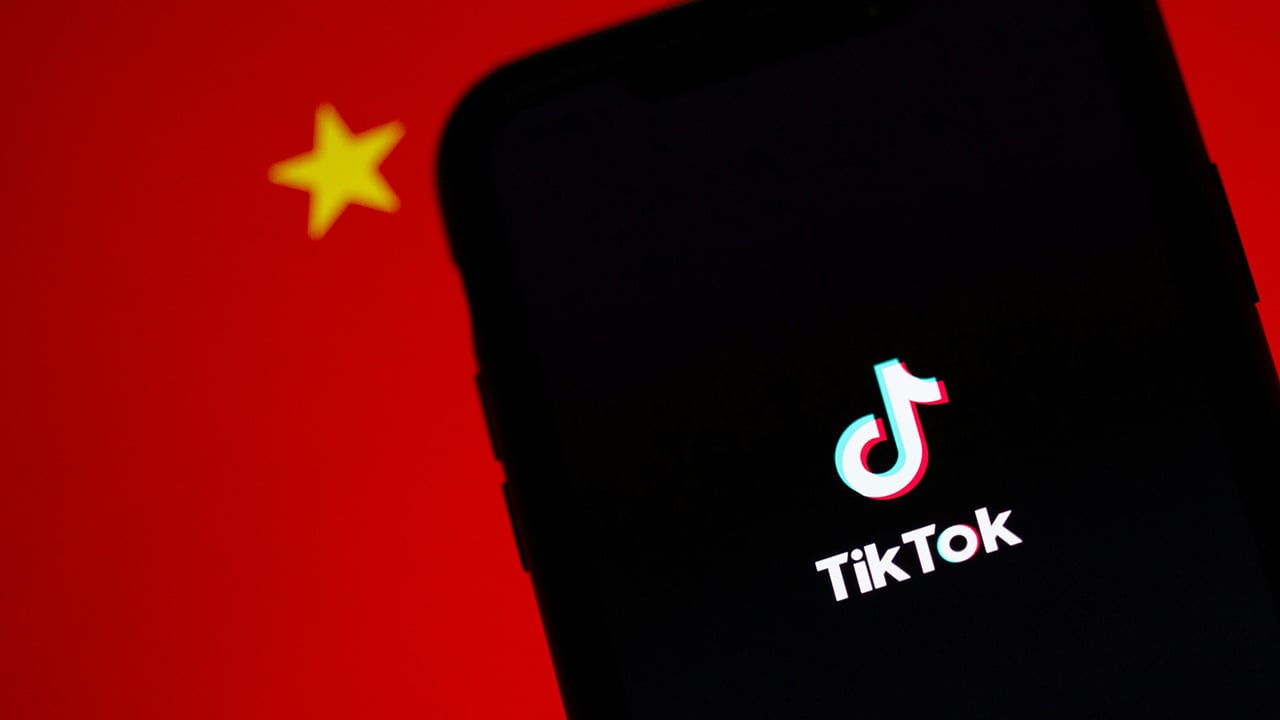
Image by Solen Feyissa on Unsplash
TikTok Remains A Powerful Opponent Against U.S. Government
- Written by Andrea Miliani Former Tech News Expert
- Fact-Checked by Justyn Newman Former Lead Cybersecurity Editor
TikTok is less than 8 years old, but has proven to the most popular social media platforms—and the U.S. government—that it is a very strong contender and that it is more than willing to fight.
The short-form video app was first launched in 2016 as Douyin in China by the tech giant ByteDance. At that moment, Instagram—launched in 2010—had reached 500 million active users.
In 2017 ByteDance officially launched Tiktok, the global version of Douyin, and it now has 1.12 billion users worldwide—170 million in the U.S.— and its main rival Instagram is currently at 1.47 billion. TikTok’s boom has been historically impressive.
Part of its “secret” for success is also its controversial algorithm. Besides being highly addictive for users , the algorithm has also been scrutinized for its data processing and treatment—especially for its links with the Chinese government.
For years, the U.S. government has tried to diminish TikTok’s presence in the country—former president Donald Trump tried to remove it from the app stores in 2020 —but the company remains resilient. And now, Biden’s administration is attacking the platform again as it considers it a national threat.
The new bill to ban TikTok was passed on March 13th. The U.S. House has given TikTok two options: transfer ownership to a non-Chinese company or leave the country. But Tiktok is not ready to surrender. Will the U.S. government finally kick the Chinese company out within the next few months or will the platform keep using its influence and powerful algorithm to prevail?
Counterattacks Against The U.S. Government
TikTok fought back just a few weeks after the bill was passed. “Make no mistake, this is a ban, a ban on TikTok, and a ban on you and your voice,” said Shou Zi Chew, CEO of TikTok in a video in April. And proceeded to take out its powerful weapon: the freedom of expression. “It’s actually ironic because the freedom of expression on TikTok reflects the same American values that make the United States a beacon of freedom” he added.
TikTok has also silent strategies to fight back. The company might not be willing to comply with the selling idea so fast, but Reuters reported that they have been secretly working on a duplicate of its core algorithm meaning they have been exploring different outcomes and scenarios to try to win the battle.
Instagram Takes Advantage
Despite the counterattacks, the effects of the White House’s ban attempts have hurt the video platform. TikTok’s growth started stalling a few months ago. Not only app downloads have been decreasing, but Instagram has now outperformed TikTok in this arena.
Instagram launched its short-video feature “Reels” in 2020—what a coincidence, right?—increasing its monthly active users, and overtaking TikTok with more downloads in 2023. What Instagram hasn’t beaten yet is the time users spend on its app. According to last year’s data, users spend on average 93 minutes on TikTok and 62 on Instagram.
The cloning strategies have been crazy these past few years. Remember when all social media platforms had very different purposes? YouTube launched YouTube Shorts soon after Instagram’s Reels, Snapchat its Spotlight feature weeks later, and even Spotify joined this trend with a redesign for its podcasts and music suggestions in 2023.
Now, TikTok launched two new photo-sharing apps, similar to what Instagram used to be, called TikTok Notes and Whee —in April and in June respectively—, a photo-sharing app, similar to what Instagram used to be.
TikTok’s Influence In The U.S. Market
Taking advantage of the popularity of the hashtag #TikTokMadeMeBuyIt, the company announced its new ‘Deals For You Days’ , a day of offers and discounts, including live video streamings and involving top brands like NYX, L’Oréal Paris, and Maybelline New York. This move shows the company’s relentless efforts to find more territories to conquer and remain relevant in the U.S. market.
Will young Americans be as influenceable as the Asia-Pacific audience? We are about to find out. Of course, TikTok’s decision to create a sales day was not randomly decided. A recent report confirms that Generation Z’s purchase decisions are heavily influenced by TikTok. “Executives we spoke with noted that the fast-paced nature of social commerce platforms such as TikTok, where not just regional, but international trends rapidly come and go, is having a downstream effect on Gen Z’s purchasing behavior and forcing brands to reassess their supply chain strategy.”
According to Forbes , Americans already spend around $7 million shopping on TikTok every day and the company aims to increase that number to $17.5 million this year.
The ambition is still there. Strong.
Despite the attacks and the multiple rivals, TikTok remains afloat and puts multiple strategies into play to remain in the United States. The platform has showcased its power this year and many—including me— are curious and eager to see what happens in the following months, as the time frame from the U.S. government’s ultimatum reaches an end.
Proton Adds Privacy-Safe Google Doc Alternative to Its Productivity Suite
- Written by Shipra Sanganeria Cybersecurity & Tech Writer
- Fact-Checked by Justyn Newman Former Lead Cybersecurity Editor
Proton announced the addition of Docs to its end-to-end encrypted (E2EE) suite of work tools on July 3rd. Dubbed Docs in Proton Drive , this new web-based document editing and collaboration tool offers usual features and functionalities found in online word processing apps.
Proton says its secure and user-friendly Doc is an alternative to established document editing and collaboration tools like Google Doc and Microsoft 365.
“This landmark addition to Proton’s suite of privacy-focused products provides a robust alternative to existing document editors like Google Docs, ensuring that privacy and security are paramount — without compromising on vital features,” Anant Vijay, Senior Product Manager for ProtonMail and Proton Drive said in a blog post.
Documents in Protin Drive seem quite similar to Google Docs, per the first screenshots shared by the company. It comes with standard features such as rich text options, multimedia support, compatibility with multiple file types, and real-time collaboration.
“One thing that we’ve heard a lot from both businesses and also consumers is that they need a document product, because Google Docs is the reason they stay on Google,” Proton founder and CEO Andy Yen told WIRED in an interview. “It will look and feel a bit like Google Docs, because in fact, it’s supposed to be easy for people to adopt.”
However, the thing which separates it from other popular document editing and collaboration tools is E2E encryption. Docs comes protected with end-to-end encryption, which is a standard feature of all Proton products. The company says that only the document’s creator and those they share it with can view the file; Proton cannot access the contents.
The company emphasized that, unlike “Big Tech companies that collect and monetize [user] private information” and use a users’ content to “train privacy-invading AI models,” every Proton Doc, keystroke, file path, and cursor are encrypted in real-time.
The product, set to be available to all users in the coming days, is still in development. Proton also shared with TechCrunch that upcoming features currently in development will soon be accessible, with plans to introduce more robust multi-user collaboration capabilities for both individual and business users (free and paid) in the future.
Following the acquisition of encrypted note-taking app Standard Notes in April this year, the addition of Docs to Proton’s encrypted cloud storage was expected. Proton, a Swiss-based privacy-focused software maker, is renowned for its E2EE webmail service (ProtonMail), VPN, cloud storage, and password manager services.
