Image by Nik, from Unsplash
TikTok Ban Delayed: 75 Days To Assess Security Concerns
- Written by Kiara Fabbri Former Tech News Writer
- Fact-Checked by Justyn Newman Former Lead Cybersecurity Editor
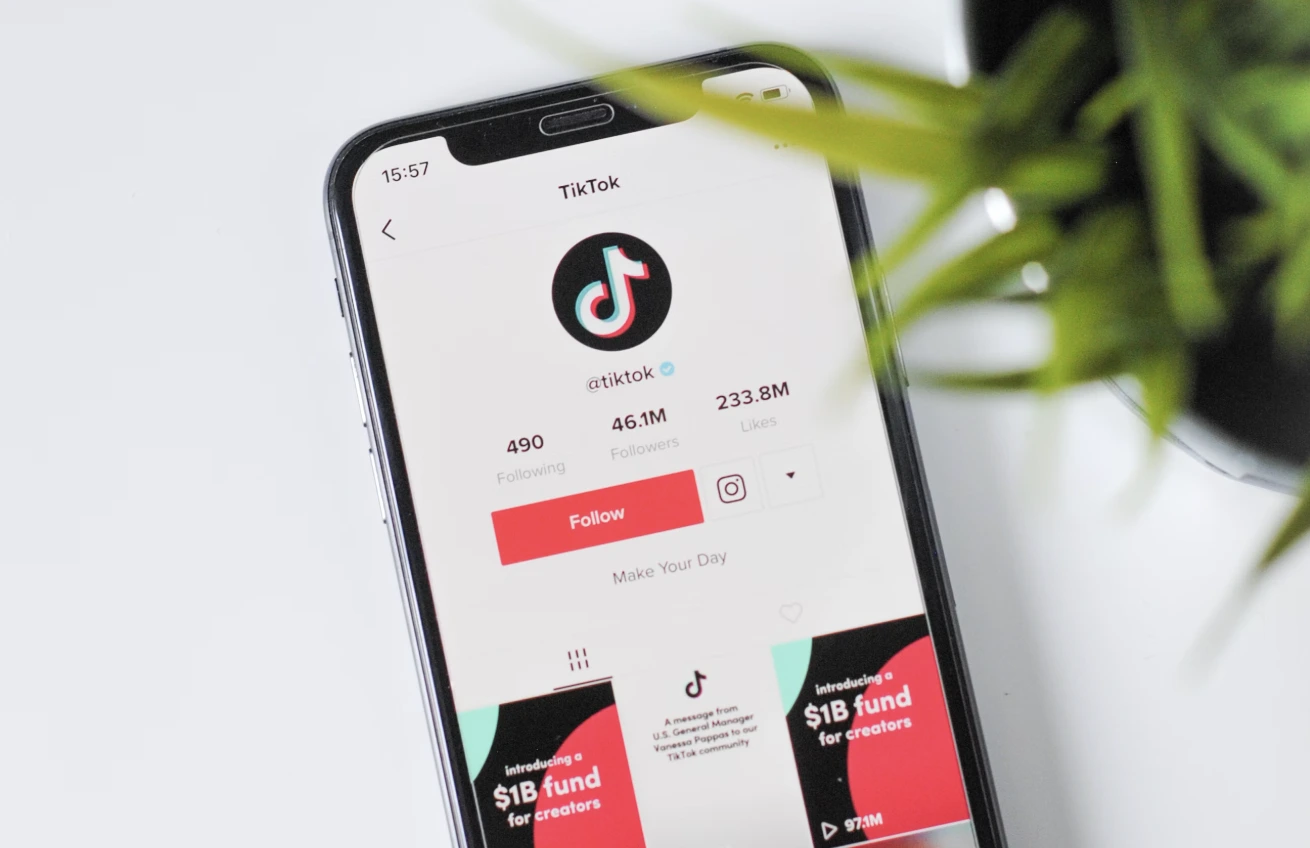
U.S. President Donald Trump has temporarily postponed enforcing the Protecting Americans from Foreign Adversary Controlled Applications Act, aimed at TikTok and other apps connected to its China-based parent company, ByteDance.
In a Rush? Here are the Quick Facts!
- The President delayed TikTok-related enforcement of the Protecting Americans Act for 75 days.
- The delay allows time to assess TikTok’s security measures and explore risk mitigation strategies.
- Companies will face no penalties for pre-delay or delay-period compliance issues.
The Act, effective January 19, 2025, prohibits app stores and hosting services from supporting such platforms, citing national security concerns. In an Executive Order issued today, the President paused enforcement for 75 days. This pause allows his administration to review the risks posed by TikTok.
It also provides time to assess the adequacy of TikTok’s security measures. The administration aims to find solutions that safeguard national security. At the same time, it seeks to maintain access for 170 million American users.
The President criticized the timing of the Act, which took effect just one day before his term began, complicating an immediate response.
During his first term in 2020, Trump issued an executive order banning TikTok. Now, he is attempting to bypass a bipartisan law that took effect on January 19, as noted by The Verge .
The legality of Trump’s efforts to pause the ban remains uncertain. The law permits a 90-day extension if ByteDance announces a sale to a U.S.-based company before the deadline.
However, The Verge notes that no such sale has been announced, and it’s unclear if an extension is possible after the January 19 deadline. Trump is not relying on the extension clause but is instead trying to override the law outright.
According to Reuters , Google Trends data showed a surge in searches for “VPN” after TikTok became inaccessible to U.S. users. Concerns also grew on Instagram about delayed TikTok Shop orders. Marketing firms, caught off guard, scrambled to devise contingency plans after assuming the app’s availability would continue.
TikTok CEO Shou Zi Chew is reportedly planning to attend the presidential inauguration and a Trump rally on Sunday, signaling the platform’s ongoing political and business significance, as reported by Reuters.
Interest in TikTok’s U.S. operations has surged, with suitors such as former Dodgers owner Frank McCourt and Beijing allegedly exploring a potential sale. However, the company has denied reports of negotiations with Elon Musk, according to Reuters.
Separately, The Verge reported that Trump announced the U.S. government could hold a 50% stake in TikTok through a vague “joint venture” with a private company. The details of how such an arrangement would work remain unclear.
Meanwhile, U.S. search engine startup Perplexity AI has submitted a bid to ByteDance to merge with TikTok U.S., aiming to form a new entity with additional partners. ByteDance, TikTok’s parent company, is predominantly owned by institutional investors, with founders and employees each holding 20%, Reuters noted.
The legal implications of delaying the enforcement of the Act remain uncertain as the situation develops.

Photo by Jorge Fernández Salas on Unsplash
Spain Announces $155 Million AI Subsidy Plan to Drive Innovation
- Written by Andrea Miliani Former Tech News Expert
- Fact-Checked by Justyn Newman Former Lead Cybersecurity Editor
Spanish president Pedro Sánchez announced this Monday that the government will invest 150 million euros—around $155 million— in a subsidiary program to help Spanish companies enhance and integrate artificial intelligence. Sánchez also introduced a Spanish open-source AI model called Alia.
In a Rush? Here are the Quick Facts!
- Spanish president Pedro Sanchez announced a 150 million euro program to help companies enhance and integrate AI.
- The government also launched an open-source AI model called Alia, capable of understanding the Spanish context and culture.
- Alia has been trained in Castilian, and the co-official languages Catalan, Basque, Galician, and Valencian.
According to La Vanguardia , Sánchez explained that the government is committed to supporting companies in the development of new technologies, including small and medium-sized enterprises.
“Of these (the 150 million euros), we will soon allocate 20 million to 500 use cases in small and medium-sized enterprises, whose results and experiences will be accessible to our entire network of SMEs, helping to make them a more innovative and competitive ecosystem,” said Sánchez during the HispanIA 2040 event yesterday.
The Spanish president also introduced the new Spanish AI model called Alia, an open-source model trained in Castilian and the co-official languages Catalan, Basque, Galician, and Valencian, spoken in multiple regions in Spain.
According to El País , Alia’s goal is to better understand Spanish context, dialects, expressions, and culture than popular models like ChatGPT, Copilot, or Gemini, which are usually trained in English. Sánchez also announced that the government is already testing the model in two pilot projects: one with the Tax Agency to accelerate bureaucratic processes and another with the Primary Care service to improve early diagnosis of heart failure.
As a government, Spain’s initiative stands out in the region with its focus on linguistic diversity and open-source accessibility.
Other powerful open-source models have also been released recently. The Chinese AI company DeepSeek launched its latest open-source AI model, DeepSeek-V3 , a few days ago, and Alibaba unveiled its Qwen 2.5 open-source models a few months ago.
