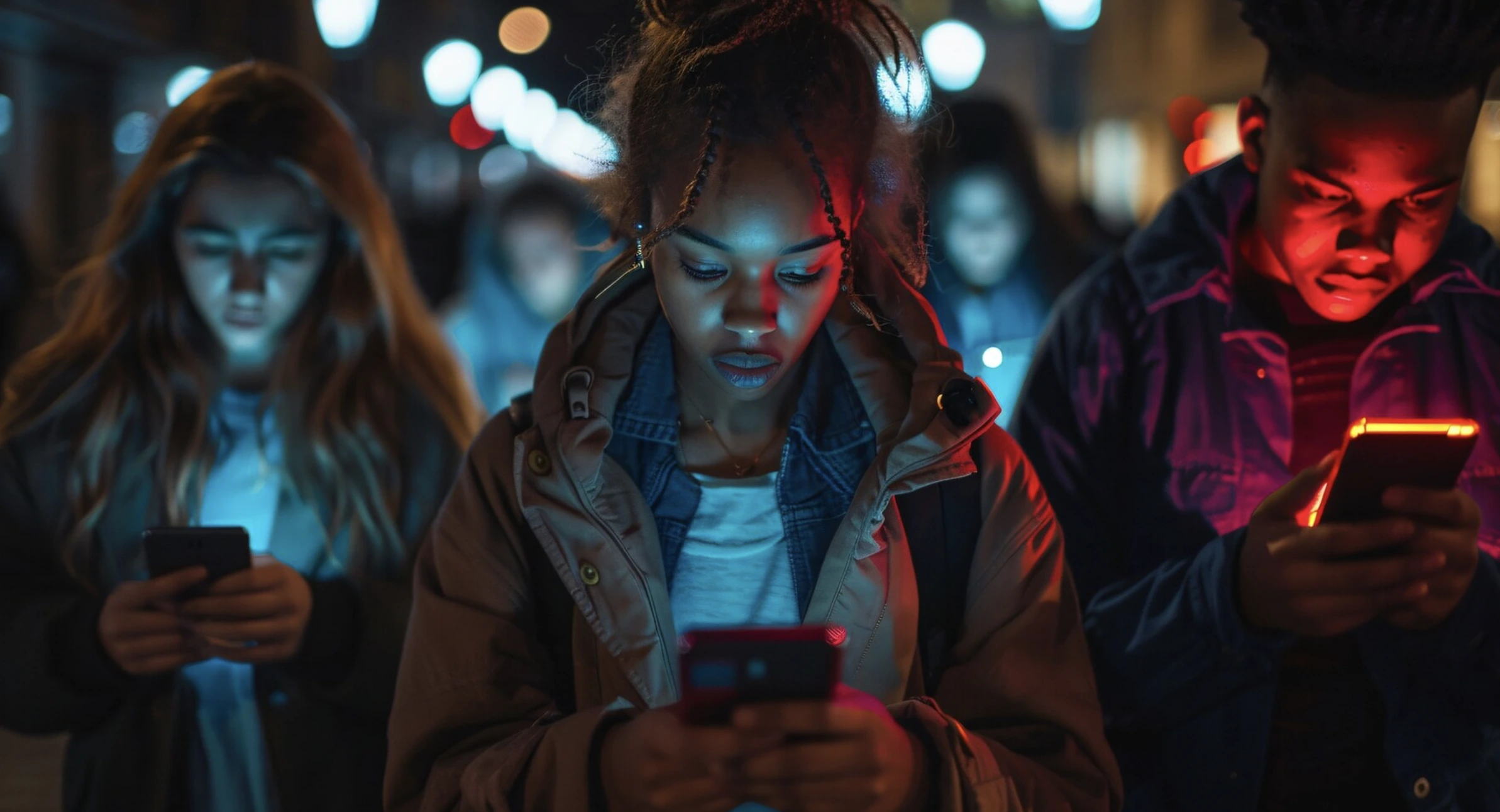
Image from Freepik
TikTok Accused Of Deliberately Making Its Platform Addictive For Young Users
- Written by Kiara Fabbri Former Tech News Writer
- Fact-Checked by Justyn Newman Former Lead Cybersecurity Editor
In a Rush? Here are the Quick Facts!
- Thirteen U.S. states and D.C. are suing TikTok over child safety violations.
- Washington D.C. alleges TikTok illegally manages money through virtual features.
- Critics argue TikTok’s safety measures are weak and easily bypassed by children.
TikTok is facing lawsuits from 13 U.S. states and Washington D.C., alleging that the platform harms young users by failing to protect them adequately. According to Reuters , the lawsuits claim that TikTok’s software is intentionally designed to keep children engaged for long periods, fueling concerns about social media addiction.
This addictive nature is central to the allegations, with critics arguing that TikTok targets children, boosting the company’s profits by exploiting users’ time on the app.
California Attorney General Rob Bonta has been vocal in criticizing the app, stating that TikTok is designed to create addiction in young users, who are less equipped to establish healthy boundaries with social media.
Moreover, the lawsuits claim that TikTok’s goal is to maximize user engagement in order to increase advertising revenue, regardless of the potential negative effects on children, reported Reuters.
New York Attorney General Letitia James emphasized that young people’s mental health is being adversely affected by the addictive design of platforms like TikTok, reported Reuters.
Further accusations include the charge that TikTok facilitates the sexual exploitation of minors through its live streaming system. Reuters reports that Washington state’s lawsuit likened TikTok’s live streaming and virtual currency to an unregulated adult venue, allowing such behavior without proper age restrictions.
In response, TikTok has strongly denied the allegations, claiming they are inaccurate and misleading. The company expressed disappointment in the states’ decision to pursue legal action rather than collaborate on industrywide solutions to improve safety, as reported by Reuters.
Further legal claims include accusations from Washington D.C. that TikTok operates an unlicensed money transmission business through its live streaming and virtual currency features, as noted by Reuters.
Washington state’s lawsuit adds that these features enable the sexual exploitation of minors, equating the platform to a virtual strip club without age restrictions, according to Reuters.
The Washington Post (TWP) notes that TikTok has implemented stricter privacy and safety measures for its youngest users. Children under 13 are directed to a separate version of the app that features stronger safeguards, and the platform has also imposed limitations on how teenagers interact with the site.
Despite these efforts, critics argue that TikTok’s safety measures, such as screen time limits, are insufficient. TWP reports that California Attorney General Rob Bonta dismissed some of TikTok’s changes as “empty gestures,” saying they are easily circumvented by children.
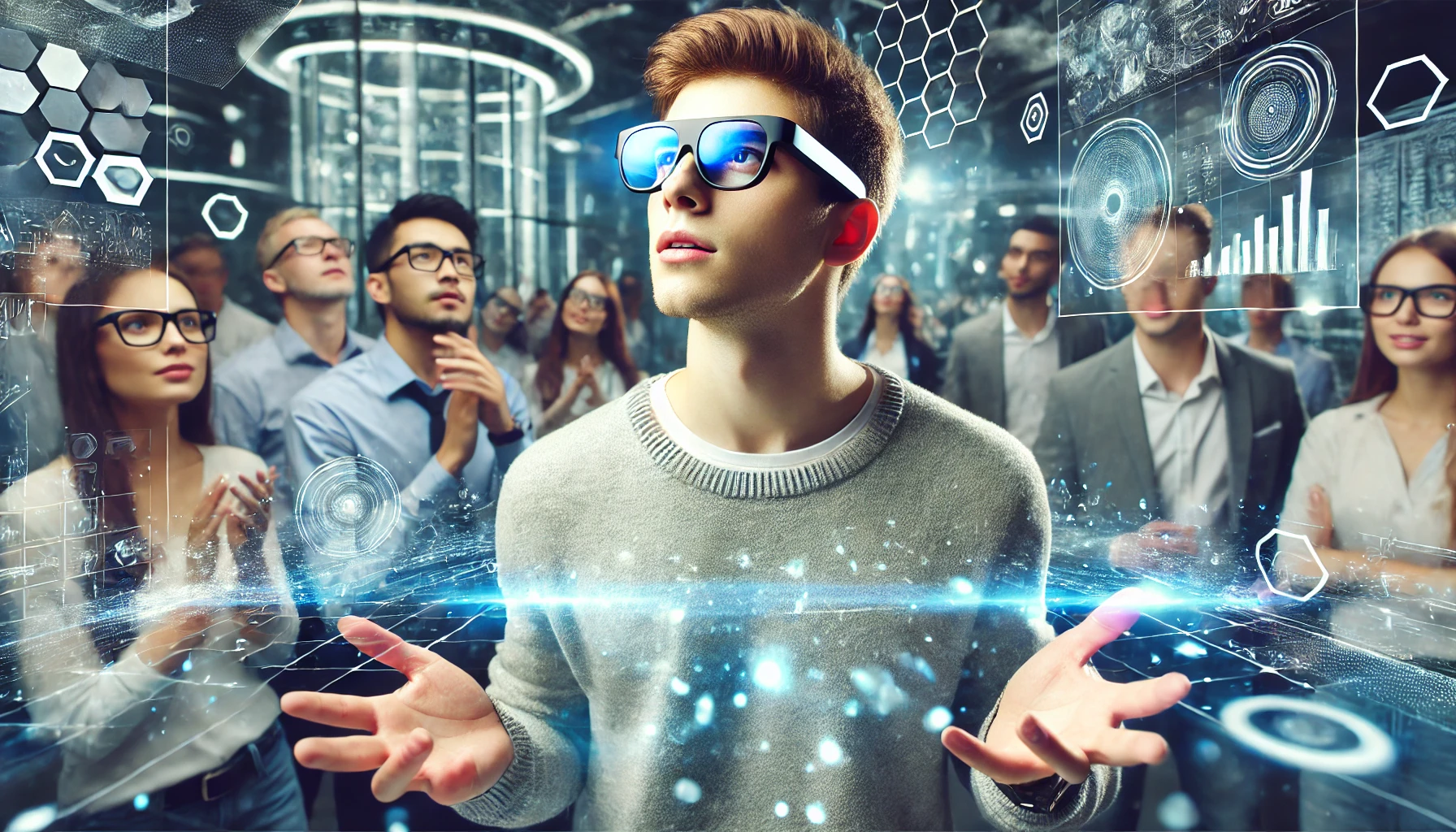
Image generated with DALL·E through ChatGPT
Opinion: We’ll All Be Wearing Smart Glasses Soon, The Intellectual Look of the Future
- Written by Andrea Miliani Former Tech News Expert
- Fact-Checked by Justyn Newman Former Lead Cybersecurity Editor
The tech gurus are saying that our society’s posture is about to change: we will not be hunched over our phones all day, we will be wearing all the information we need in our brand-new and AI-powered smart glasses.
It’s hard to imagine a near future where we are not constantly taking selfies, walking to our destinations tracking Google Maps’ routes on a screen, or talking to our loved ones through that precious device we keep glued to our hands. But all the big tech companies assure it’s happening soon. And they are heavily investing in it.
Only in September, Snap launched its new AR glasses Spectacles , Samsung and Google announced a new partnership with Qualcomm to build new smart glasses, and Meta just introduced its latest augmented reality smart glasses called Orion . So, what’s happening?
Looking Up to the Future
Are we all going to be comfortable wearing smart glasses? Unfortunately, recent studies say we probably will have to as 1 in 3 children worldwide is nearsighted , but besides the medical needs, the recent devices seem to have fascinating features and benefits that could make us go for the intellectual look.
The new AI-powered glasses now include augmented reality options that can show us emails and messages while we wash the dishes, or take pictures while our hands are busy holding the car wheel or swinging a bat while playing baseball.
We can now control smart glasses by hand gestures—with the help of sensors in a bracelet— and even with our eyes as the new technologies can track eye movements.
From workout guidance at the gym to helping us correct our posture, these smart devices can act as powerful tools for a healthier or enhanced lifestyle, and even assist surgeons during operations and complex procedures. The possibilities seem unlimited.
Smart Glasses vs. Headsets And Smartphones
The times when it was all going mobile seem to be staying in the past, as well as the already futuristic virtual reality headsets. We saw how phones could take over infinite tasks that we used to be able to do only through our computers, and are now seeing a transition from virtual reality to augmented reality and a fascinating mix between both.
AR VR headsets have been evolving—in price and technology—for the past few years. However, despite the viral videos of people wearing them to go to the gym, to eat at restaurants, or around the city, many remain skeptical about whether or not it is ok wear these devices in public for safety reasons and for how they look—many users on social media have called it dorky and silly.
While the AR VR headsets can provide an immersive experience like no smartphone has been able to—no matter how absorbed we can get while looking at the screen—, they are still too flashy and that’s when the smart glasses gain points.
Smart glasses look like regular glasses, just a little bigger—for the moment—, and people are already used to seeing others wear glasses, so it looks more “natural.” These devices are more discrete and provide a “more present” experience as Mark Zuckerberg tried to emphasize during a recent interview with journalist Cleo Abram .
“The main value we are trying to add is this feeling of presence,” said Zuckerberg, while he also explained that the new models will be cheaper and lighter and will include more features than ever: holograms, eye tracking, cameras, microphones, speakers, batteries, and sensors to capture everything inside a simple structure.
Whether or not the “being more present” wearing these glasses is an illusion—many, including science, consider that multitasking is not as effective as people believe —what is certain is that the glasses are easier to wear compared to smartphones and do feel more familiar than headsets.
Is Now The Right Time?
The smart glasses idea is not new. It has been pitched before and it failed terribly. Google first announced Google Glass in 2012 —yes, twelve years ago—and Dyson designed a prototype in 2001 . What is different now?
A few of the reasons why these futuristic devices failed are still in the equation in our present, like privacy and ethical concerns. Something the big tech companies seem to be ignoring or at least not paying too much attention to. These discrete devices recording and observing everything so easily do raise a few red flags.
But there is, of course, our new favorite ingredient for all the new technologies: artificial intelligence. Not only AI as a more developed and advanced technology with new modern large language models but also as a more adopted technology.
OpenAI recently announced that they have over 200 million weekly users across the globe, so the use of ChatGPT is not only more common for more people, but it’s becoming an essential and day-to-day tool. On top of this, OpenAI also started to roll out the voice feature, so it won’t be too different talking to a phone, than talking to glasses. Right?
Another new difference is prices. While Google Glasses started at $1,500, accessible to a reduced amount of the population, the new devices developed by Snap or Meta have significantly reduced costs, making them more accessible to a larger audience.
However, the latest models are not even ready for sale yet, they have just been introduced and pitched to the world. Only time will tell if we are now ready to wear these devices, if our posture and health will improve, or if the challenges smart glasses have been facing for years are still there and we are not ready to adopt them yet.
