
Everton, from Goodfon.com
Therapeutic Benefits of Video Games In Patients With Schizophrenia
- Written by Kiara Fabbri Former Tech News Writer
- Fact-Checked by Justyn Newman Former Lead Cybersecurity Editor
In a recently published research paper by the University Medical Center Humburg-Eppendorf in Germany, it was reported that video game training can enhance cognitive functions and neuronal plasticity in patients with schizophrenia.
The research team, led by Maxi Becker, investigated this by recruiting 95 patients with schizophrenia and compared them to a group of 82 healthy controls. Participants were randomly divided into three groups: playing a 3D video game (Super Mario 64), a 2D video game (New Super Mario Bros), or reading ebooks (active control group with a choice of 13 books). Everyone participated in their assigned activity for 30 minutes each day for eight weeks.
Before and after the eight-week period, researchers assessed participants’ cognitive function and mental health. They also used functional magnetic resonance imaging (fMRI) to measure changes in brain connectivity.
Overall results were promising. Both 2D and 3D video game groups showed significant improvements in sustained attention compared to the control group.
These improvements were correlated with enhanced functional connectivity between the hippocampus and prefrontal cortex (HC-PFC), areas of the brain essential for attention and executive function . This result is particularly relevant since disrupted HC-PFC connectivity has been consistently associated with cognitive impairment in schizophrenia.
Notably, the study also reported improvements in negative symptoms and general psychopathology, as measured by the PANSS scale , which includes factors such as depression, anxiety, and disturbances in volition, among others. The patients also reported feeling a greater sense of mental health recovery compared to the control group.
While the exact mechanism for this effect is unclear, the researchers suggest it may be due to the overall demands of the video games. These include continuous and goal-oriented interaction, incentives and gamification elements, and the rewarding aspects that could potentially boost dopamine levels in the brain. Notably, dopamine deficiency in the prefrontal cortex is suspected to be linked to negative symptoms in schizophrenia.
Moreover, the researchers acknowledged that the video game intervention’s effects were not significantly different between the 2D and 3D conditions, suggesting that the specific type of game may be less important than the general cognitive engagement it provides. While the findings are promising, the authors acknowledge some limitations. For example, the sample size, which was reduced due to dropouts, particularly among patients with more severe symptoms. This suggests that future studies might benefit from focusing on more stable patients or even including high-risk individuals.
Additionally, the observed effects were modest, indicating that video games should be seen as a complementary treatment alongside medication and therapy, not a standalone solution. Further research is needed to fully dissect the mechanisms at play and explore the potential benefits for this broader population.
Overall, this study provides initial evidence that video game training can be a beneficial intervention for schizophrenia. It offers a low-cost, engaging, and potentially effective tool to improve cognitive function, reduce symptoms, and promote mental health recovery in patients with schizophrenia. Future research can further explore its potential and refine its use for this complex mental disorder.
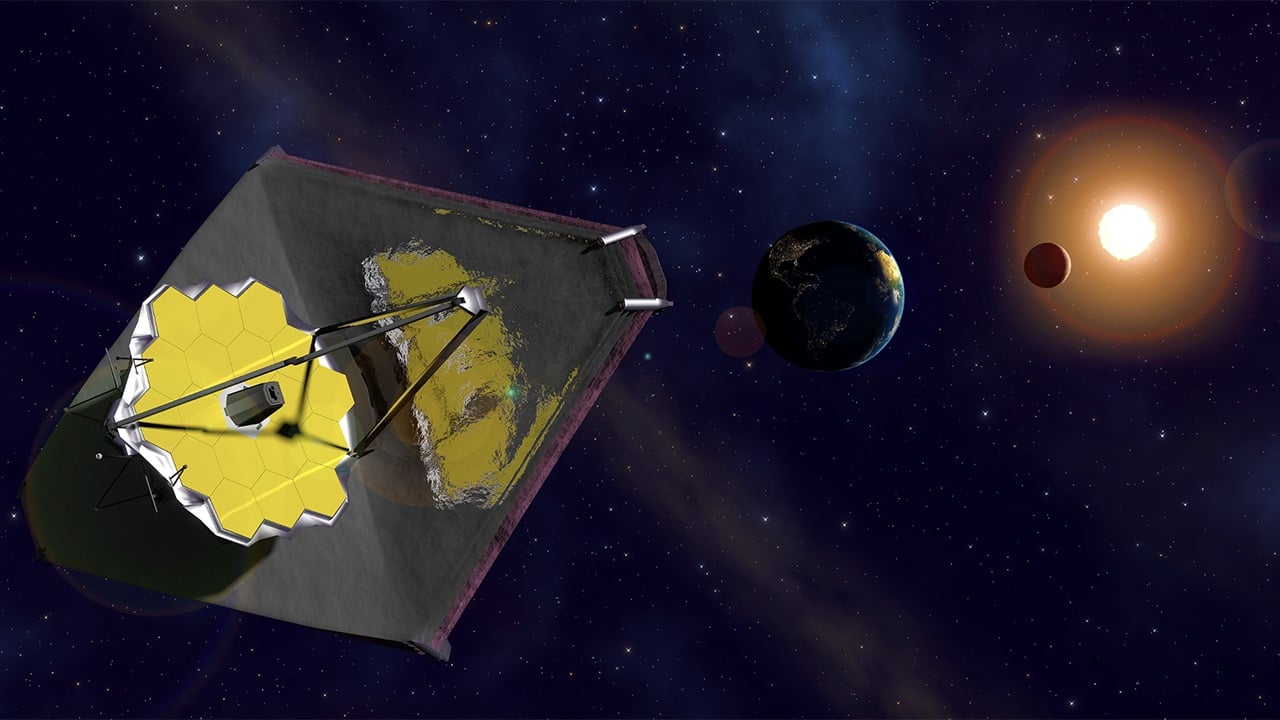
Image by Kevin Gill, from Flickr
Webb Telescope Discovers Elusive Ice In Space
- Written by Kiara Fabbri Former Tech News Writer
- Fact-Checked by Justyn Newman Former Lead Cybersecurity Editor
Scientists using the James Webb Space Telescope (JWST) have made a new discovery. A type of ice previously only observed in labs has been found in space for the first time. The results of their observations were published this week in Nature Astronomy. This “fluffy ice” could hold the key to understanding the chemistry that led to life on Earth.
Normal ice has a tightly packed structure, but this interstellar ice is different. It’s less compact, similar to powdery snow. This allows some water molecules to have “dangling bonds.”
Imagine a water molecule (H2O) with two hydrogen atoms. In regular ice, both hydrogens are firmly linked to the central oxygen. However, in this unusual ice, one hydrogen might not be fully bonded, leaving it dangling outwards.
These dangling bonds create unique light signatures detectable in labs. However, these specific light frequencies are absorbed by Earth’s atmosphere, making it difficult to find them in space.
A team led by astronomer Jennifer Noble from Aix-Marseille University used the JWST’s powerful infrared spectrometer to peer into the star-forming region Chamaeleon I cloud, located roughly 500 light-years away.
They detected two specific light frequencies remarkably similar to those observed in lab-made dangling bond ice. One signature likely represents light reflected directly by the ice, while the other could be from ice interacting with other molecules like carbon monoxide.
Understanding how this special ice behaves is crucial for comprehending the formation of planets and the complex organic molecules essential for life.
“Our results provide insights into the initial, dark chemistry stage of the formation of ice on the interstellar dust grains that will grow into the centimeter-sized pebbles from which planets form in disks,” said Melissa McClure, an astronomer at Leiden Observatory in the Netherlands and the principal investigator of the observing program, as well as the lead author of the paper detailing this discovery. “These observations open a new window on the formation pathways for the simple and complex molecules that are needed to make the building blocks of life.”
Martin McCoustra, who played a part in the first lab detection of dangling bonds in ice nearly 30 years ago, expressed excitement about this discovery. New Scientist reports how Martin emphasizes the importance of understanding these bonds: “These little icy snowballs are essentially the chemical nanofactories in which complex organic molecules can be made.”
This research is a part of the Ice Age project, one of Webb’s 13 Early Release Science programs. These observations aim to demonstrate Webb’s observing capabilities and help the astronomical community maximize the use of its instruments. The Ice Age team has already scheduled additional observations and aims to trace the journey of ices from their formation to the assembly of icy comets.
