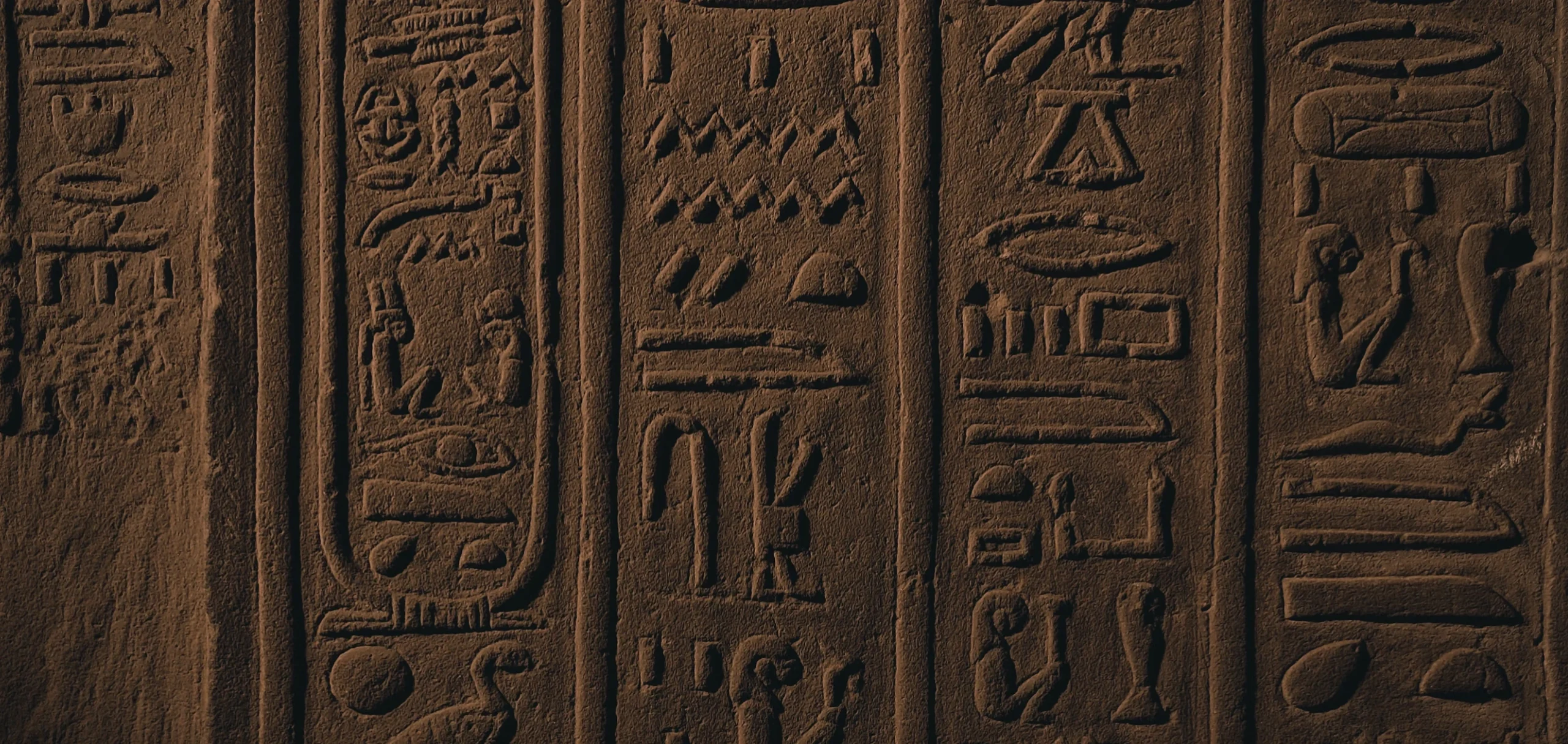
Image by Ahmed Assem, from Unsplash
The Future Of Archaeology: AI Decodes Ancient Scripts
- Written by Kiara Fabbri Former Tech News Writer
- Fact-Checked by Justyn Newman Former Lead Cybersecurity Editor
AI is increasingly being harnessed to unlock the mysteries of ancient texts, offering a new approach to reading and interpreting historical documents that were previously indecipherable.
In a Rush? Here are the Quick Facts!
- AI is improving translations of historical records.
- AI neural networks aid in reading fragmented ancient documents by filling missing characters.
- Tools like Ithaca restore gaps in ancient inscriptions with more accuracy than humans alone.
From deciphering burnt Roman scrolls to reading faded cuneiform tablets, AI techniques are opening doors to ancient archives, potentially rewriting parts of history. A recent review in Nature highlights the Vesuvius Challenge, a project using AI to read scrolls from the ancient Roman villa in Herculaneum, buried by Mount Vesuvius’ eruption in AD 79.
The scrolls, carbonized by the eruption, have been impossible to open without damaging them. For centuries, scholars have been forced to abandon attempts to read many of these texts.
However, AI is now allowing researchers to see beyond the damage. In October 2023, papyrologist Federica Nicolardi was sent an image of a fragment of a papyrus scroll with visible Greek lettering, a breakthrough that revealed entire lines of text that had been inaccessible for 2,000 years.
“It was incredible,” says Nicolardi. “I thought, ‘So this is really happening.’” She realized then that papyrology had changed forever. “In that moment, you really think ‘now I’m living something that will be a historical moment for my field,’” as reported by Nature.
This breakthrough is part of a broader trend where AI neural networks are being applied to a range of ancient texts, including Greek, Latin, and Chinese Oracle Bone Script.
Nature explains that these networks are trained to recognize patterns in images of ancient writings, helping researchers fill in gaps where characters are missing or damaged. AI can analyze texts more quickly and accurately than humans, allowing scholars to process large volumes of ancient documents and potentially identify patterns that would otherwise go unnoticed.
Nature explains that the technology is based on deep learning models, particularly convolutional neural networks (CNNs) and recurrent neural networks (RNNs).
CNNs capture grid-like data from images, aiding optical character recognition, while RNNs process sequential data, ideal for reconstructing transcribed texts. CNNs are used for analyzing visual data like eroded lettering, while RNNs suggest missing characters in historical documents.
A key development is the creation of tools like Ithaca , a machine learning model designed to suggest missing parts of ancient inscriptions. Ithaca has been able to restore gaps in texts with greater accuracy than human specialists alone.
Nature reported that when paired with human expertise, the model’s suggestions improve the restoration process even further. Ithaca’s creators believe that such AI models could transform the way scholars approach the study of ancient texts.
Nature explains that beyond individual projects, AI is also being used to tackle vast archives of historical data.
In South Korea, for example, researchers are using AI to translate records from the Joseon dynasty, written in Hanja, an ancient writing system. The AI’s translations have proven to be more accurate than earlier efforts, highlighting the potential for AI to transform historical research.
Nature also reports that AI is also being applied to languages with only fragmentary records. In Crete, for instance, AI is being used to restore missing text from Mycenaean tablets written in the Linear B script. Researchers hope to expand this approach to decipher Linear A, a related but still undeciphered script.
The use of AI to read ancient texts is still in its early stages, but it promises to be a powerful tool in uncovering forgotten histories. As technology continues to advance, AI may soon allow researchers to access vast swathes of historical data that were previously out of reach, changing our understanding of the ancient world.

Image by Kelly Sikkema, from Unsplash
DoubleClickjacking: How A New Cyberattack Targets User Interactions
- Written by Kiara Fabbri Former Tech News Writer
- Fact-Checked by Justyn Newman Former Lead Cybersecurity Editor
Cybersecurity expert Pablos Yibelo has announced today DoubleClickjacking, a web attack leveraging double-click timing to deceive users into executing sensitive actions on websites.
In a Rush? Here are the Quick Facts!
- DoubleClickjacking exploits the timing gap between two clicks in a double-click sequence.
- It enables unauthorized actions, including account takeovers and permission grants on OAuth platforms.
- Browser extensions and mobile apps are also vulnerable to DoubleClickjacking attacks.
Pablos Yibelo explains that the DoubleClickjacking technique expands on the well-known “ clickjacking ” technique. This attack manipulates user interface interactions to bypass protections such as X-Frame-Options headers and SameSite cookies, potentially affecting a wide range of websites.
Yibelo explains that DoubleClickjacking works by exploiting the timing between two clicks in a double-click sequence. The attack typically begins with a user interacting with a webpage that opens a new window or displays a prompt.
The first click closes the newly opened window, revealing a sensitive action page—such as an OAuth authorization screen—in the original browser window. The second click then unintentionally authorizes a malicious action or grants access to unauthorized applications.
This method leverages the brief delay between “mousedown” and “click” events, bypassing traditional security measures. Its impact is substantial, enabling attackers to perform actions such as gaining access to accounts, altering settings, or conducting unauthorized transactions, says Yibelo.
Many platforms using OAuth for authentication are particularly vulnerable, as attackers can exploit this method to obtain extensive permissions on user accounts.
The risks extend beyond websites, with browser extensions and mobile applications also susceptible. Examples include scenarios where cryptocurrency wallets or VPN settings could be manipulated without the user’s awareness, as noted by Yibelo.
Here Yibelo gives an example of a Slack account takeover:
The attack’s simplicity—requiring only a double-click—makes it difficult to detect and prevent. To mitigate the risks, Yibelo says that developers can implement JavaScript-based protections that disable critical buttons until intentional user actions, like mouse movements or keyboard input, are detected.
Yibelo says that this approach adds a layer of verification, ensuring that sensitive actions cannot occur without deliberate user engagement. Over time, browser developers may adopt more robust solutions, such as introducing specialized HTTP headers to prevent context-switching during double-click interactions.
DoubleClickjacking highlights the evolving challenges in web security. By exploiting minor user interaction patterns, it underscores the need for continuous updates to security practices and protections.
