
Image by Mohammed Hassan, from Pxhere
Texas Law Protecting Children Online Partially Blocked
- Written by Kiara Fabbri Former Tech News Writer
- Fact-Checked by Justyn Newman Former Lead Cybersecurity Editor
A federal judge has issued a partial block on Texas’s SCOPE Act. The law, aimed at regulating minors’ online access, was set to take effect on September 1st. The judge halted it just before its implementation, citing concerns over free speech. as reported today by The Verge .
On Friday, August 30th, a federal judge in Texas issued a last-minute injunction against key provisions of the Securing Children Online Through Parental Empowerment (SCOPE) Act, a law that would have imposed stringent requirements on web services to monitor and filter content accessible to minors, states The Verge.
The law, which was set to take effect on September 1st, mandates that large online platforms like social media sites take steps to verify users’ ages, restrict data collection, ban targeted advertising for minors, and prevent their exposure to harmful content.
Judge Robert Pitman’s ruling came in response to lawsuits from tech industry groups NetChoice and the Computer & Communications Industry Association (CCIA), as well as the Foundation for Individual Rights and Expression ( FIRE ), who argued that the law posed a significant threat to free speech, notes The Verge.
The judge agreed that the law’s “monitoring and filtering” requirements were overly broad and could lead to unconstitutional censorship, especially since terms like “promoting,” “glorifying,” and “grooming” were left undefined, opening the door to selective enforcement.
The Verge reports that judge Pitman criticized the law for potentially blocking minors from accessing important information or participating in discussions on controversial topics, while pointing out the inconsistency in its application.
For instance, while teenagers could read about physician-assisted suicide in a book available on Google Books, they might be prohibited from watching a related lecture on YouTube.
While the judge’s ruling stops the enforcement of these provisions, other parts of the SCOPE Act will still go into effect. These include rules that limit data collection on minors and require age verification on platforms with significant amounts of adult content, as reported by Click2Houston (C2H).
The SCOPE Act also introduces measures to enhance consumer protection, such as preventing online platforms from listing fraudulent or dangerous products and increasing transparency about sellers on these platforms, notes C2H.
C2H reports that exemptions within the SCOPE Act include state agencies, small businesses, financial institutions, and digital service providers offering limited services like email or direct messaging. Additionally, internet service providers and search engines are generally exempt unless they are directly responsible for creating harmful content.
The law reflects growing concerns over the safety and reliability of digital marketplaces, especially regarding third-party sellers. Although the legal fight over the SCOPE Act is ongoing, the partial block highlights the challenges of balancing child protection with the preservation of free speech online.
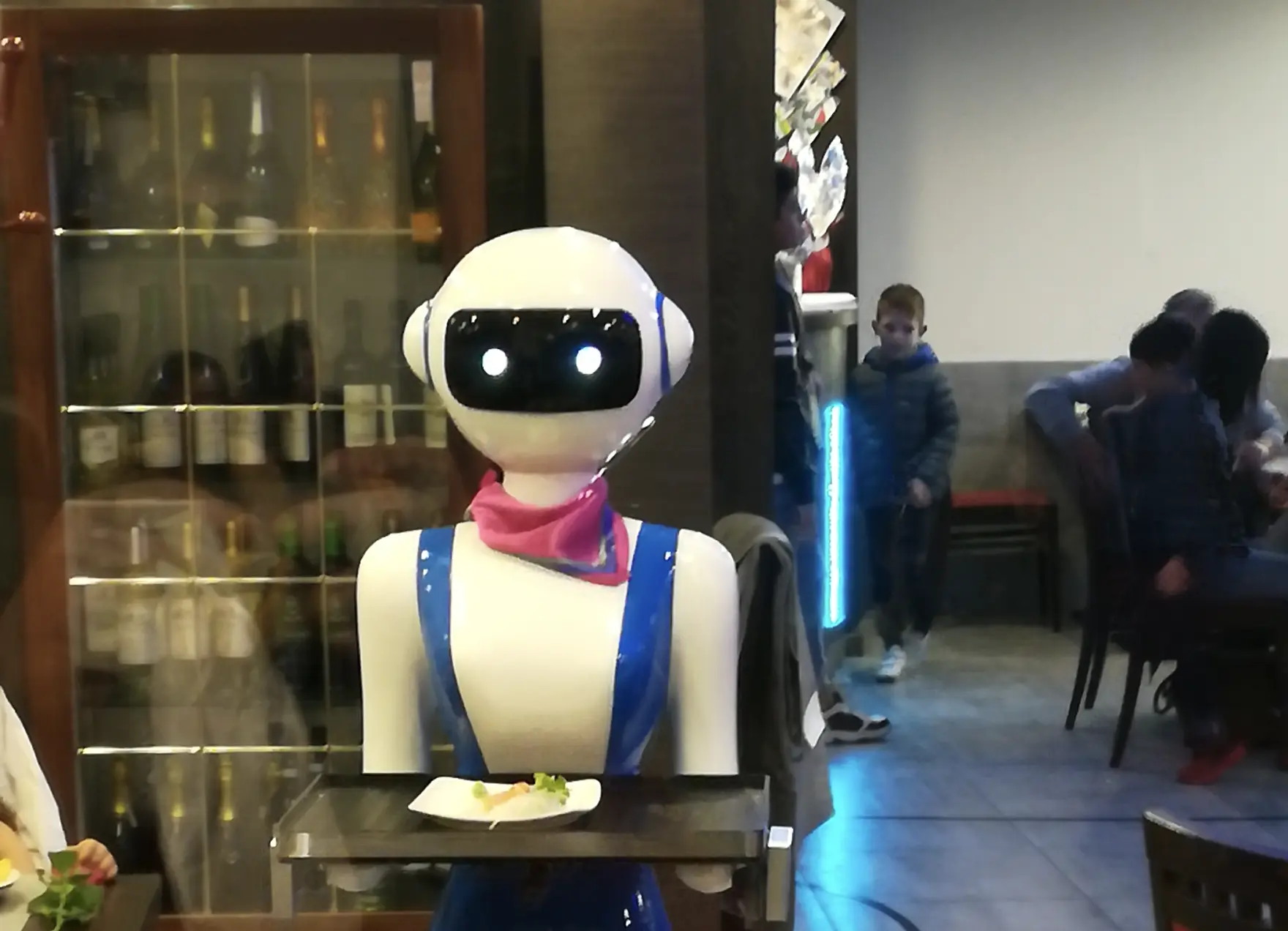
Image by Tiguliano, from Wikimedia Commons
Robotic Waiters in Nairobi
- Written by Kiara Fabbri Former Tech News Writer
- Fact-Checked by Justyn Newman Former Lead Cybersecurity Editor
Kenya’s first robotic cafe is making waves in Nairobi, drawing in both locals and tourists eager to experience this new dining concept. The cafe, called “ The Robot Cafe ,” reflects the city’s growing reputation as a tech hub, known as the “Silicon Savanna,” as first reported on Sunday by the AP .
The AP notes that the three robots aren’t fully autonomous and aren’t equipped for full conversations with customers, but they do announce, “Your order is ready, Welcome,” when the food is prepared. After customers retrieve their meals from the robot’s tray, they need to press an exit button. The robots are operated by waiters using an iPad application.
View this post on Instagram A post shared by Robot Cafe (@robot_cafe_ke)
Human waiters remain an essential part of the operation, taking orders, serving drinks, and ensuring customer satisfaction. “At no point are the robots able to fully function in all the services that are supposed to be ongoing in the restaurant without the human touch,” said to the AP John Kariuki, the cafe’s manager.
The AP reports that the preprogrammed robots were initially brought in as an entertainment feature. Cafe owner Mohammed Abbas, who had encountered robot service in Asian and European countries, decided to make the investment. “Importing the robots was very expensive,” he admits, but notes that the decision has paid off, as the restaurant is “often busy with curious customers” eager to experience the unique service.
The introduction of robotic service in the hospitality industry raises questions about the future of human labor. The AP highlights that this technology is expected to disrupt the global workforce, with a particularly strong impact in Africa, where the median age is just 19 years.
Edith Ojwang, a hospitality expert, noted to the AP, “The hospitality industry is very diverse. We have clients who will prefer robotic service and full automation, while we also have clients who will prefer human service, the human touch and warmth that comes with human service.”
As Kenya’s tech industry continues to grow, innovations like the Robot Cafe offer a glimpse into the future of service, where technology enhances, rather than replaces, the human touch.
