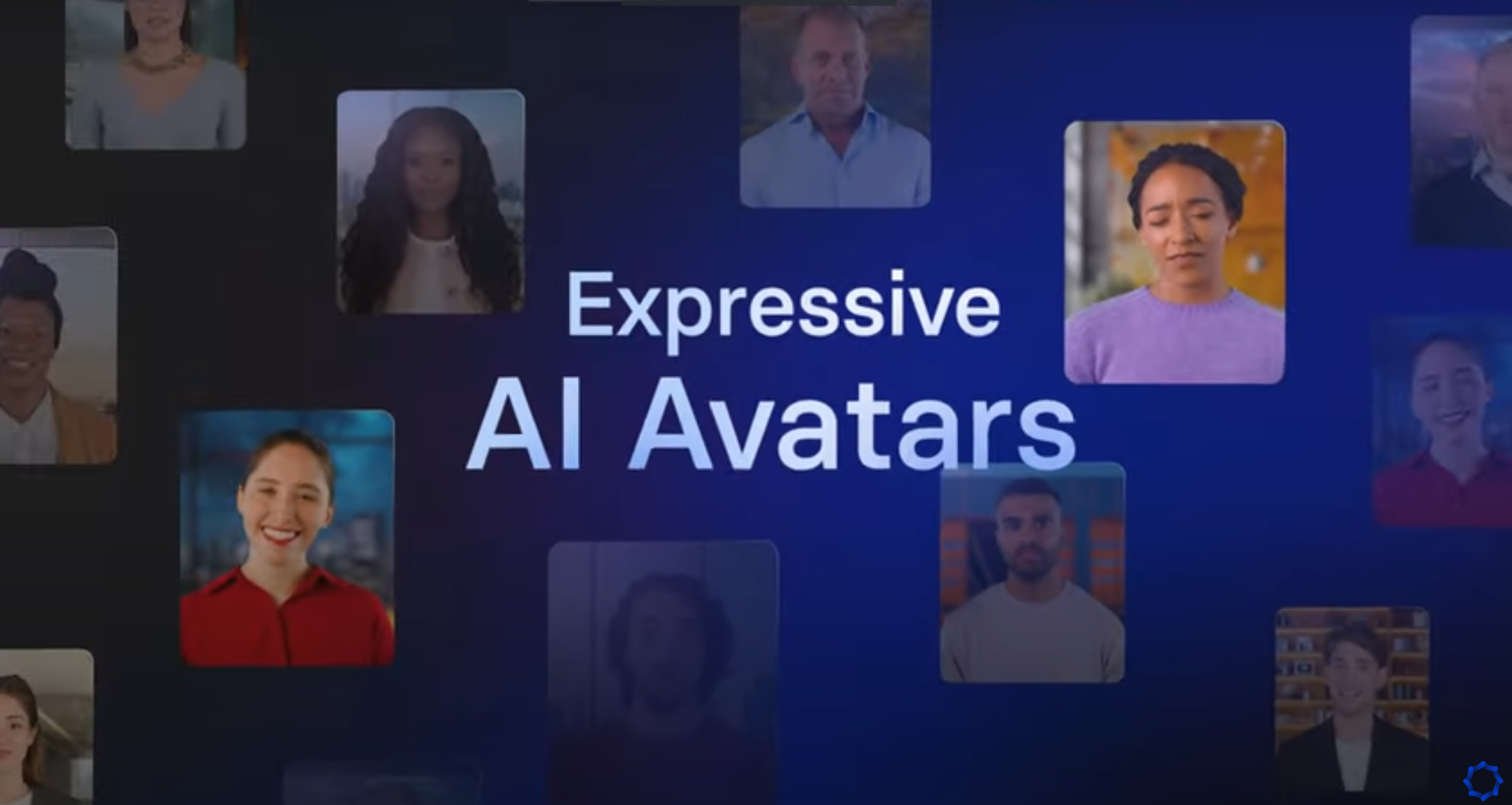
Synthesia Unveils AI Avatars Capable of Expressing Human Emotions
- Written by Deep Shikha Content Writer
- Fact-Checked by
Nvidia-backed startup Synthesia has launched its 4th generation of AI avatars, now with the ability to express human emotions. Unveiled in a blog post on April 22, these avatars are meant to enhance corporate video communications by delivering performances with lifelike tones and body language in real-time, based on textual inputs.
Synthesia’s technology includes 225 avatars, which have already been used by more than 200,000 people to generate 18 million+ video presentations in 130 languages.
In a demonstration that can be seen in the blog post, Synthesia inserted three lines of text into its platform: “I am happy. I am sad. I am frustrated.” The AI actor delivers each line with an emotion-specific tone and facial expression.
Synthesia’s latest innovation, termed “Expressive Avatars,” is powered by their new EXPRESS-1 model. The model enables these digital personas to convey a wide range of human emotions effectively, from happiness to frustration, through voice and facial expression synchronization.
The firm’s avatars have been implemented in over 55,000 businesses globally, including half of the Fortune 100 companies, to create corporate presentations and training videos, according to CNBC.
According to Synthesia, this technology aims to transform professional video production by reducing costs and resource requirements. This approach removes the need for cameras, microphones, and traditional actor-based setups, streamlining content creation.
Synthesia has also implemented stringent controls to ensure its platform is not used for disinformation. Synthesia is part of the Coalition for Content Provenance and Authenticity, an alliance of AI firms working to add credentials and digital “watermarks” to AI-generated content in order for it to be easily identified as AI-generated and not human-made, reports CNBC .
Synthesia states that these avatars could play a crucial role in onboarding and training within companies. They could simulate lifelike interactions in virtual settings, providing new employees with a dynamic and engaging way to learn about their roles and the company culture.
Meta to Bring New Education Product to Quest VR Devices
- Written by Shipra Sanganeria Cybersecurity & Tech Writer
- Fact-Checked by
Meta announced that it is set to launch a new education product for its Quest VR headsets later this year. By leveraging its metaverse technologies like virtual, mixed, and augmented reality, Meta aims to transform conventional teaching and learning experiences.
Aimed at teachers, trainers, and administrators, it will enable seamless management of multiple Quest devices in any educational setting, eliminating the need for individual device preparation and updates. Additionally, educators would have the ability to access “education-specific apps and features,” wrote Nick Clegg, Meta’s president of global affairs, in a blog post dated April 15.
While the company still hasn’t revealed the product name or its list of features, Clegg said that the product will help teachers save time and make it “easier for students to learn, apply, and practice new skills”. Utilizing virtual reality, the hub will make it possible for students and educators to cost-effectively learn and experience things that are impossible in the physical world.
Initially, the education product will be available in Quest for Business-supported markets and to institutions serving learners aged 13 and above.
Additionally, to enhance this product as the best education device, Meta intends to continue its partnership with educators, researchers, and third-party developers within the global sector.
Over the past year, Meta, in partnership with various educational institutions , has been exploring the application and impact of immersive learning. In September 2023, the company announced its collaboration with 15 universities across the US that were actively experimenting with immersive learning.
Moreover, for Meta Quest, the company already had available a dedicated range of education-related apps covering a variety of subjects, including science, engineering, technology, math (STEM), history, and language.
