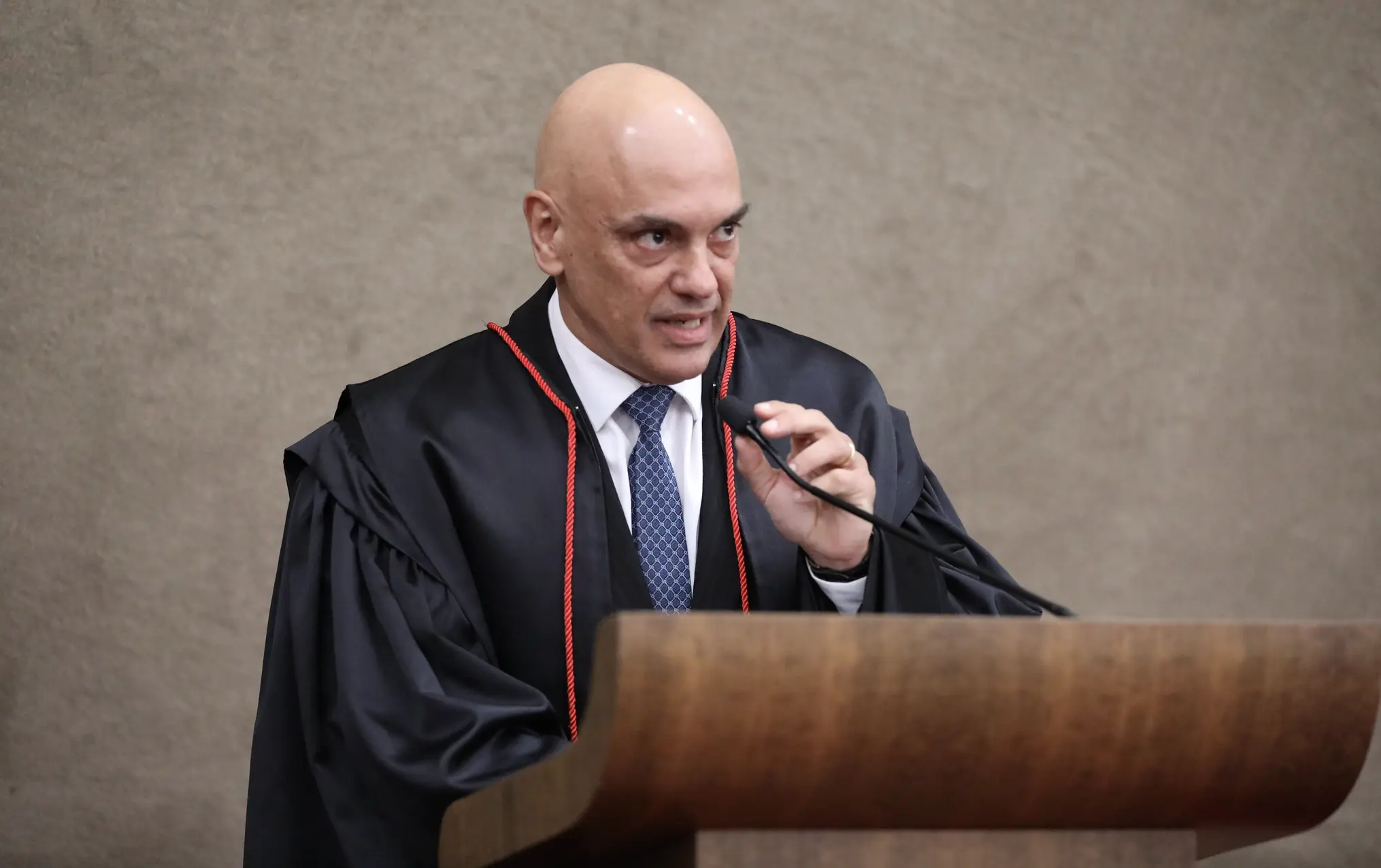
Image by TSE, from Flickr
Supreme Court Orders X Suspension in Brazil
- Written by Kiara Fabbri Former Tech News Writer
- Fact-Checked by Justyn Newman Former Lead Cybersecurity Editor
On Friday, Brazil’s Supreme Federal Court judge Alexandre de Moraes ordered the suspension of X across the entire country. This decision followed the platform’s failure to comply with a previous court order, intensifying tensions between the Brazilian government and the social media giant.
According to local news outlet Poder360 , the dispute began when Musk refused to appoint a legal representative in Brazil, a mandatory requirement for foreign companies operating within the nation.
In addition to suspending the platform, Moraes imposed a daily fine of R$50,000 (approximately USD 10,000) on anyone caught using Virtual Private Networks (VPNs) to access X while the ban is in effect, as reported by Poder360.
VPNs, which allow users to bypass geographical restrictions by masking their location, are often used to evade censorship in countries with strict internet regulations. By penalizing VPN usage, the court seeks to prevent users from circumventing the suspension.
Moraes criticized the company stating that X has been contributing to “an environment of total impunity and lawlessness in Brazilian social networks, including during the 2024 local elections.”
“Extremist groups and digital militias” have been using X for “massive dissemination of Nazi, racist, fascist, hateful and anti-democratic speeches,” adds Morales, as reported by Bloomberg .
Elon Musk responds to this decision stating in a post on X that ”Alexandre de Moraes is an evil dictator cosplaying as a judge.”
Bloomberg also reports that Moraes took legal action against SpaceX’s Starlink satellite-internet service in Brazil, freezing its finances to recover $3 million in fines imposed on X.
The AP notes that in his ruling, Moraes stated that he ordered the freezing of Starlink’s assets because X did not have sufficient funds in its accounts to cover the accumulating fines. He justified the decision by noting that both companies belong to the same economic group.
To this, Starlink responded with a post on X stating that : “This order is based on an unfounded determination that Starlink should be responsible for the fines levied — unconstitutionally — against X.”
Bloomberg further reports that Starlink announced plans to fight the order and potentially offer its services free of charge in Brazil.
As the legal battle unfolds, it remains to be seen how the Brazilian government will balance its efforts to regulate online platforms with the principles of free speech and open communication.

Image by Azamat Bohed, from Flickr
North Korean Hackers Exploit Chromium Zero-Day To Target Cryptocurrency Sector
- Written by Kiara Fabbri Former Tech News Writer
- Fact-Checked by Justyn Newman Former Lead Cybersecurity Editor
A North Korean threat actor has been exploiting a zero-day vulnerability in Chromium to target cryptocurrency organizations for financial gain, according to a report published today by Microsoft.
The vulnerability, identified as CVE-2024-7971, allows attackers to execute remote code on compromised systems.
Microsoft has attributed the attack to Citrine Sleet , a North Korean threat actor known for primarily targeting financial institutions, especially those involved in cryptocurrency. The group engages in extensive reconnaissance of the cryptocurrency sector, and employs sophisticated social engineering tactics.
These tactics include creating fake websites that mimic legitimate cryptocurrency trading platforms to distribute malicious software, such as fake job applications or weaponized cryptocurrency wallets.
The attack chain involved exploiting the Chromium vulnerability, executing malicious code, and deploying the FudModule rootkit. This rootkit is a sophisticated piece of malware that can evade detection and grant attackers elevated privileges on compromised systems.
It has been in use since 2021, with its earliest variant exploiting vulnerable drivers to gain admin-to-kernel access, a technique known as “bring your own vulnerable driver”.
The FudModule rootkit, previously attributed to Diamond Sleet, another North Korean threat actor, suggests a potential sharing of tools or infrastructure between the two groups, as reported by Microsoft.
To mitigate the threat, Microsoft recommends updating systems with the latest security patches, enabling Microsoft Defender for Endpoint’s tamper protection and network protection features, and running EDR in block mode. Additionally, customers should be vigilant of suspicious activity and report any unusual occurrences to their security teams.
Additionally, Microsoft provides detailed detection guidance and hunting queries for customers to identify and respond to related threats within their networks.
