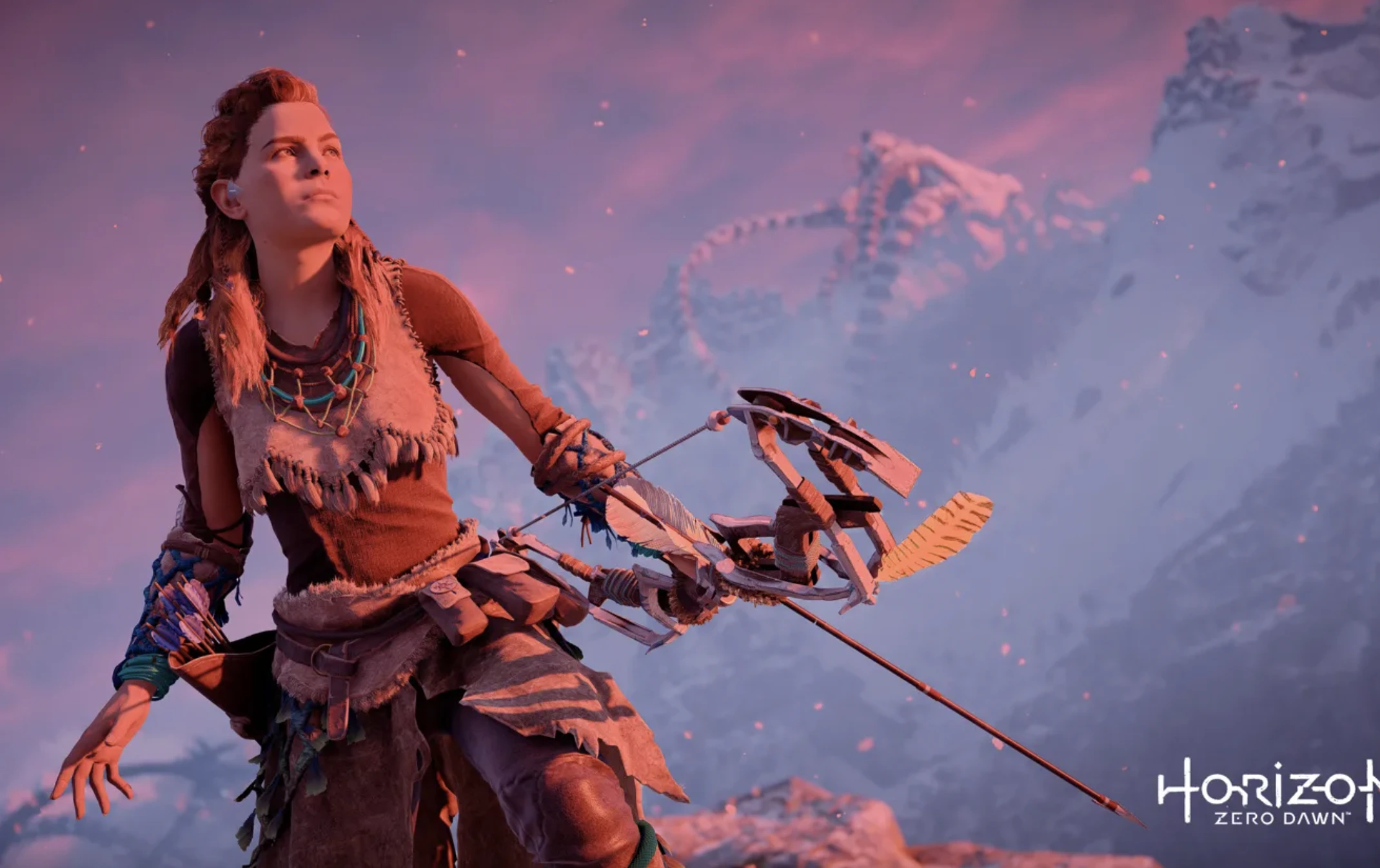
Image by Oleksandr-lobkov, from Goodfon
Sony Tests AI-Powered PlayStation Characters, Including Aloy Prototype
- Written by Kiara Fabbri Former Tech News Writer
- Fact-Checked by Sarah Frazier Former Content Manager
Sony tested AI-powered PlayStation characters, including Aloy, sparking debate on AI’s gaming role after a leaked video.
In a Rush? Here are the Quick Facts!
- The AI demo uses GPT-4, Llama 3, OpenAI’s Whisper, and Sony’s internal voice synthesis technology.
- The leaked video was pulled from YouTube after a copyright claim linked to Sony.
- AI in gaming is controversial due to job concerns and its impact on creativity.
The Verge first reported on the video, which showcased an experimental AI version of Aloy responding to voice prompts with AI-generated speech and facial animations. Shortly after publication, the video was removed from YouTube following a copyright claim by Muso, a company linked to Sony Interactive Entertainment.
The video, narrated by Sony software engineering director Sharwin Raghoebardajal, demonstrates how the AI-powered Aloy can engage in conversations.
It utilizes OpenAI’s Whisper for speech-to-text, GPT-4 and Llama 3 for dialogue, Sony’s Emotional Voice Synthesis (EVS) for speech, and the company’s Mockingbird technology for facial animation. “This is just a glimpse of what is possible,” Raghoebardajal says in the video, as reported by The Verge.
Sony developed the prototype in collaboration with Horizon developer Guerrilla Games. While the demo was primarily tested on PC, Sony has reportedly experimented with running it on PS5 with minimal performance impact, says The Verge.
The technology was first showcased internally a year ago, with a more refined version presented behind closed doors at the Sony Technology Exchange Fair (STEF) in Tokyo last November, as reported by The Verge. The leaked footage has raised concerns within the gaming industry, particularly among voice actors and developers.
IGN reports how the AI-generated voice of Aloy does not belong to Ashly Burch, the character’s original actor, sparking debates on AI’s role in game development. Some viewers also noted that AI Aloy’s speech felt robotic, with stiff facial movements and lifeless eyes.
The broader gaming industry has been exploring similar AI implementations. Nvidia has been developing AI-driven non-playable characters (NPCs) under its “ ACE ” program, , allowing players to engage in real-time conversations with in-game characters.
AI-powered NPCs could transform open-world storytelling by making interactions more dynamic and immersive. Supporters argue that AI can personalize quests based on player choices, creating more meaningful experiences, as reported by Medium .
NPCs could remember past encounters, altering their dialogue accordingly. AI-driven characters may also adapt their tone and responses to match emotional situations, making conversations feel more realistic.
Additionally, AI can adjust difficulty levels and enemy behaviors in real-time for a balanced experience.
Microsoft, meanwhile, is partnering with Inworld AI to introduce generative AI features for Xbox developers, as noted by The Verge.
Additionally, Ubisoft’s NEO NPC, launched in March 2024 with Nvidia and Inworld AI, enables real-time, dynamic NPC interactions. Powered by Nvidia’s Audio2Face and Inworld’s language model, the AI syncs facial animations with speech, generating context-aware responses.
The rise of AI in game development is controversial. A recent Game Developers Conference (GDC) survey found that nearly half of respondents use generative AI in their workplaces, but concerns remain about its impact on jobs and creativity. Critics argue AI in gaming could weaken storytelling by replacing human-crafted narratives.
Medium reports that concerns include robotic dialogue, loss of emotional depth, and job displacement for writers and voice actors. While AI mimics patterns, it lacks true creativity, raising fears that games may lose the nuance and authenticity human storytellers provide.
IGN notes that companies like EA and Capcom have embraced AI for content generation, while others, such as Keywords Studios, have acknowledged AI’s current limitations, noting that it failed to replace human creativity in game development.
Sony has yet to announce plans to integrate AI-driven characters into PlayStation games. The timing of the leak—just ahead of GDC 2024—ensures AI in gaming will remain a key topic of discussion.

Photo by Lan Lin on Unsplash
China’s Leading Universities Boost AI Talent Development with Increased Enrollment
- Written by Andrea Miliani Former Tech News Expert
- Fact-Checked by Sarah Frazier Former Content Manager
Top universities in China announced plans to expand undergraduate enrollment to develop talent in areas like artificial intelligence.
In a Rush? Here are the Quick Facts!
- China’s top universities are expanding AI-focused undergraduate programs to nurture future talent.
- Peking, Renmin, and Shanghai Jiao Tong universities are increasing enrollment in AI, biomedicine, and emerging tech fields.
- China is fast-tracking AI education as part of its national strategy to become a global leader by 2035.
According to Reuters , Peking University announced this Saturday 150 undergraduate spots in 2025 to educate on fundamental disciplines related to areas of “national strategic importance” and emerging fields.
Renmin University also announced over 100 spots in multiple disciplines, including courses related to AI and innovation. Meanwhile, Shanghai Jiao Tong University added 150 places in areas such as biomedicine, new energy, AI, emerging industries, and other courses with focus on “cutting-edge technologies.”
China has been rapidly prioritizing AI education across multiple fields and academic environments, targeting learners of different age groups. the government outlined its goal to develop a “strong education nation” by 2035.
In February, multiple Chinese universities made announcements about new AI courses related to DeepSeek, just a few weeks after the AI model ranked in first place in Apple’s App Store in the United States. The advanced technology had a significant impact in the nation—and worldwide—boosting an academic trend including courses to understand the successful technology.
According to Fortune , these academic efforts are not limited to universities or adults. Children from six years old will be offered AI classes in school starting this fall. Multiple institutions in Beijing will offer multiple hours of AI classes to teach young students how to use AI models and tools and develop knowledge of the technology including AI ethics.
Another initiative gaining popularity in the country is the “ AI self-study room , ” an emerging business model that provides students with the necessary equipment and training—powered by AI—to develop new skills, as an affordable alternative to private tutors.
China stays ahead of market trends and demands in technology and education, preparing skilled professionals and citizens to navigate the changes brought by AI and maintain its global leadership in innovation.
