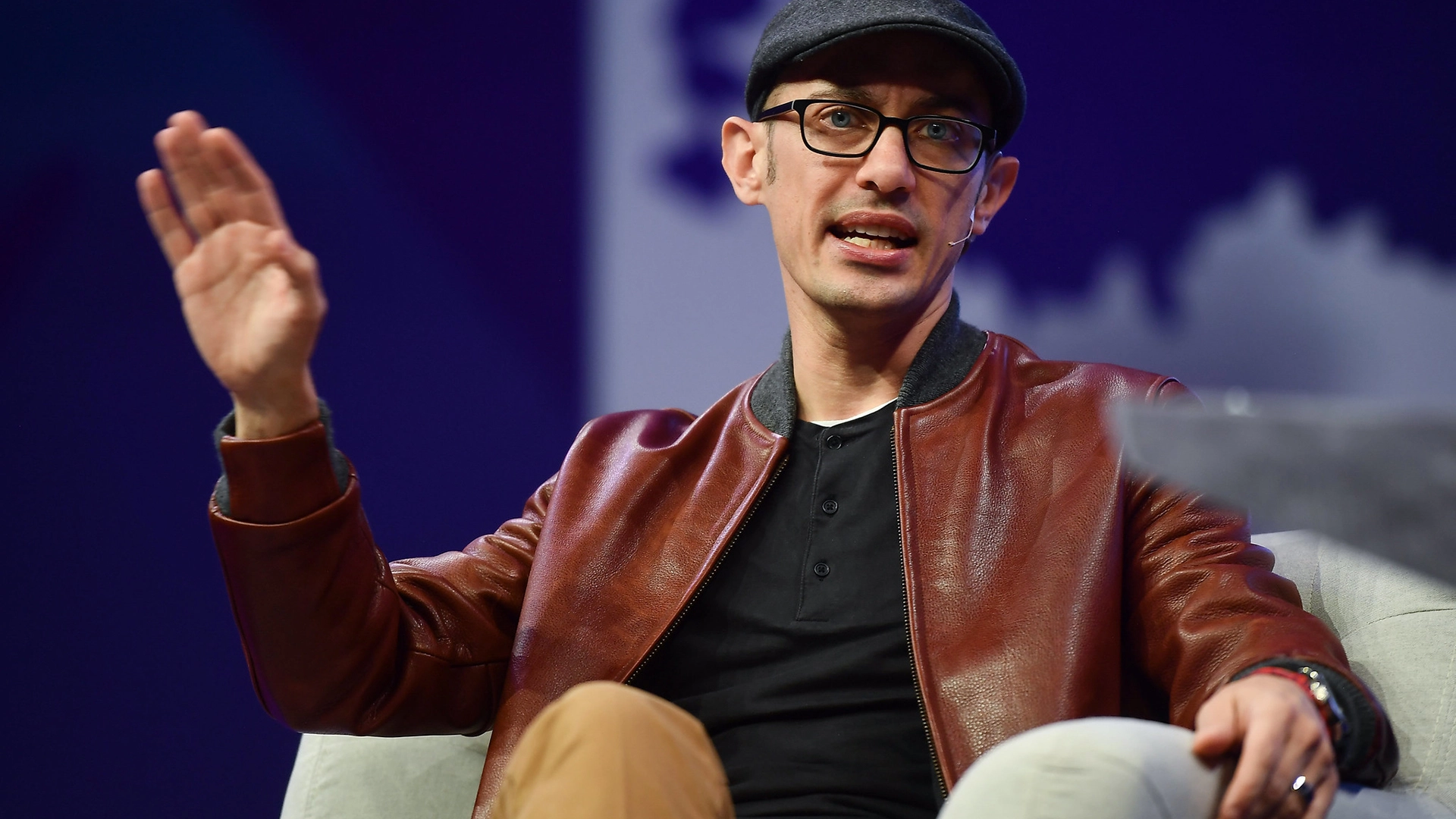
Featured image: Image by Collision Conf, from Flickr
Shopify CEO: No New Hires Without Proving AI Can’t Do the Job
- Written by Kiara Fabbri Former Tech News Writer
- Fact-Checked by Sarah Frazier Former Content Manager
Shopify CEO Tobi Lütke is urging employees to fully embrace artificial intelligence before requesting more staff or resources.
In a rush? Here are the quick facts:
- AI usage is now required in all Shopify employees’ daily work.
- Performance reviews will include questions about effective AI use.
- Shopify has launched AI tools like Sidekick and Shopify Magic.
In a recent internal memo Lütke made it clear that AI should be the first solution explored when tackling new tasks.
I heard this internal memo of mine is being leaked right now, so here it is: pic.twitter.com/Qn12DY7TFF — tobi lutke (@tobi) April 7, 2025
“Before asking for more headcount and resources, teams must demonstrate why they cannot get what they want done using AI,” he wrote. He posed a thought-provoking question to his staff: “What would this area look like if autonomous AI agents were already part of the team?”
According to Lütke, using AI effectively is now “a fundamental expectation of everyone at Shopify.” He emphasized that employees who lean into AI tools have been able to accomplish significantly more. “I’ve seen many of these people approach implausible tasks… with reflexive and brilliant usage of AI to get 100X the work done,” he added.
AI performance will now be part of performance and peer reviews, he said. Shopify, known for helping online sellers run their businesses, has already launched AI tools like its chatbot Sidekick and its automation system, Shopify Magic.
The directive comes as the tech industry continues to invest heavily in AI while simultaneously cutting jobs. According to Layoffs.fyi, more than 152,000 tech jobs were eliminated across 549 companies in 2024 alone. Shopify’s own headcount dropped to 8,100 by the end of last year, from 8,300 a year earlier, as reported by CNBC .
Despite the pressure to keep staffing flat, Shopify CFO Jeff Hoffmeister recently said the company may spend more on salaries, particularly for top AI talent. “A higher comp, high-end AI engineer” can drive up costs even if the team size stays the same, he explained as reported by CNBC.
Image by jcomp, from Freepik
Hackers Disguise Malware As Screensaver Files In Fake Shipping Email Attack
- Written by Kiara Fabbri Former Tech News Writer
- Fact-Checked by Sarah Frazier Former Content Manager
Cybersecurity firm Symantec has uncovered a phishing campaign targeting industries across Asia, Europe, and the U.S., using fake shipping emails and disguised screensaver files to infect victims with malware.
In a rush? Here are the quick facts:
- The ModiLoader tool deploys stealers including Remcos and Agent Tesla and AsyncRAT.
- The emails pretend to be official communications from a prominent Taiwanese freight company that provides shipping updates.
- The attack targets four specific sectors which include electronics together with automotive and manufacturing and broadcasting.
Attackers pretend to be a major Taiwanese freight and logistics company and send phishing emails in Chinese that look like real shipment updates. The subject line includes detailed shipping info, referencing customs clearance from Kaohsiung to Atlanta on April 7.
The recipients are subsequently asked to verify shipping documents like the ISF, packing list, and invoice. Inside is a malicious file disguised as a Windows screensaver (.SCR). When clicked, it silently installs a malware loader called ModiLoader.
GBHackers notes that the ModiLoader is a known threat that downloads and installs remote access tools and information stealing malware. Symantec has reported that it has been used to drop malware like Remcos, Agent Tesla, MassLogger, AsyncRAT and Formbook.
“While they might appear harmless, they are essentially executable programs with a different file extension. Once executed, these files can perform any action a regular executable can—such as installing loaders, backdoors, keyloggers, or ransomware. As of today, they continue to be heavily used in attack chains,’’ warned Symantec.
The campaign has affected multiple sectors including automotive, electronics, publishing, broadcasting, and manufacturing, and the victims are located in countries such as Japan, the UK, Sweden, the U.S., Hong Kong, Taiwan, Thailand, and Malaysia.
Symantec is fighting the threat by using a variety of protections including machine learning, file scanning, email filtering, and Carbon Black endpoint security. The malware has been flagged under multiple names including Trojan.Gen.MBT and Scr.Malcode!gen19.
Experts urge businesses to educate employees about suspicious emails.
