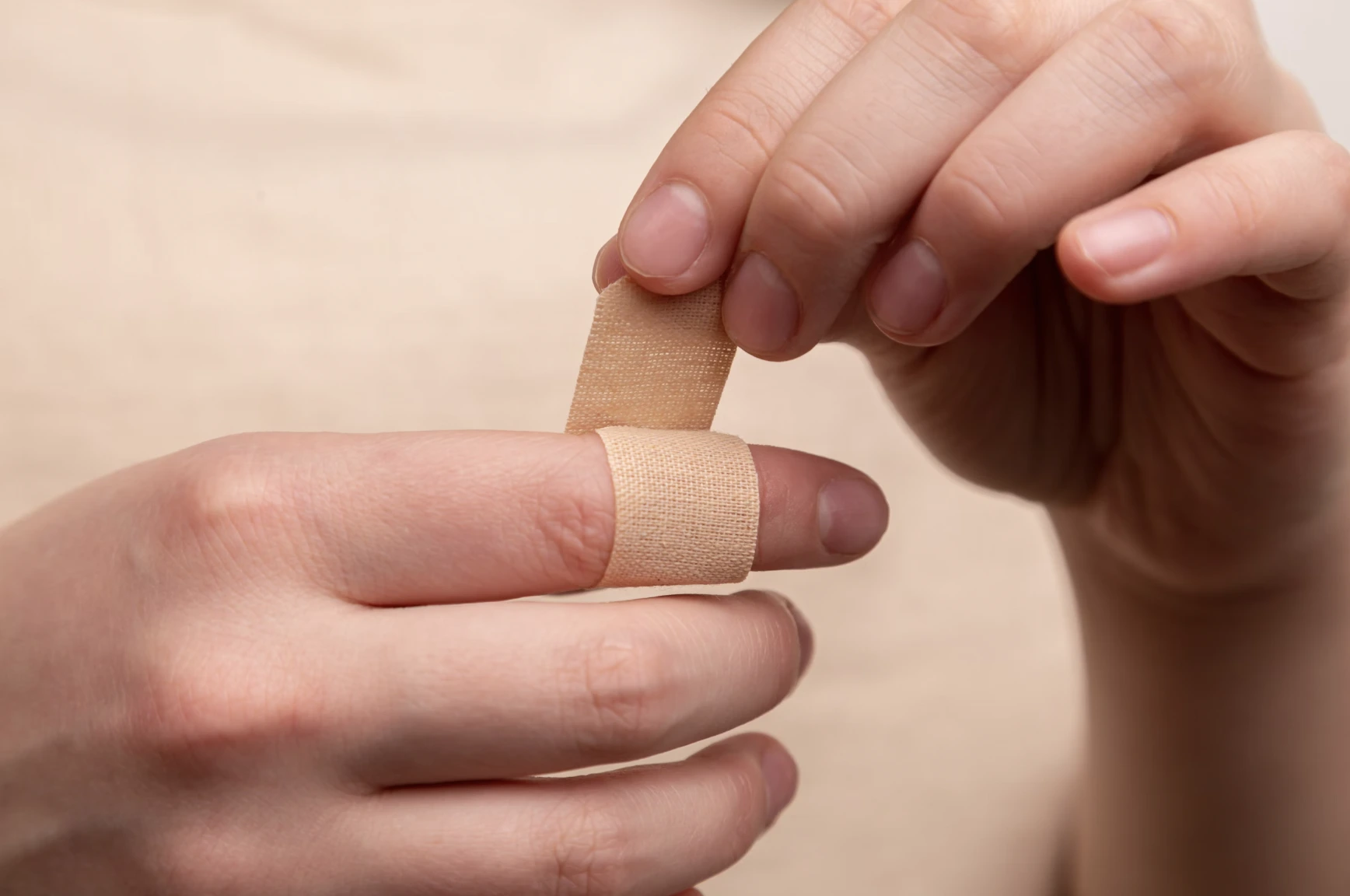
Image by Diana Polekhina, from Unsplash
Self-Healing Robots Can Recover From Damage Without Human Help
- Written by Kiara Fabbri Former Tech News Writer
- Fact-Checked by Sarah Frazier Former Content Manager
Scientists have developed a hydrogel that mimics human skin by combining strength, flexibility, and self-healing capabilities.
In a Rush? Here are the Quick Facts!
- The robots use special materials to regenerate without human intervention.
- Self-healing tech could extend robot lifespan and reduce maintenance costs.
- Potential applications include space exploration, healthcare, and hazardous environments.
Created by researchers from Aalto University and the University of Bayreuth, this material can repair 80-90% of cuts in just four hours and fully heal within 24 hours, marking a significant advancement in materials science
The hydrogel’s innovative design is based on ultra-thin clay nanosheets that create a dense polymer network, enhancing its durability while preserving its ability to self-repair. The researchers achieved this by mixing a monomer powder with water containing nanosheets and exposing the solution to UV light.
“The UV radiation from the lamp causes the individual molecules to bind together so that everything becomes an elastic solid – a gel,” explained Chen Liang, one of the study’s authors, as reported on Interesting Engineering .
The key to the hydrogel’s self-healing ability lies in the entanglement of its polymers. “Entanglement means that the thin polymer layers start to twist around each other like tiny wool yarns, but in a random order,” said Hang Zhang from Aalto University, as reported on Eurekalert .
“When the polymers are fully entangled, they are indistinguishable from each other. They are very dynamic and mobile at the molecular level, and when you cut them, they start to intertwine again,” he added.
A one-millimeter-thick sample of the hydrogel contains around 10,000 layers of nanosheets, making it as stiff as human skin while maintaining flexibility. The material’s rapid healing and durability make it a promising candidate for applications in artificial skin, soft robotics, and biomedical technologies.
“This work is an exciting example of how biological materials inspire us to look for new combinations of properties for synthetic materials. Imagine robots with robust, self-healing skins or synthetic tissues that autonomously repair,” said Olli Ikkala from Aalto University, as reported on Eurekalert.
“It’s the kind of fundamental discovery that could renew the rules of material design,” he added.
The synthetic clay nanosheets used in the hydrogel were developed by Professor Josef Breu at the University of Bayreuth. The study, published in Nature Materials , represents a major step toward bio-inspired materials that could transform multiple industries, from wound healing to drug delivery and robotics.
While real-world applications are still in development, the potential of this technology is immense.
Researchers believe that with further improvements, self-healing synthetic tissues, flexible robotic skins, and medical materials with autonomous repair capabilities could soon become a reality.
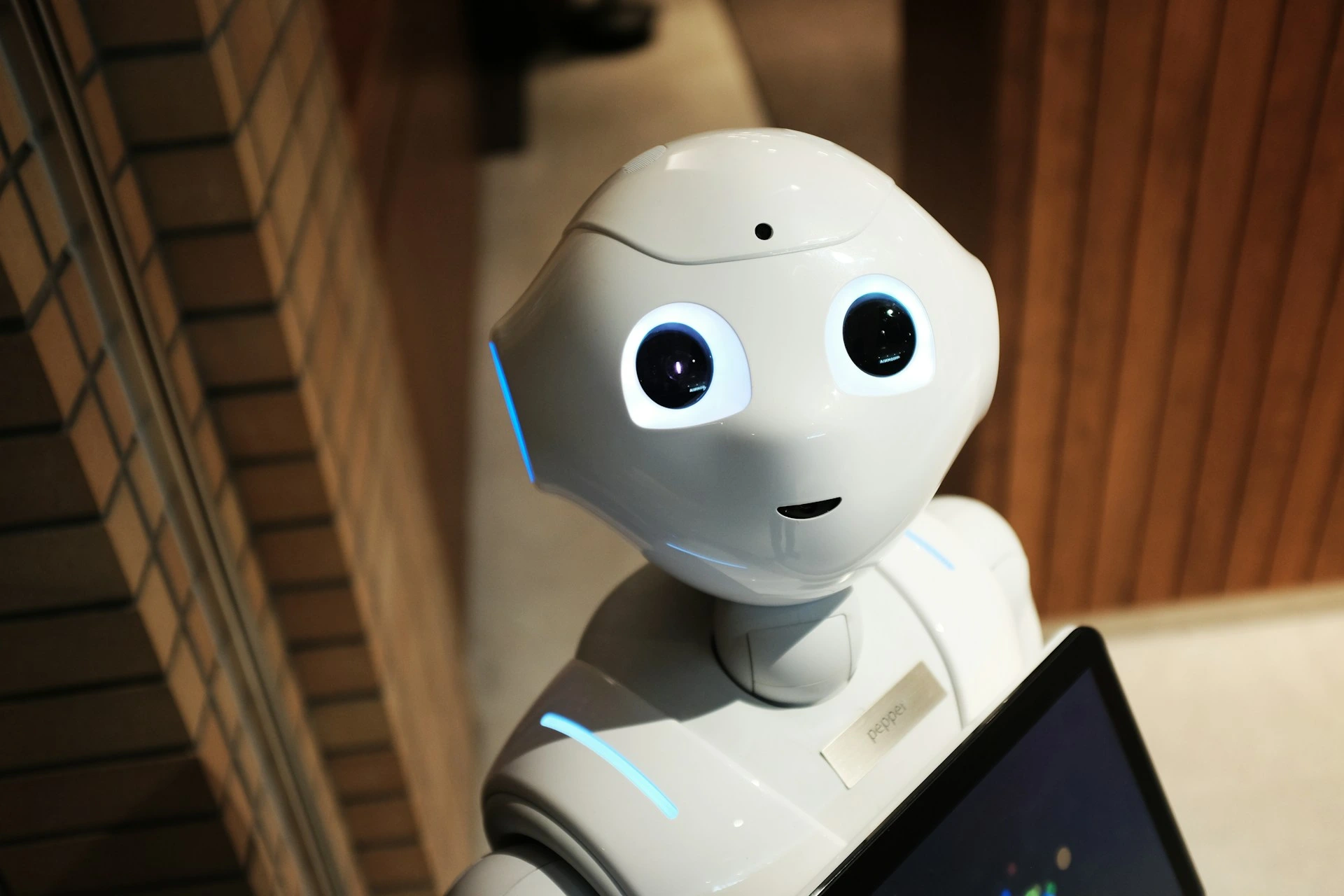
Photo by Alex Knight on Unsplash
Japan’s Service Robot Market Set to Triple to ¥400 Billion by 2030
- Written by Andrea Miliani Former Tech News Expert
- Fact-Checked by Sarah Frazier Former Content Manager
Research firm Fuji Keizai estimates that Japan’s service robot market will triple by 2030, reaching ¥400 billion—approximately $2.7 billion. These machines have been introduced as a solution to labor shortages and to support an aging population.
In a Rush? Here are the Quick Facts!
- Japan’s service robot market is projected to reach ¥400 billion ($2.7 billion) by 2030, addressing labor shortages and supporting an aging population.
- Skylark Holdings has deployed approximately 3,000 cat-themed robots across 2,000 restaurants to enhance service efficiency.
- Robots like “Hug” assist patients with mobility and monitor vital signs, addressing an anticipated shortfall of 570,000 caregivers by 2040.
According to Bloomberg , the presence of service robots in restaurants has been significantly increasing. The Japanese food service corporation Skylark Holdings has included the technology—around 3,000 cat-themed machines—across its 2,000 restaurants.
The existence of androids is also an answer to labor shortage across the country and a solution for employers and even to overcome language barriers. The robots have 3D sensors, can carry heavy plates, and show facial expressions.
“The service robot market is only just getting started,” said Takayuki Ito, president of the International Federation of Robotics, to Bloomberg.
Service robots are also being used in the care sector, where the Japanese government estimates that by 2040 the nation will face a shortfall of 570,000 caregivers. One of the popular services is “Hug”, a robot that helps patients with mobility by assisting them in standing on their feet.
The devices can also monitor the patient’s sleep, respiration, and heart rates, making it easier for caregivers to keep an eye on multiple patients at a time.
Wearable robots have also been gaining popularity in the market. South Korean researchers recently developed an exoskeleton that allows paraplegic people to walk, climb, and avoid obstacles.
The presence of robots in care homes has also helped avoid worker’s back strain and retain staff.
“This market is significantly broader and more diverse than industrial robotics,” said Kraus, Werner Kraus, head of automation and robotics research at Fraunhofer Institute for Manufacturing Engineering and Automation IPA, to Bloomberg. “The growth potential is therefore higher.”
The latest devices can also assist in other areas such as cleaning and surveillance. Roborock recently introduced its latest vacuum model , the Saros Z70, with enhanced navigation skills and a robotic arm.
