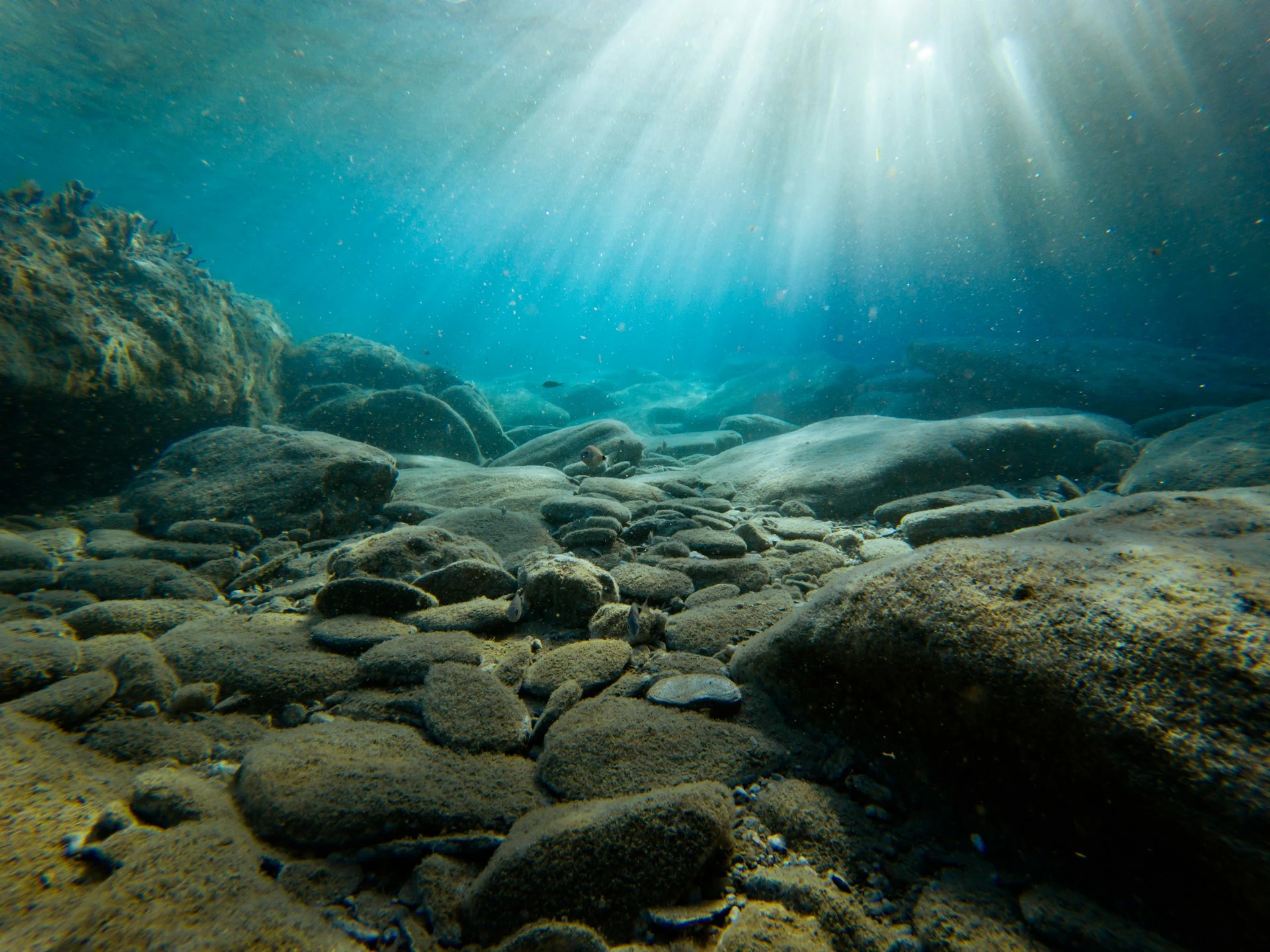
Photo by Yannis Papanastasopoulos on Unsplash
Scientists Discover Mysterious Oxygen Source Produced On Sea Floor
- Written by Andrea Miliani Former Tech News Expert
- Fact-Checked by Justyn Newman Former Lead Cybersecurity Editor
Scientists discover a “dark oxygen” source on the sea floor in the Pacific Ocean, in complete lack of sunlight. The phenomenon was revealed in a study published in Nature called “Evidence of dark oxygen production at the abyssal seafloor.”
However, the new discovery has raised multiple unanswered questions, starting with what exactly is producing this oxygen and how.
According to Nature , the mechanism behind it remains a mystery, but scientists suspect it has to do with elements in the location, such as the polymetallic nodules—plum-sized formations and their possible capabilities of splitting water molecules.
“We have another source of oxygen on the planet, other than photosynthesis,” said Andrew Sweetman, one of the authors of the study at the Scottish Association for Marine Science. Sweetman also explained that this new discovery could lead to further explanation of how life began, as well as the consequences of deep-sea mining practiced in the region.
The research began in 2013, when scientists were analyzing sea-floor ecosystems between Mexico and Hawaii, in the Clarion–Clipperton Zone. For the study, they released a module that sinks, performs experiments, and measures, gathering useful data for the experts. The instrument showed scientists that the water in the area studied got richer in oxygen.
Sweetman explained that, at first, they assumed the sensor was broken, but it kept giving similar results in following expeditions in 2021 and 2022. “I suddenly realized that for eight years I’d been ignoring this potentially amazing new process, 4,000 meters down on the ocean floor,” said Sweetman.
The amount of oxygen found was significantly, higher than in areas rich in algae, suggesting that the polymetallic nodules have an important role.
Biogeochemist at the University of Southern Denmark Donald Canfield found the study “fascinating,” but also frustrating “because it raises a lot of questions and not very many answers.”
Photo by Prometheus 🔥 on Unsplash
Elon Musk Says Tesla Will Use Humanoid Robots In Production Next Year
- Written by Andrea Miliani Former Tech News Expert
- Fact-Checked by Justyn Newman Former Lead Cybersecurity Editor
Elon Musk, Tesla’s CEO, said on social media that his electric car company will begin using and producing humanoid robots by next year.
“Tesla will have genuinely useful humanoid robots in low production for Tesla internal use next year and, hopefully, high production for other companies in 2026,” wrote Musk on X , in a reply to another user’s posts about former OpenAI worker Daniel Kokotajlo’s predictions on the evolution of artificial general intelligence.
According to the BBC , Musk’s statements tend to be very ambitious, and the CEO does not always deliver the expected results. It’s also not the first time Musk talked about producing humanoid robots. He has previously explained that Tesla is building these products and that they will work on mass production to sell them for less than $20,000.
In 2019, Musk also promised robotaxis for 2020, but this promise has not been fulfilled. According to CNBC , investors have been asking questions and requesting more information on these self-driving vehicles, named CyberCabs, and about the humanoid robots named Optimus.
A few weeks ago, in April, Musk assured stakeholders that the Optimus would be in “limited production in the natural factory itself, doing useful tasks before the end of this year.” He also added that Tesla will probably be selling them next year.
According to Forbes , he said recently that Optimus robots would significantly increase the company’s valuation—currently estimated at $788 billion by Google Finance —to $25 trillion.
Musk and other Tesla executives are expected to discuss the challenges and expectations for the business and share financial results today.
Despite Musk’s false promises and issues in the company from laying off over 10% of its staff a few months ago to false promises and investors being left in the dark , stakeholders still believe in Tesla’s CEO. Last month, shareholders approved the largest pay package in U.S. history for Musk .
