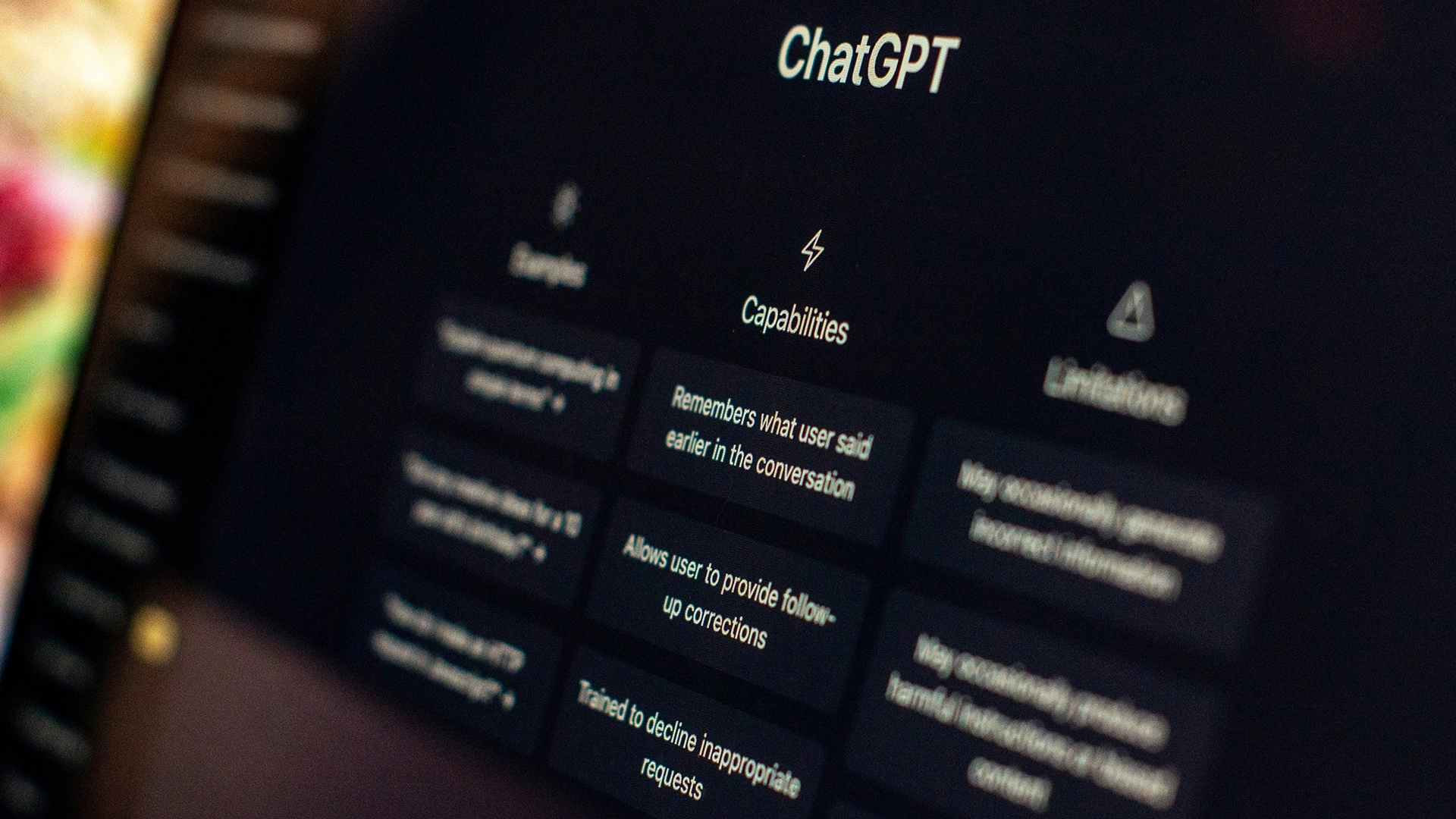
Image by Emiliano Vittoriosi, from Unsplash
Saying “Please” To AI Could Be Burning Millions in Energy
- Written by Kiara Fabbri Former Tech News Writer
- Fact-Checked by Sarah Frazier Former Content Manager
Experts say politeness to AI shapes its tone, while OpenAI’s Sam Altman admits the courtesy is costing millions in electricity.
In a rush? Here are the quick facts:
- Sam Altman says politeness to AI costs “tens of millions” in electricity.
- 12% use manners to appease AI in case of a future uprising.
- AI data centers already consume about 2% of global energy.
Saying “please” and “thank you” to AI chatbots might sound like harmless manners—or even pointless. But it’s actually costing tech giants millions, and some say it’s a habit worth keeping.
OpenAI CEO Sam Altman recently confirmed that courtesy isn’t free. Using “please” and “thank you” with AI chatbots appears to be nothing more than polite manners, yet, as reported in a recent article by Futurism , it might result in millions of dollars in losses for tech companies.
User @tomiinlove posted on X that he wondered about the electricity expenses OpenAI incurred from users thanking their models. To which OpenAI CEO Sam Altman replied with:
tens of millions of dollars well spent–you never know — Sam Altman (@sama) April 16, 2025
Microsoft’s Kurtis Beavers, a director on the design team for Microsoft Copilot, says in an interview with WorkLab, that while AI doesn’t have feelings, it responds more collaboratively when users set a respectful tone.
Because generative AI models are trained on human conversations, they reflect the politeness, professionalism, and clarity of your input. “It’s a conversation,” Beavers notes, and the user guides the tone. Saying “please” and “thank you” not only improves the chatbot’s responses.
Futurism reports that a survey from late 2024 revealed that 67% of U.S. users are polite to their chatbots. Of those, 55% said they do it because “it’s the right thing to do,” while 12% admitted it’s just in case of an AI uprising.
A Washington Post investigation together with researchers from the University of California studied the environmental impact of messages produced by AI. The energy consumption from sending one AI-assisted email weekly throughout a year equals 7.5 kWh which matches the power usage of nine Washington D.C. households during one hour.
Although AI etiquette may seem minor, it highlights a larger issue: our digital behavior has real-world energy consequences. Indeed notes that the data centers running these AI tools already use about 2% of global electricity—a figure expected to rise sharply as AI becomes more integrated into daily life.

Image by Tom Chen, from Unsplash
AI in Parliament? United Arab Emirates Plans Automated Law Reform Process
- Written by Kiara Fabbri Former Tech News Writer
- Fact-Checked by Sarah Frazier Former Content Manager
The UAE is pioneering AI-driven legislation, using artificial intelligence to suggest legal changes and reshape how laws are created and reviewed.
In a rush? Here are the quick facts:
- UAE to use AI to draft and amend national laws.
- AI aims to cut legislative time by 70%.
- Regulatory Intelligence Office will supervise AI lawmaking.
The United Arab Emirates is planning to use artificial intelligence not just to speed up its lawmaking, but to help suggest changes to existing laws—a new move that experts say goes beyond what any other country is doing, as first reported by the Financial Times (FT).
“This new legislative system, powered by artificial intelligence, will change how we create laws, making the process faster and more precise,” said Sheikh Mohammad bin Rashid Al Maktoum, Dubai’s ruler and the UAE’s vice-president, as reported by the FT.
A new government office, the Regulatory Intelligence Office, will oversee this AI-driven lawmaking plan. The system is expected to track how laws affect the population and economy, drawing on a huge database of court rulings, public services, and both local and federal laws.
“The UAE appears to have an “underlying ambition to basically turn AI into some sort of co-legislator “, said Rony Medaglia, a professor at Copenhagen Business School, as reported by the FT.
The government hopes AI will make the legislative process up to 70% faster and reduce the costs of hiring law firms to review new regulations.
Vincent Straub, a researcher at Oxford University, noted that while the idea is innovative, it comes with risks. “They continue to hallucinate [and] have reliability issues and robustness issues […] We can’t trust them,” he warned, as reported by the FT.
AI models are prone to errors and can misunderstand human logic. The FT reports that Marina De Vos, a computer scientist at Bath University, explained that AI might suggest solutions that make sense to a machine but are completely impractical in real-world human society.
Despite these concerns, some experts believe the UAE’s top-down approach makes it easier for the country to push forward with such radical innovation. “They’re able to move fast. They can sort of experiment with things,” said Keegan McBride from the Oxford Internet Institute, as reported by the FT.
What remains unclear is which AI system the UAE will use—and how it will make sure human oversight is strong enough to avoid mistakes.
