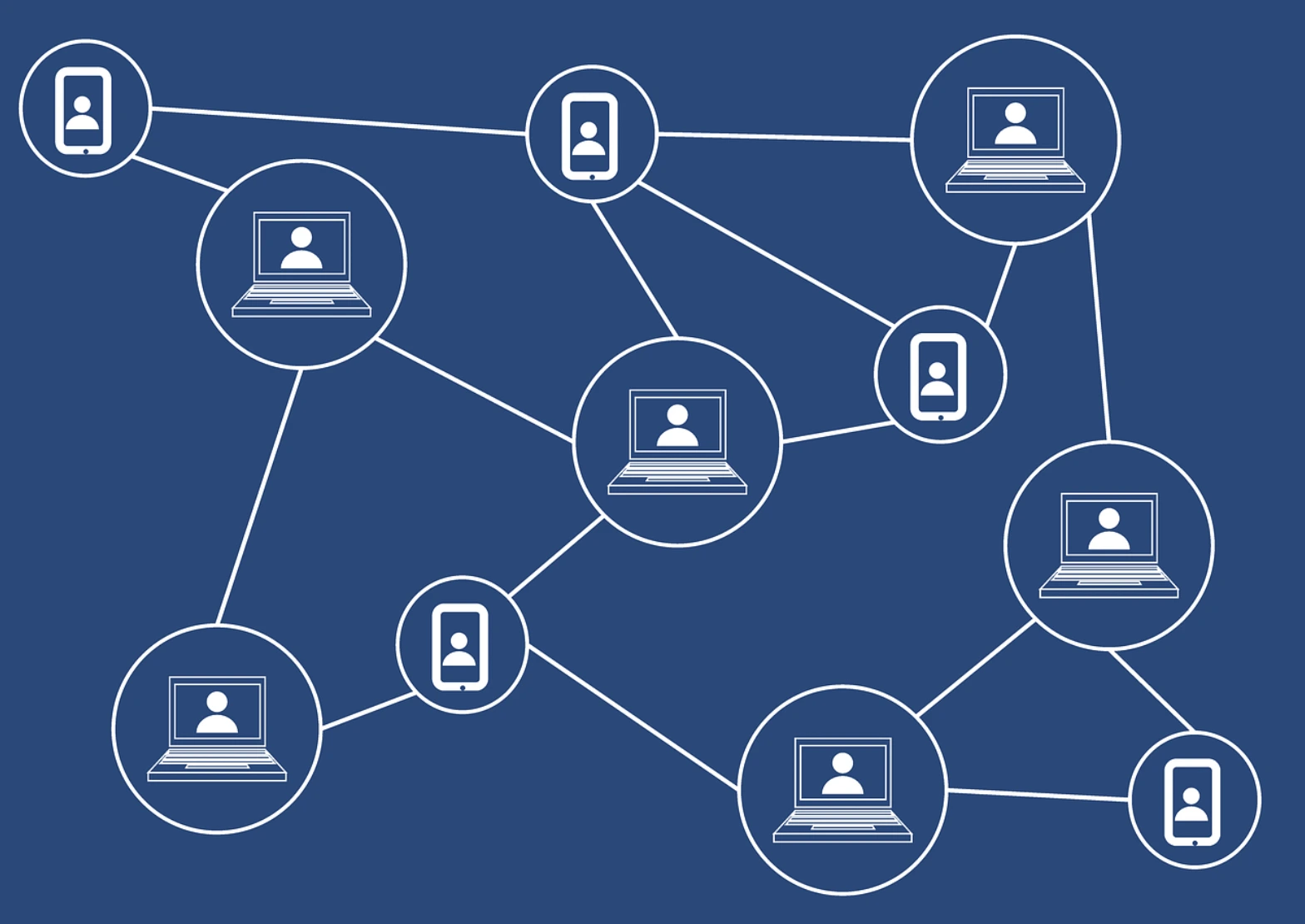
Image by Tumisu, from Pixabay
Researchers Introduce Blockchain Framework To Democratize Deep Reinforcement Learning
- Written by Kiara Fabbri Former Tech News Writer
- Fact-Checked by Justyn Newman Former Lead Cybersecurity Editor
In a Rush? Here are the Quick Facts!
- Crowdsourced DRL framework enhances accessibility and training.
- Blockchain ensures transparency, security, and traceability.
- Decentralization lowers costs and democratizes DRL.
A team of researchers, led by Concordia University, announced yesterday a novel blockchain-based framework to make deep reinforcement learning (DRL) more accessible.
DRL, a branch of AI that combines deep learning and reinforcement learning, has proven valuable in industries such as gaming, robotics, healthcare, and finance. However, due to its complexity, it remains out of reach for many small businesses and individuals.
To bridge this gap, the researchers developed a crowdsourced DRL as a Service (DRLaaS) framework, which allows users to access DRL-related services, including model training and sharing.
This new framework enables users to tap into the expertise and computational capabilities of workers who can train DRL models on their behalf. Furthermore, users can benefit from pre-trained models shared by workers, which can then be customized through knowledge transfer methods.
Built on a Consortium Blockchain, this framework ensures transparency and traceability in the execution of tasks. The system employs smart contracts to manage task allocation, and models are stored using the InterPlanetary File System (IPFS) to maintain data integrity.
By using blockchain technology, the framework addresses concerns related to server failures and data tampering.
According to lead author Ahmed Alagha, the crowdsourcing aspect enhances accessibility, allowing more people to participate in developing DRL solutions.
The authors claim that the system’s decentralization also reduces the risk of catastrophic failures and lowers the costs associated with training DRL models.
The authors state that by distributing computational efforts across multiple machines, the system offers resilience against server crashes or cyberattacks, a significant improvement over traditional centralized systems.
Co-author Jamal Bentahar, Alagha’s thesis supervisor, emphasized that this service democratizes access to DRL solutions.
“To train a DRL model, you need computational resources that are not available to everyone. You also need expertise. This framework offers both,” Bentahar noted.
The full details of this framework can be found in their research paper , published in Information Sciences, which highlights the framework’s design and its potential applications.

Photo by CDC on Unsplash
Neuralink’s Sight Implant Gets “Breakthrough Device” Tag from FDA
- Written by Andrea Miliani Former Tech News Expert
- Fact-Checked by Justyn Newman Former Lead Cybersecurity Editor
- Reader’s Comments 3
The United States Food and Drug Administration (FDA) gave Neuralink’s experimental implant to restore sight, Blindsight, the “breakthrough device” tag this Tuesday.
According to Reuters , this designation is provided to medical devices that can diagnose or treat severe medical conditions, and it’s intended to speed its development and review processes.
The update was shared on X by the neurotechnology company. “We have received Breakthrough Device Designation from the FDA for Blindsight,” states the post. “Join us in our quest to bring back sight to those who have lost it. Apply to our Patient Registry and openings on our career page.”
We have received Breakthrough Device Designation from the FDA for Blindsight. Join us in our quest to bring back sight to those who have lost it. Apply to our Patient Registry and openings on our career page https://t.co/abBMTdv7Rh — Neuralink (@neuralink) September 17, 2024
Elon Musk, co-founder of Neuralink, said on X that Blindsight is aimed to help those patients “who have lost both eyes and their optic nerve to see.” He explained that people who were born blind but still have a visual cortex could be able to see for the first time with the implant and mentioned that those who get the implant might see in low quality at first, but that within time their sight could be even better than natural vision and compared it to the fictional character from the show Star Trek, Geordi La Forge.
However, multiple news outlets have explained that Musk’s message is misleading and has also been considered “irresponsible” by the online news site Techcrunch . Journalist Devin Coldewey explained that the update does not imply that there is a cure for blindness, that it is still too premature to guarantee such results and Musk has publicly made big promises that might not be realistic.
Coldewey acknowledges that Neuralink has developed a powerful technology and that Blindsight can contribute to further medical advances.
While Musk has a reputation for making unfulfilled promises , Neuralink has made significant progress with its technology. The company recently installed another Link implant for the PRIME Study successfully on a second patient.
