
Image by metamorworks, from Adobe Stock
Researchers Aim To Improve AI’s Role In Chemistry
- Written by Kiara Fabbri Former Tech News Writer
- Fact-Checked by Justyn Newman Former Lead Cybersecurity Editor
Researchers are working to understand how AI makes decisions to enhance its use in chemistry, especially drug development. New research on this topic will be presented at the American Chemical Society’s Fall meeting, from August 18 to 22. The meeting will feature over 10,000 presentations on various scientific topics.
Today, the American Chemical Society announced in a press release that researchers will present findings on using Explainable AI (XAI) to understand how AI make decisions in chemistry. By demystifying these complex systems, experts aim to increase trust and improve AI’s effectiveness.
Rebecca Davis, a chemistry professor, explains that current AI models are often seen as “black boxes,” with their decision-making processes concealed. She states, “If we can come up with models that help provide some insight into how AI makes its decisions, it could potentially make scientists more comfortable with these methodologies.”
Additionally, XAI can provide valuable information to refine AI programming and enhance its performance in the field. “I want to use XAI to understand what information we need to teach computers about chemistry,” says Hunter Sturm, a graduate student in Davis’ lab presenting the work at the meeting.
The researchers began by feeding databases of known drug molecules into an AI model designed to predict a compound’s biological activity. To understand the model’s decision-making process, they employed an XAI model developed by collaborator Pascal Friederich at Germany’s Karlsruhe Institute of Technology.
This allowed them to identify the specific molecular features influencing the AI’s predictions. By analyzing these factors, Davis and Sturm gained insights into the AI’s criteria for categorizing molecules and determining their potential as drug candidates.
Preliminary findings suggest that XAI can detect things humans might overlook, since it can analyze far more variables at once.
For example, when analyzing penicillin molecules, the AI discovered something unexpected. Scientists generally believe the core structure of penicillin is crucial for its antibiotic properties. However, Davis explained that the XAI identified the parts attached to this core as the key factor in determining the molecule’s antibiotic activity. She states that this could explain why some modified versions of penicillin with the same core structure are less effective.
As a next step, the researchers plan to collaborate with a microbiology lab to create and test potential antibiotic compounds identified by the improved AI models. Their ultimate goal is to use AI to develop new and more effective antibiotics that can combat the growing threat of antibiotic resistance.
In a presentation , Davis states, “Machine learning now offers us the opportunity to do this on a much larger scale, where we’re likely to see trends that we have never seen in chemical behavior and will allow us to create molecules and materials at a much faster rate than we ever have in history.’’
As AI continues to evolve, transparency and comprehension are essential for fostering public as well as scientific trust. By unraveling the complexities of AI, scientists are making progress towards harnessing its full potential for societal benefit.
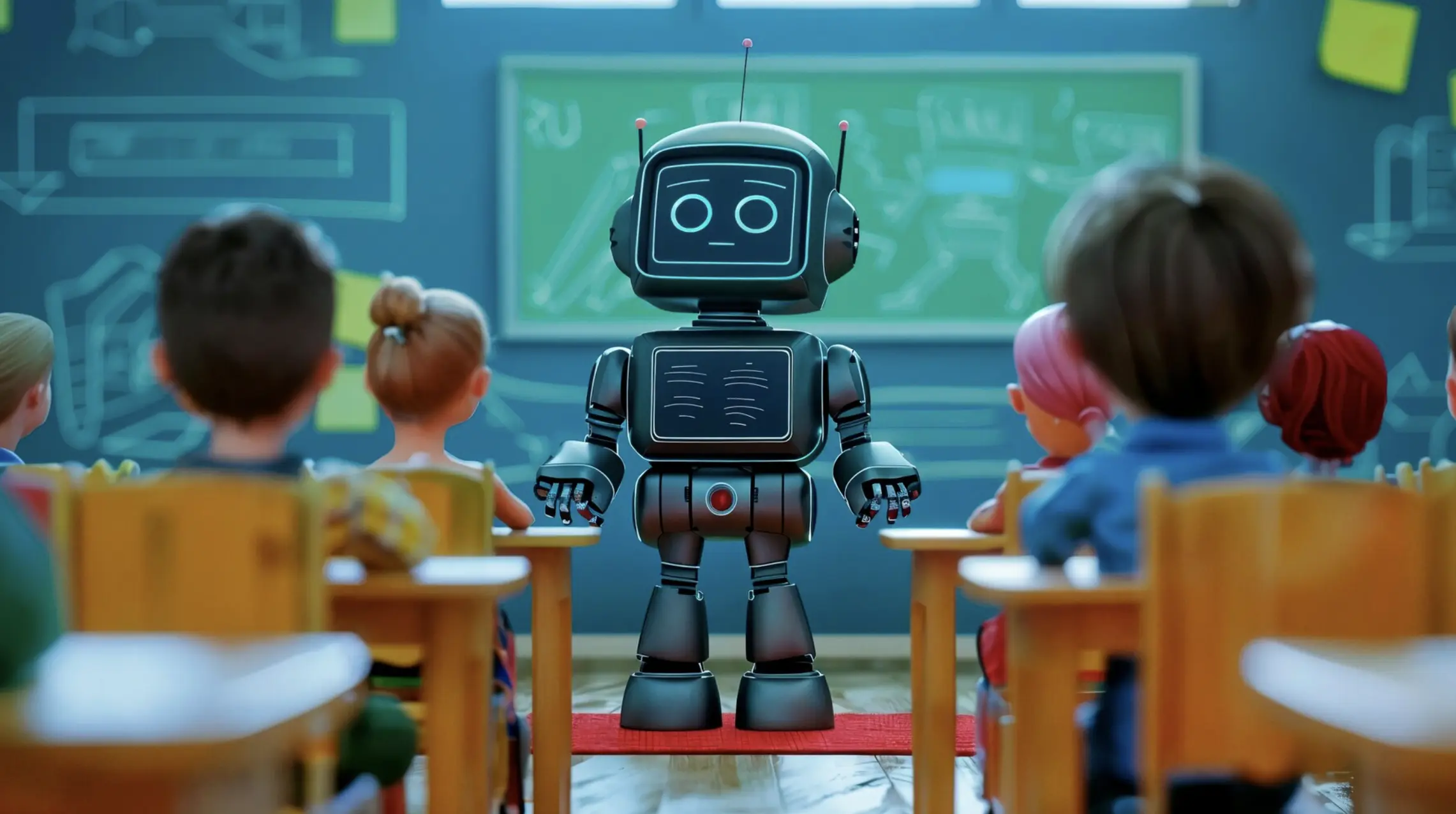
Image from Freepik
AI Textbooks In South Korea: Parents Express Growing Worries
- Written by Kiara Fabbri Former Tech News Writer
- Fact-Checked by Justyn Newman Former Lead Cybersecurity Editor
The Financial Times reported today that South Korean parents are increasingly concerned about the government’s plan to introduce AI-powered textbooks in schools.
Announced on June 8 last year by Education Minister Lee Ju-Ho, this initiative aims to roll out AI digital textbooks in 2025 for subjects such as math, IT, and English. By 2028, the program plans to expand to include Korean, history, science, technology, and social studies.
The ministry emphasizes benefits like personalized learning, real-time translation for multilingual students, and enhanced support for students with special needs.
The Financial Times also notes that the plan includes programs that can transcribe a teacher’s remarks onto an electronic whiteboard as they move around the classroom. Additionally, the tablets can be customized to assess both “fast learners” and “slow learners.” The AI will then provide tasks that match each student’s learning pace.
This plan has received mixed reactions. According to a nationwide survey reported by The Korea Herald , 53% of public school teachers support the introduction of AI-powered educational content. Among them, 35% believe it could offer individualized coaching, while 29% think it would foster self-directed learning.
Despite these potential advantages, parents have expressed significant concerns. The Korea Herald reports that parents worry about students bypassing security measures to access non-educational content, such as video games or YouTube, during class. They also fear reduced focus, impaired reading skills, and potential strain on eyesight.
The Straits Times reported that in May, 56,000 parents submitted a petition to the National Assembly opposing excessive digital device exposure. The petition, as noted by The Financial Times, stated, “We, as parents, are already encountering many issues at unprecedented levels arising from [our children’s] exposure to digital devices.”
Education Minister Lee understands these concerns and stresses the importance of equal access to AI education and proper preparation. He noted that it’s normal for people to feel uneasy about new changes because they have limited information and experience.
“We believe that parents’ concerns will be alleviated when they understand that digital textbooks will be used in conjunction with hardcover textbooks and will be used in the classroom under the guidance of teachers,” he said, as reported by The Straits Times.
Finally, The Financial Times reports that Shin Kwang-young, a sociology professor at Chung-Ang University, criticized this move, stating that the government is rushing to introduce these textbooks “too hastily without properly assessing the side effects, simply because AI is a megatrend nowadays.”
Regardless of the outcome, South Korea’s ambitious AI textbook plan is set to be a defining moment in the evolution of education, showcasing both the potential benefits and challenges of integrating AI into the classroom.
