
Image by Karl Fredrickson, from Unsplash
Rabbi Bot Preaches In Houston, Raising Questions About A.I. And Spiritual Authority
- Written by Kiara Fabbri Former Tech News Writer
- Fact-Checked by Justyn Newman Former Lead Cybersecurity Editor
Rabbi Josh Fixler recently introduced his Houston congregation to “Rabbi Bot,” an artificial intelligence chatbot trained on his past sermons.
In a Rush? Here are the Quick Facts!
- Pastor Jay Cooper experimented with ChatGPT for a church service, drawing new attendees.
- A.I.-generated sermons can present risks, including fabricating religious quotes.
- Faith-based A.I. tools spark interest among tech entrepreneurs to engage younger generations.
During a service at Congregation Emanu El, the congregation listened to a sermon generated and delivered by an A.I. version of Rabbi Fixler’s voice. The experiment sparked discussion about the intersection of faith and technology, as reported in a press release by The New York Times .
Rabbi Fixler’s use of A.I. mirrors a broader trend among religious leaders adopting new technologies. From translating sermons in real-time to generating theological research, A.I. is reshaping spiritual practices . The Times points out that faith-focused tech companies now offer tools like sermon-writing chatbots and multilingual translation assistants.
However, these advancements raise ethical questions.The Times notes that while many leaders embrace A.I. for administrative tasks, using it for core spiritual roles, such as sermon writing, is controversial. Critics argue that A.I. lacks the ability to address the uniquely human emotions and experiences central to faith.
Rabbi Fixler’s experiment was a one-time demonstration. Still, it raised profound questions. At one point, Rabbi Bot suggested including a line stating, “Just as the Torah instructs us to love our neighbors as ourselves,” Rabbi Bot said, “can we also extend this love and empathy to the A.I. entities we create?”
This unexpected addition resonates with tech companies’ new moves to explore AI welfare , as well as highlighting the ethical complexities of allowing A.I. to influence religious messages.
Pastor Jay Cooper of Austin, Texas, used OpenAI’s ChatGPT to design an entire service as an experiment in 2023. The service drew new attendees, particularly “gamer types,” Mr. Cooper noted, who had never previously visited his congregation, as reported by The Times.
However, Cooper choose not to continue using A.I. for sermon writing, questioning whether A.I. could authentically convey spiritual truths, or as The Times put it: Can God speak through A.I.?
“That’s a question a lot of Christians online do not like at all because it brings up some fear,” Mr. Cooper said to The Times. “It may be for good reason. But I think it’s a worthy question.”
Religious scholars have drawn comparisons between A.I.’s transformative potential and historical technological shifts, like the printing press or the advent of radio. Yet, the risks of A.I., particularly its tendency to produce hallucinations, are evident.
Rabbi Bot, for instance, fabricated a quote from the Jewish philosopher Maimonides during its sermon, illustrating the dangers of misinformation in sacred contexts, as reported by The Times.
For some leaders, the concern lies in losing the personal growth that comes with traditional sermon writing. Pastor Thomas Costello of Honolulu fears A.I. might hinder ministers from honing their craft, which often stems from years of reflection and experience, as reported by The Times.
Faith-based A.I. tools have also sparked interest among tech entrepreneurs. Joe Suh, founder of Pastors.ai , creates custom chatbots that answer both logistical and spiritual questions. Mr. Suh’s chatbots are trained using a church’s sermon archives and website information, reports by The Times.
However, according to Mr. Suh, about 95 percent of users ask practical questions, such as service times, rather than exploring deeper spiritual matters, says The Times.
While some leaders view A.I. as a tool to enhance engagement with younger, tech-savvy generations, others emphasize the importance of preserving the personal and communal aspects of worship.
As A.I. blurs the line between human and machine, emulating spiritual authority and reshaping guidance in mental health , it raises profound questions about traditional gendered leadership structures, and influence faith traditions that exclude women from such roles.
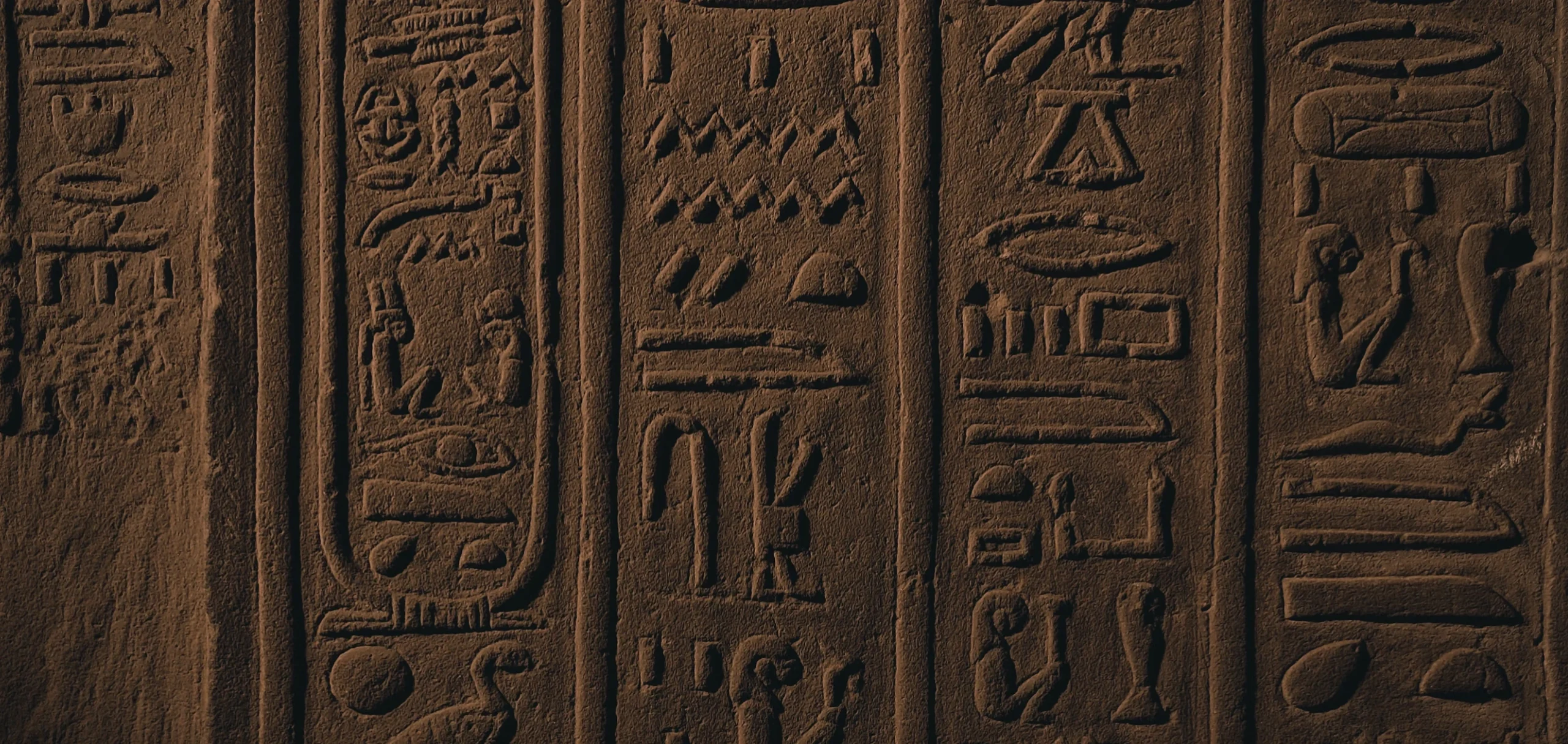
Image by Ahmed Assem, from Unsplash
The Future Of Archaeology: AI Decodes Ancient Scripts
- Written by Kiara Fabbri Former Tech News Writer
- Fact-Checked by Justyn Newman Former Lead Cybersecurity Editor
AI is increasingly being harnessed to unlock the mysteries of ancient texts, offering a new approach to reading and interpreting historical documents that were previously indecipherable.
In a Rush? Here are the Quick Facts!
- AI is improving translations of historical records.
- AI neural networks aid in reading fragmented ancient documents by filling missing characters.
- Tools like Ithaca restore gaps in ancient inscriptions with more accuracy than humans alone.
From deciphering burnt Roman scrolls to reading faded cuneiform tablets, AI techniques are opening doors to ancient archives, potentially rewriting parts of history. A recent review in Nature highlights the Vesuvius Challenge, a project using AI to read scrolls from the ancient Roman villa in Herculaneum, buried by Mount Vesuvius’ eruption in AD 79.
The scrolls, carbonized by the eruption, have been impossible to open without damaging them. For centuries, scholars have been forced to abandon attempts to read many of these texts.
However, AI is now allowing researchers to see beyond the damage. In October 2023, papyrologist Federica Nicolardi was sent an image of a fragment of a papyrus scroll with visible Greek lettering, a breakthrough that revealed entire lines of text that had been inaccessible for 2,000 years.
“It was incredible,” says Nicolardi. “I thought, ‘So this is really happening.’” She realized then that papyrology had changed forever. “In that moment, you really think ‘now I’m living something that will be a historical moment for my field,’” as reported by Nature.
This breakthrough is part of a broader trend where AI neural networks are being applied to a range of ancient texts, including Greek, Latin, and Chinese Oracle Bone Script.
Nature explains that these networks are trained to recognize patterns in images of ancient writings, helping researchers fill in gaps where characters are missing or damaged. AI can analyze texts more quickly and accurately than humans, allowing scholars to process large volumes of ancient documents and potentially identify patterns that would otherwise go unnoticed.
Nature explains that the technology is based on deep learning models, particularly convolutional neural networks (CNNs) and recurrent neural networks (RNNs).
CNNs capture grid-like data from images, aiding optical character recognition, while RNNs process sequential data, ideal for reconstructing transcribed texts. CNNs are used for analyzing visual data like eroded lettering, while RNNs suggest missing characters in historical documents.
A key development is the creation of tools like Ithaca , a machine learning model designed to suggest missing parts of ancient inscriptions. Ithaca has been able to restore gaps in texts with greater accuracy than human specialists alone.
Nature reported that when paired with human expertise, the model’s suggestions improve the restoration process even further. Ithaca’s creators believe that such AI models could transform the way scholars approach the study of ancient texts.
Nature explains that beyond individual projects, AI is also being used to tackle vast archives of historical data.
In South Korea, for example, researchers are using AI to translate records from the Joseon dynasty, written in Hanja, an ancient writing system. The AI’s translations have proven to be more accurate than earlier efforts, highlighting the potential for AI to transform historical research.
Nature also reports that AI is also being applied to languages with only fragmentary records. In Crete, for instance, AI is being used to restore missing text from Mycenaean tablets written in the Linear B script. Researchers hope to expand this approach to decipher Linear A, a related but still undeciphered script.
The use of AI to read ancient texts is still in its early stages, but it promises to be a powerful tool in uncovering forgotten histories. As technology continues to advance, AI may soon allow researchers to access vast swathes of historical data that were previously out of reach, changing our understanding of the ancient world.
