PrivacyLens: New Camera Protects Privacy by Turning People into Stick Figures
- Written by Kiara Fabbri Former Tech News Writer
- Fact-Checked by Justyn Newman Former Lead Cybersecurity Editor
Researchers at the University of Michigan have announced the development of PrivacyLens , an innovative camera technology designed to remove personally identifiable information (PII) from images and videos. This removal happens before the information is even stored or sent anywhere. This could significantly improve privacy of smart home devices and internet-connected cameras.
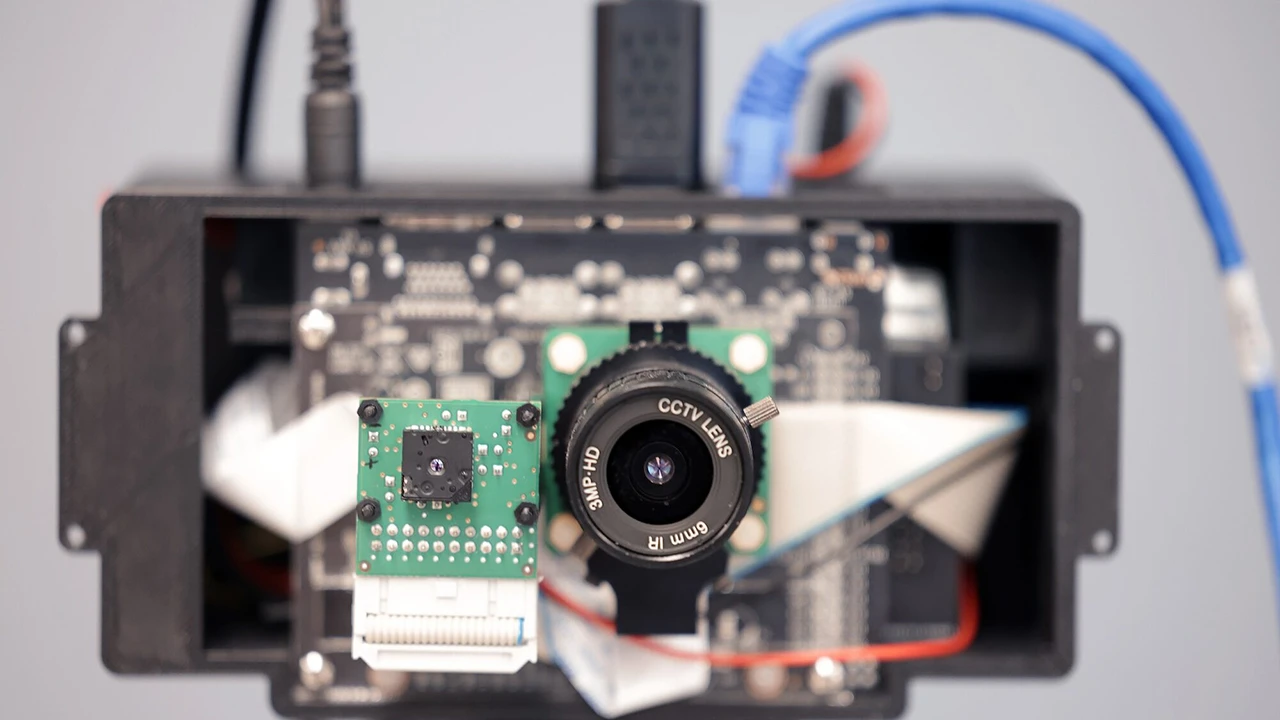
PrivacyLens utilizes a combination of a standard video camera and a heat-sensing camera. The heat-sensing camera detects people based on their body temperature, and replaces their likeness with a generic stick figure that mimics their movements. This ensures that devices relying on the camera can function without revealing the identity of the individuals in view.
Moreover, PrivacyLens eliminates the storage of raw photos on devices or cloud servers, thereby further enhancing user privacy.
“Most consumers do not think about what happens to the data collected by their favorite smart home devices. In most cases, raw audio, images and videos are being streamed off these devices to the manufacturers’ cloud-based servers, regardless of whether or not the data is actually needed for the end application,” said Alanson Sample, U-M associate professor of computer science and engineering and the corresponding author of the study.
This technology has the potential to address growing concerns about privacy leaks from smart home devices. Incidents such as intimate photos captured by Roomba vacuum cleaners being leaked on social media, and the recent hacking of 150,000 Verkada security cameras, have highlighted the vulnerability of traditional camera systems. The latter incident allowed hackers to access live feeds from cameras in sensitive locations including women’s health clinics, psychiatric hospitals companies, police departments, prisons and schools.
Another notable case involved Heather Hines, a 24-year-old from Southern California, who experienced a privacy breach with her Wyze security cameras. A caching issue caused thousands of customers to see photos and videos from other people’s homes when the cameras came back online, affecting 13,000 accounts. “It made me feel violated,” said Hines to CNN, who used the cameras to monitor her sick cat.
In this context, PrivacyLens could also make patients more comfortable using cameras for chronic health monitoring at home. By replacing them with stick figures, the camera wouldn’t capture sensitive information about people in their most private spaces.
The applications of PrivacyLens extend beyond the home. For instance, car manufacturers could potentially use this technology to prevent autonomous vehicles from being used for surveillance. Additionally, companies that use cameras to collect data outdoors could use PrivacyLens to comply with privacy laws.
The researchers are currently working to improve the technology and bring it to market. While there are some limitations, such as the resolution of the thermal camera, PrivacyLens shows promise for a future where cameras can be used without compromising privacy.
Kaspersky Lab to Shut Down US Operations Following Government Ban
- Written by Shipra Sanganeria Cybersecurity & Tech Writer
- Fact-Checked by Justyn Newman Former Lead Cybersecurity Editor
Cybersecurity company Kaspersky Lab will shut down all its US operations and lay off its US-based employees following the recent government ban on the sale and distribution of its products.
The announcement comes shortly after Commerce Secretary Gina Raimondo stated in June 2024 that Moscow’s influence over Kaspersky posed a significant risk to US infrastructure and services.
Kaspersky, which has operated in the US for two decades, initially denied the allegations and planned to challenge the ban in court. However, Kaspersky has now decided to exit the US market.
The popular antivirus provider in a statement to Zero Day confirmed that beginning July 20, it will “gradually wind down” its US operations, as “business opportunities in the country [was] no longer viable.”
According to Techcrunch , Kaspersky’s US website has already ceased selling its products. A message on the site reads, “For legal compliance purposes, Kaspersky products cannot be purchased from your country.”
The US Commerce Department in June 2024 imposed a ban prohibiting the sale of all Kaspersky antivirus and software products to US consumers. This ban includes software or security updates for current licenses. Effective from September 29, 2024, the prohibition extends to the resale of these products and the integration of Kaspersky’s antivirus and security software into other products or services.
In addition to the ban, the US Commerce Department has added three Kaspersky subsidiaries to the US Entity List (trade-restrictions entities list). Moreover, the US Treasury Department sanctioned 12 senior Kaspersky executives after the Commerce Department announcement.
By imposing these sanctions, the current administration aims to prevent US-based suppliers and consumers from conducting business with Kaspersky and the 12 associated executives. Additionally, Commerce Secretary Raimondo (as reported by Zero Day) explained that the gradual ban rollout is intended to allow US consumers enough time to shift to alternative security products.
