
Portugal Orders Sam Altman-Backed Worldcoin to Halt Biometric Data Collection
- Written by Shipra Sanganeria Cybersecurity & Tech Writer
- Fact-Checked by
Portugal’s data regulator banned the controversial iris-scanning technology for the Worldcoin cryptocurrency project yesterday. The ban is meant to last for 90 days.
The Worldcoin project aims to create a global digital ID system by encouraging people to have their irises scanned on its ‘Orb’ device in exchange for free cryptocurrency (Worldcoin’s own token, WLD).
The Comissão Nacional de Proteção de Dados (CNPD) cited a high risk to its citizens’ fundamental right to personal data protection , necessitating this urgent intervention “to prevent serious or irreparable damage.”
It raised concerns about “the impossibility of deleting data or revoking consent,’’ especially in the wake of over 300,000 Portuguese people sharing biometric data with Worldcoin. Moreover, the dozens of complaints regarding unauthorized data collection from minors and dissemination of insufficient information to data subjects pushed the regulator into implementing the ban.
Worldcoin has denied any wrongdoing. “The report from CNPD is the first time we are hearing from them regarding many of these matters, including reports of underage sign-ups in Portugal, for which we have zero tolerance for and are working to address in all instances, even if a matter of a few reports,’’ Jannick Preiwisch, data protection officer at the Worldcoin Foundation said in an email to Reuters.
However, CNPD said the temporary restriction would be in place until the regulator investigates the complaints and does additional due diligence into Worldcoin’s data collection and usage process.
The order from CNPD comes just weeks after Spain’s data protection agency (AEPD) issued a similar ban of three months on Worldcoin’s biometric data collection of Spanish citizens. The AEPD said that in response to several complaints, it was forced to take this precautionary measure to safeguard and protect its citizens’ fundamental data privacy rights.
Kenya, one of the first countries in the world to see Worldcoin launch, cited similar security and privacy concerns to suspend the project’s activity in the country in August 2023.
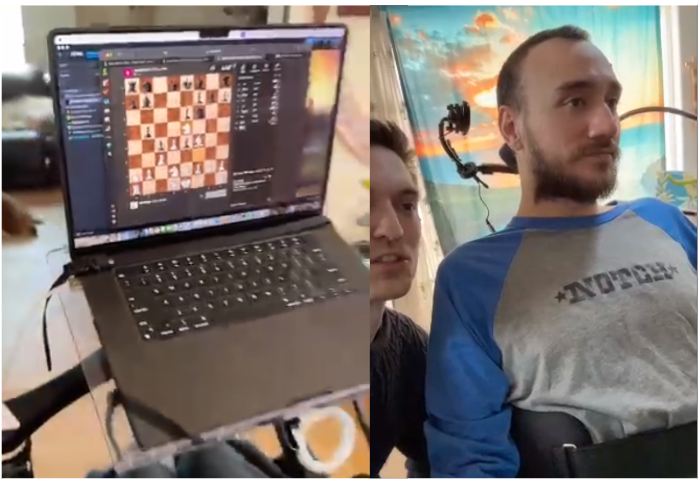
First Neuralink Patient Plays Online Chess With Only Brain Power
- Written by Elijah Ugoh Cybersecurity & Tech Writer
- Fact-Checked by
Elon Musk’s neural tech startup, Neuralink, showed a live stream on X last Wednesday of the first human brain-chip user playing online chess with his mind. The chip’s purpose is to help people control a computer cursor or keyboard using only brain power.
Noland Arbaugh, the 29-year-old Neuralink patient, explains in the broadcast that he became a “complete quadriplegic” after a freak diving accident 8 years ago and is paralyzed from below the shoulders. Reuters reported that Noland received the implant from Neuralink in late January and was able to move his computer’s mouse cursor with just his thoughts.
“I love playing chess, and this is one of the things y’all (Neuralink) have enabled me to do. Something that I wasn’t able to really do much of in the last few years, especially not like this,” says Noland in the broadcast. “I have used a mouth stick and stuff, but now, it’s all being done with my brain.”
When asked about how he is able to move his mouse around the computer, Noland mentioned that the company had tried several things with him until it became intuitive for him to imagine his cursor movement. “Every day, it seems like we’re learning new stuff, and I just can’t even describe how cool it is to be able to do this,” he adds.
Arbaugh also said it’s “not perfect” and they “have run into some issues.” He said, “I don’t want people to think that this is the end of the journey, there’s still a lot of work to be done, but it has already changed my life.”
The implant also uses a battery that must be charged, as it runs out with use. “Honestly, the biggest restriction at this point is having to wait for the implant to charge after I’ve used all of it,” says Nolan.
However, Reuters reported that Kip Ludwig, former program director for neural engineering at the U.S. National Institutes of Health, said what Neuralink showed was not a breakthrough.
“It is still in the very early days post-implantation, and there is a lot of learning on both the Neuralink side and the subject’s side to maximize the amount of information for control that can be achieved,” says Ludwig.
Neuralink intends to conduct more tests on more human subjects in the US. The company has also opened its patient registry for clinical trials in Canada .
