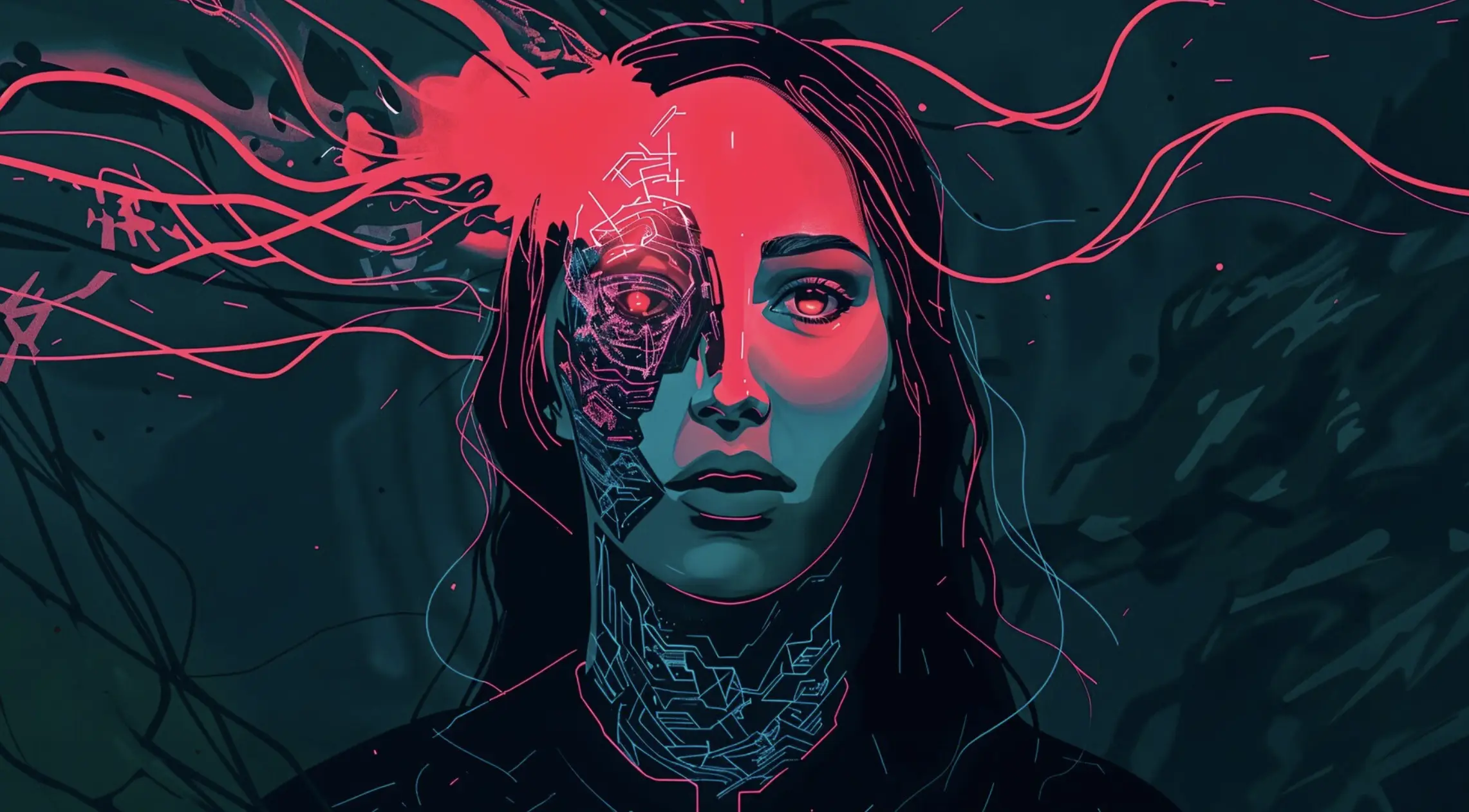
AI-generated Image from Freepik
Popular Digital Painting App Rejects AI to Protect Artistic Integrity
- Written by Kiara Fabbri Former Tech News Writer
- Fact-Checked by Justyn Newman Former Lead Cybersecurity Editor
The popular digital art app Procreate has taken a firm stance against integrating generative AI into its platform. The company has publicly declared its commitment to supporting human creativity, arguing that the current direction of AI development poses a threat to artistic originality.
Procreate’s CEO, James Cuda, has been vocal in his criticism of generative AI, expressing concerns about its impact on artists. In a video published yesterday on platform X, he stated, “I really f****** hate generative AI. I don’t like what’s happening in the industry, and I don’t like what it’s doing to artists. We’re not going to be introducing any generative AI into our products.”
We’re never going there. Creativity is made, not generated. You can read more at https://t.co/9Fgh460KVu ✨ #procreate #noaiart pic.twitter.com/AnLVPgWzl3 — Procreate (@Procreate) August 18, 2024
Procreate issued a strong statement against generative AI on its website. The company asserts that “Generative AI is ripping the humanity out of things. Built on a foundation of theft, the technology is steering us toward a barren future.”
While acknowledging the potential of machine learning, Procreate maintains that the current trajectory of generative AI is detrimental to human creativity.
The company emphasizes its commitment to artists, stating, “We’re here for the humans. We’re not chasing a technology that is a moral threat to our greatest jewel: human creativity.”
Procreate recognizes that its stance may position it as an outlier in the tech industry, but it remains steadfast in its belief to prioritize human creativity.
The Verge and TechCrunch report that many online creators have applauded Procreate’s decision to reject generative AI, many of whom are critical of the increasing integration of AI in other digital art and illustration tools.
However, the use of AI tools in artistic creation might be more nuanced than what Cuda expressed. A research paper exploring both the benefits and limitations of such tools suggests that it’s a complex issue.
Specifically, while highlighting criticisms and limitations, including a lack of creativity and originality, technical skill requirements, potential homogenization, and ethical concerns, AI tools can offer advantages. These include increased efficiency, idea generation, personalization, and collaboration. AI tools enable artists to enhance their creative processes by leveraging these benefits.
The paper emphasizes the importance of addressing these issues. It highlights the need to understand both the benefits and drawbacks of these tools to make informed decisions about integrating them into the creative process.
Another recent research project delves into the complexity of AI’s role in creativity. The results show that AI is increasingly being integrated into various stages of the creative process. While the concept of independent creative AI remains debated, the focus has shifted to co-creativity – how AI can best collaborate with humans in the creative process.
In any case, Procreate’s decision to distance itself from generative AI is particularly noteworthy. It will be intriguing to observe the implications of this stance for both the company and the broader industry.

Photo by Ruslan Zh on Unsplash
Ex-Google Researcher Explains How His New AI Startup Can Generate Digital Scents
- Written by Andrea Miliani Former Tech News Expert
- Fact-Checked by
Alex Wiltschko, former Google researcher and current CEO and co-founder of the startup Osmo, has recently revealed how his company is using AI to digitize scent in an interview with CNBC Make It.
“It’s been my passion to try to understand smell. It’s this very powerful emotional sense, yet we know so little about it,” said Wiltschko to the journal. The scientist earned a bachelor’s degree in neuroscience from the University of Michigan. Before working for Google, Wiltschko studied olfactory neuroscience at Harvard University and earned his Ph.D. in 2016.
At Google Research, he dedicated 5 years to leading a machine-learning team focused on understanding and predicting smells based on molecule structures. He launched Osmo in January 2023, with a mission to “improve human health and happiness” with scent digitalization.
“Vision and hearing have been digitized, but not smell — our oldest and deepest sense,” states the startup’s home page . “Osmo brings together frontier AI and olfactory science to solve this historic challenge.”
When asked why computers should be given the ability to smell, Wiltschko explained that if computers learn to interpret smell data, they can detect diseases in the future, as smell is a very important sense in medicine.
To teach computers to “smell,” Wiltschko and his team created a “principal odor map” while working at Google, processing 5,000 aroma molecules and creating categories like minty, floral, or fruity.
It was not an easy task as these molecules are very complex and sensitive. “You can move one tiny thing around in that molecule, like one bond, and the scent of the molecule goes from roses to rotten egg,” he explained. With the help of AI, the model could process patterns and accurately predict the smell of other molecules.
Unlike other current AI projects, relevant scent data is not easily available to train the models Osmo uses. “We actually spent about a year working with companies in the fragrance industry that had what they thought were great datasets, which we found were not,” said Wiltschko.
Now Osmo wants to continue digitizing scents and recreate them in different locations to prove that the AI model can truly work. “We will eventually be able to detect disease with scent and we’re on our way to building that technology,” he said.
