
Image by Freepik
Phishing Campaign Targets Mobile Users With Malicious PDFs
- Written by Kiara Fabbri Former Tech News Writer
- Fact-Checked by Justyn Newman Former Lead Cybersecurity Editor
A new phishing campaign is targeting mobile users by impersonating the United States Postal Service (USPS) and using fake PDF documents to steal sensitive information. Security researchers at Zimperium’s zLabs detailed today this campaign, which utilizes advanced social engineering tactics and a novel method to hide malicious links within PDFs.
In a Rush? Here are the Quick Facts!
- The attack uses malicious PDF files with sophisticated evasion techniques to bypass security.
- Over 20 malicious PDFs and 630 phishing pages were uncovered in the operation.
- The campaign spans over 50 countries and uses deceptive tactics to steal credentials.
The campaign works by sending SMS messages containing seemingly legitimate PDF attachments. These PDFs appear harmless but include hidden links that redirect users to phishing websites. Victims are prompted to provide personal information, such as their name, address, email, and phone number.
By exploiting the trust users place in PDFs as secure, professional documents, attackers have managed to evade detection by many traditional security systems.
The researchers note that PDFs are a staple in business communication, valued for their compatibility and ability to maintain formatting. However, this popularity also makes them a prime target for cybercriminals.
Malicious PDFs can embed links, scripts, or other harmful content that is hard to detect, especially on mobile devices, where users typically preview files with limited scrutiny.
Zimperium’s investigation revealed a large-scale operation involving over 20 malicious PDF files and 630 phishing pages, impacting users across more than 50 countries. The campaign employs a unique evasion technique to obscure malicious links, bypassing many endpoint security tools.
Unlike standard methods that use visible links, these PDFs hide URLs within their structure, making the attack harder to detect, as noted by Zimperium’s analysis.
When victims click the embedded links, they are taken to fake USPS websites designed to look authentic. These phishing pages request personal details under the pretense of resolving delivery issues. Without advanced mobile threat defenses, such attacks can lead to data breaches, credential theft, and financial loss.
This campaign underscores the growing need for advanced security solutions to protect against increasingly sophisticated phishing attacks targeting mobile devices.
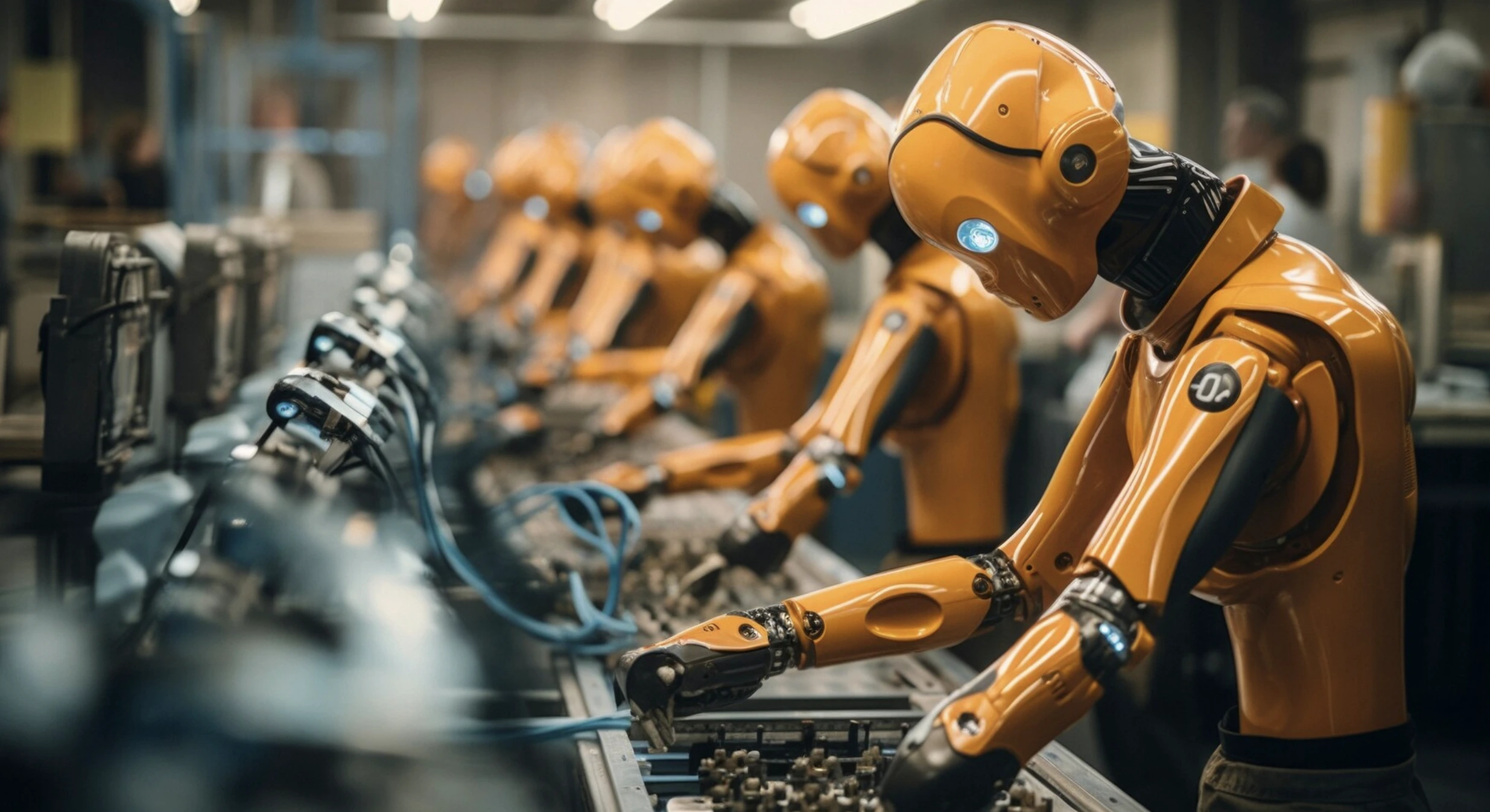
Image by Freepik
UBTech to Deploy 1,000 Humanoid Robots To Tackle Labor Shortages In Factories
- Written by Kiara Fabbri Former Tech News Writer
- Fact-Checked by Justyn Newman Former Lead Cybersecurity Editor
UBTech Robotics plans to deliver between 500 and 1,000 units of its Walker S Series industrial humanoid robots this year, with customers including Foxconn, car manufacturers, and logistics giant SF Express.
In a Rush? Here are the Quick Facts!
- Walker S2, a lighter and stronger humanoid robot, launches in Q2 2025.
- Competition in China’s robotics industry intensifies as start-ups scale commercial robot production.
- UBTech prioritizes AI investment over profits to advance its humanoid robotics capabilities.
Michael Tam, UBTech’s chief brand officer, shared this during the recent South China Morning Post’s China Conference in Guangzhou.
While UBTech’s ultimate goal is to bring humanoid robots into homes, the company is currently focusing on industrial applications. “Factories need humanoid robots “to help them solve the challenge of the shortage of manpower,” Tam explained, as reported by South China Morning Post (SCMP).
Factories, he noted, provide a simpler and more stable environment for robots to operate and train compared to homes, as current models are not yet advanced enough for home use.
Founded in 2012 and listed in Hong Kong in 2023, UBTech is a leading player in China’s robotics sector, offering a wide range of non-humanoid robots for tasks such as cleaning, delivery, and service, as reported by SCMP. Its Walker S1 , launched in October 2024, is the company’s most advanced industrial humanoid robot to date.
SCMP says that the Walker S1 is already deployed in factories of major car manufacturers, while integration into Foxconn’s production lines will involve more delicate and complex tasks, according to Tam. This year, UBTech plans to launch the Walker S2 in the second quarter, which will feature a lighter and stronger build.
A newer Walker S3 model is also scheduled for release later in the year. Tam confirmed that more than 60% of this year’s deliveries will consist of the upcoming Walker S2, as reported by SCMP.
UBTech’s rollout comes as competition intensifies in China’s robotics industry. New entrants, including a two-year-old start-up led by a former Huawei recruit, have begun mass production of general-purpose robots, says SCMP.
However, Tam emphasized UBTech’s advantage from over a decade of experience in the sector. “Technology is a key driving power for the new companies, but it takes time for all of them to train or to make the talent pool, because humanoid robots are a really comprehensive area,” he said, as reported by SCMP.
Despite its position in the industry, SCMP reports that UBTech faces financial challenges, reporting a net loss of 516.4 million yuan (US$70.5 million) in the first half of 2024, a slight improvement from the previous year.
Nonetheless, the company remains committed to investing in AI over immediate profitability. “We need more patience,” Tam stated, adding that UBTech will focus on building its AI capabilities to enhance its robots, as reported by SCMP.
