
Image by Tumisu, from Pixabay
Phishing Attacks Drain $494 Million From Crypto Users In 2024, Report Shows
- Written by Kiara Fabbri Former Tech News Writer
- Fact-Checked by Justyn Newman Former Lead Cybersecurity Editor
In 2024, nearly $500 million in cryptocurrency was stolen from over 332,000 victims due to wallet drainer malware, according to the anti-scam firm Scam Sniffer .
In a Rush? Here are the Quick Facts!
- Wallet drainers trick victims into signing malicious transactions, leading to stolen assets.
- The largest theft amounted to $55.48 million, marking a significant loss.
- Ethereum-based assets made up the majority of stolen funds, totaling $152 million.
These types of attacks, known as “ wallet drainers ,” trick victims into signing harmful transactions, allowing cybercriminals to steal their crypto assets .
Wallet drainer attacks saw a staggering 67% increase in losses compared to the previous year, with the total amount stolen reaching $494 million. Although the number of victims rose slightly by 3.7%, the amount stolen per attack grew significantly. The largest single theft amounted to over $55 million.
Wallet drainer malware typically operates through phishing websites , where unsuspecting users are lured into signing malicious transactions. Once the user authorizes the transaction, the malware gains access to their crypto assets.
Scam Sniffer says these attacks primarily target users of EVM-compatible blockchain networks, such as Ethereum, Arbitrum, and BNB Chain. Scam Sniffer’s analysis reveals that wallet drainer attacks followed a distinct pattern in 2024. The first quarter of the year saw the highest number of victims and losses, totaling $187.2 million.
As the year progressed, however, the number of victims decreased, and security awareness seemed to improve. In the second half of the year, the frequency of large-scale thefts dropped significantly.
Some notable trends include a rise in phishing attacks linked to specific malware types like Pink Drainer and Inferno Drainer, which dominated the first half of the year. By the end of 2024, however, these threats had evolved, with new players entering the scene.
Victims often suffer losses in popular cryptocurrencies like stablecoins and staking tokens. In total, 30 major thefts exceeding $1 million each contributed to the $171 million stolen in large-scale attacks.
To protect against wallet drainer threats, Scam Sniffer recommends users remain vigilant about unsolicited messages and only download apps from trusted sources. Security measures, including using up-to-date anti-malware tools and verifying transactions through different channels, are essential to safeguarding digital assets.
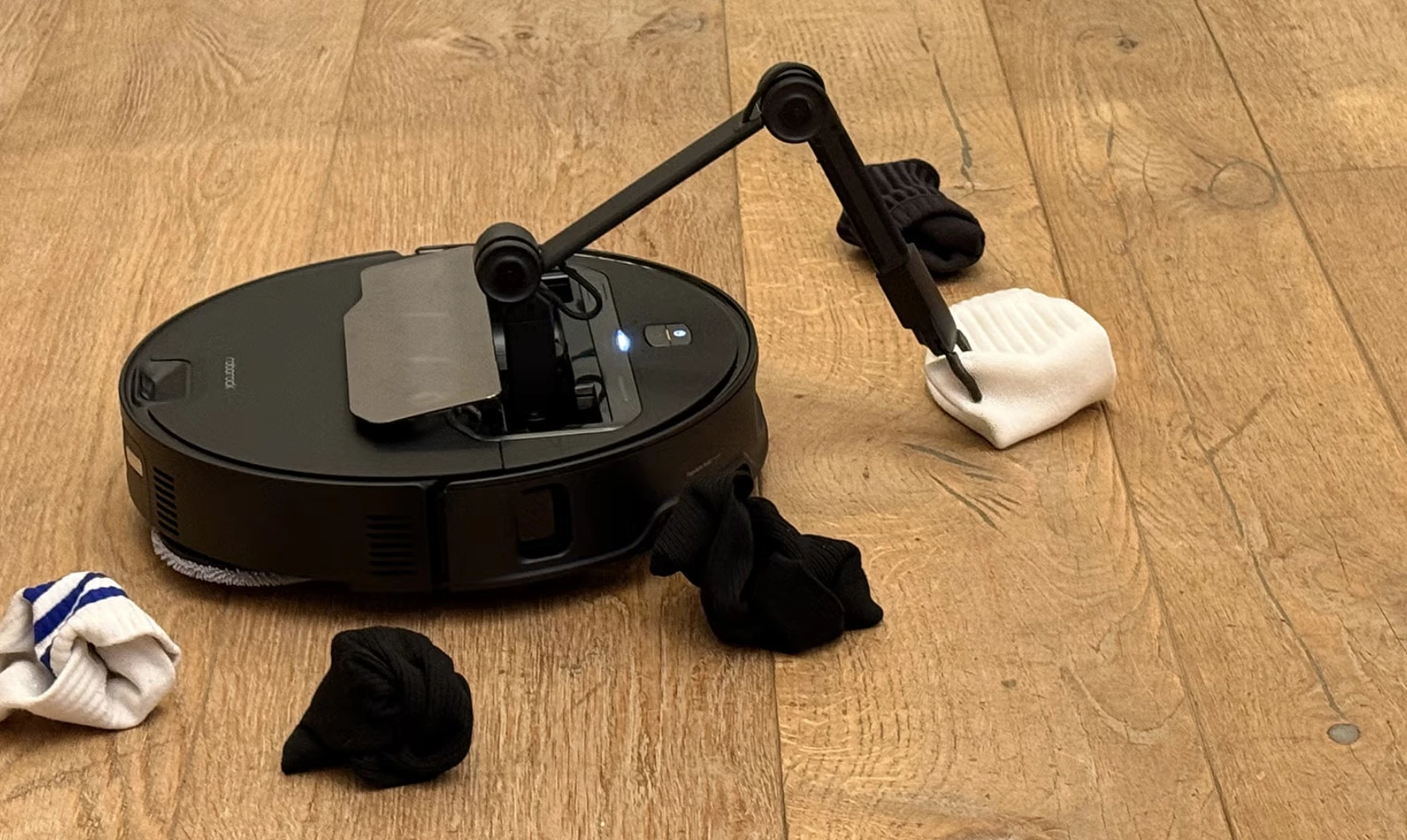
Image from Trusted Reviews
Roborock’s Z70 Vacuum Features Robotic Arm To Clear Obstacles
- Written by Kiara Fabbri Former Tech News Writer
- Fact-Checked by Justyn Newman Former Lead Cybersecurity Editor
Roborock has introduced its latest vacuum model, the Saros Z70, which features a robotic arm and enhanced navigation capabilities.
In a Rush? Here are the Quick Facts!
- The Roborock Z70 introduces a robotic arm to move small obstacles during cleaning.
- The robotic arm can handle objects weighing up to 300 grams.
- The Roborock Z70 will be priced at $1,600 and ships on February 10.
The Z70’s robotic arm, which unfolds from the top of the vacuum, can extend and twist to move objects weighing under 300 grams, such as small items of laundry, as reported by TechCrunch .
After completing a basic cleaning pass, the robot returns to interact with these objects, moving them to areas it has already cleaned. The arm is equipped with an onboard camera and sensors that help it navigate and identify obstacles, as reported by TechCrunch.
The Verge notes that the Z70’s cleaning process begins by detecting and marking any items it can lift during its first run. Once the floor is cleared, it circles back to move the items and clean the previously obstructed areas.
The Verge says that system allows for a third run, where it can place the items in a designated spot, such as a laundry basket or near a closet, based on the user’s preferences in Roborock’s app.
In addition to the robotic arm, the Z70 features Roborock’s StarSight Autonomous System 2.0 , a navigation system that uses machine learning and advanced sensors to detect and map up to 108 different obstacles in a home, as reported by The Verge.
The system can identify specific objects, like a purse or teddy bear, and the vacuum can even be programmed via the Z70’s app to return and pick up these objects, demonstrating the arm’s role in interacting with the environment.
The Verge also notes that the Z70 builds on Roborock’s previous models, incorporating advanced technologies such as 3D time-of-flight sensors, RGB cameras, and machine learning for improved navigation.
The system also includes VertiBeam, a laser-powered obstacle avoidance feature that enhances the robot’s ability to clean around cables and irregularly shaped furniture, as reported by The Verge.
Despite these advancements, TechCrunch notes that the Z70 comes with a significant price tag of $1,600. While the robotic arm marks a significant advancement in vacuum technology, its widespread adoption remains uncertain due to the high cost compared to traditional models.
The Verge previewed the Saros Z70 ahead of its CES 2025 launch, and confirmed that the arm functions as expected, though it operates slowly. During the demo, it took about a minute to pick up and move each sock. Furthermore, the arm is limited to handling items under 300 grams.
Roborock has stated that additional items will be supported in the future, but hasn’t committed to increasing the weight limit, says The Verge. The fact that manually lifting socks might be more convenient could deter people from seeing the utility of such an expensive vacuum.
Additionally, the inclusion of built-in cameras and AI raises potential cybersecurity concerns for smart vacuum owners .
As reported recently by Medium , smart home devices are vulnerable to hackers, leading to data breaches, device hijacking, and network compromises. These threats can result in unauthorized access to personal data and physical security systems.
To mitigate these risks, Medium recommends securing networks, regularly updating devices, and using strong authentication practices. Manufacturers must prioritize cybersecurity when designing these devices.
