
Image by Torsten Dettlaff, from Pexels
Over 2.5 Billion Gmail Users Are At Risk From AI-Driven Phishing Scams
- Written by Kiara Fabbri Former Tech News Writer
- Fact-Checked by Justyn Newman Former Lead Cybersecurity Editor
In a Rush? Here are the Quick Facts!
- Scammers use AI to impersonate Google support with convincing phishing attempts.
- Scammers use Google Forms and real Google servers to appear legitimate.
- Google launched the Global Signal Exchange to share intelligence and combat scams.
A new security alert has been issued for Gmail users following the emergence of AI-driven phishing scams that are becoming increasingly sophisticated. According to Frobes , which reported the development today more than 2.5 billion Gmail users are at risk, making the platform a prime target for cybercriminals.
The latest AI-powered phishing attempts have reached a new level of realism, tricking even experienced users. One notable case involves Sam Mitrovic, a Microsoft solutions consultant, who shared his near-miss experience after being targeted by a convincing scam call, as reported by Forbes.
Mitrovic first received a notification about a Gmail account recovery attempt, a common phishing technique, which he ignored. However, a week later, he received another recovery notification followed by a phone call from someone pretending to be from Google support.
The scammer claimed that his Gmail account had been compromised, creating a sense of urgency and fear, as noted by Forbes. Mitrovic initially thought the call was legitimate, as the scammer used convincing details, including references to suspicious login attempts and even providing a phone number that appeared to belong to Google.
He knew that even if the number appeared legitimate, such as showing up on an official Google page, it could still be spoofed. Shortly after, he received an email that, at first glance, looked authentic, coming from a Google domain.
However, he realized that spoofing an email address is also possible. Upon closer inspection, the “To” field revealed an email address cleverly disguised as GoogleMail@InternalCaseTracking.com, a non-Google domain.
By connecting the clues, along with the unnatural pauses and overly precise pronunciation, he realized it was an AI-generated call. Mitrovic ultimately avoided falling victim but warned that these types of AI-generated attacks could easily deceive less tech-savvy users, as reported by Forbes.
Another incident tha Forbes mentioned was reported by Garry Tan, the founder of Y Combinator. Tan recounted a similarly elaborate phishing scam involving a fake Google support call, in which the attacker claimed that a family member had provided a death certificate to recover his account.
The scam was designed to manipulate Tan into approving a fraudulent account recovery. Fortunately, he recognized inconsistencies in the process and avoided being scammed.
Public service announcement: You should be aware of a pretty elaborate phishing scam using AI voice that claims to be Google Support (caller ID matches, but is not verified) DO NOT CLICK YES ON THIS DIALOG— You will be phished They claim to be checking that you are alive and… pic.twitter.com/60zeuS2lL8 — Garry Tan (@garrytan) October 10, 2024
These AI-driven phishing scams not only exploit sophisticated technology but also manipulate legitimate tools such as Google Forms to create convincing support documents, notes Forbes. By using genuine Google servers, the attackers make their communications appear trustworthy, further complicating the detection of these fraudulent activities, warned Forbes.
In response to the growing threat, Google has launched the Global Signal Exchange in collaboration with the Global Anti-Scam Alliance and the DNS Research Federation. This new initiative aims to share real-time intelligence on cybercrime, enabling faster detection and disruption of scams.
To protect themselves, Gmail users are advised to enable Google’s Advanced Protection Program, which now includes passkey support, providing additional security measures for high-risk accounts such as those of journalists and activists.
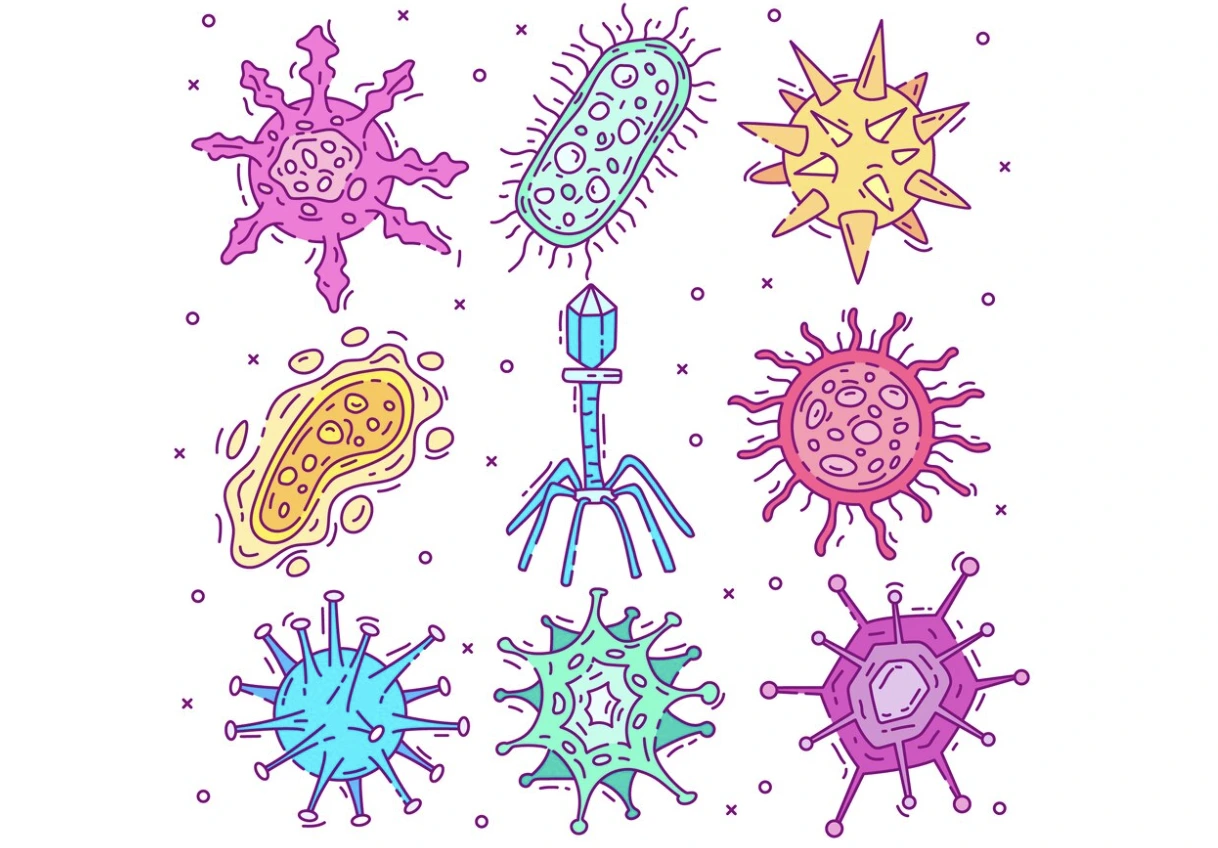
Image from Freepik
AI Advances Virology: 70,500 New RNA Viruses Identified
- Written by Kiara Fabbri Former Tech News Writer
- Fact-Checked by Justyn Newman Former Lead Cybersecurity Editor
In a Rush? Here are the Quick Facts!
- The study employs metagenomics to analyze genetic material without culturing viruses.
- Identifying new viruses is essential as some may link to human diseases.
- The AI techniques used in this study may revolutionize future virology research.
A new study published on Friday in Nature reports that researchers have used AI to identify 70,500 new RNA viruses, many of which live in harsh environments like salt lakes and hydrothermal vents.
This research applies a technique called metagenomics, which allows scientists to analyze the genetic material from various ecosystems without needing to grow individual viruses in a lab.
Viruses are tiny organisms that can infect animals, plants, and bacteria, but many remain unknown. Artem Babaian, a computational virologist at the University of Toronto, explains that there are still countless undiscovered viruses.
The article notes that identifying these viruses is important because some may be linked to diseases in humans, helping to shed light on unexplained illnesses.
Previous research has also used machine learning to find new viruses, but this study goes further by including predicted protein structures in the analysis. The AI model used here combines genetic sequencing data with a protein-prediction tool called ESMFold, developed by Meta.
This study follows the recent Nobel Prize win for Google DeepMind’s AlphaFold, which made significant advances in protein structure prediction.
Finding new RNA viruses is crucial because these viruses change quickly, making them hard to identify. Researchers typically look for a specific part of the virus’s genetic code that helps it replicate, called RNA-dependent RNA polymerase (RdRp). If the genetic code of a new virus is very different from what is already known, it might be overlooked.
In earlier work, Babaian and his team examined 5.7 million genomic samples available online, discovering nearly 132,000 new RNA viruses in 2022.
The current study builds on this by using a model called LucaProt, based on a transformer architecture similar to what powers AI tools like ChatGPT. This model helped researchers find around 160,000 RNA viruses , almost half of which had not been documented before.
In parallel, Microsoft recently announched innovations within its Healthcare platform , emphasizing AI’s role in advancing medical care. Their new healthcare AI models facilitate the integration and analysis of various data types, including medical imaging and genomics.
The application of AI in virology offers a way to explore the vast number of viruses that have not yet been studied, potentially leading to important findings for both public health and environmental science.
