
Image by wayhomestudio, from Freepik
OpenAI’s AI Models Show Growing Persuasion Power, Raising Concerns Over Global Influence
- Written by Kiara Fabbri Former Tech News Writer
- Fact-Checked by Justyn Newman Former Lead Cybersecurity Editor
OpenAI has revealed a new benchmark for its AI models, showing that their persuasive abilities now surpass 82% of Reddit users, specifically those engaging in debates on the r/ChangeMyView subreddit, as first reported by ArsTechnica .
In a Rush? Here are the Quick Facts!
- AI responses were tested against human arguments from the r/ChangeMyView subreddit.
- The o3-mini model ranks in the 80th percentile for persuasive writing.
- OpenAI warns AI persuasion could be used for political manipulation and misinformation.
While impressive, the company continues to warn that AI’s potential to influence opinions could become a dangerous tool, especially in the hands of nation states.
The r/ChangeMyView forum serves as an ideal testing ground, as users post opinions they are willing to reconsider in hopes of gaining alternative perspectives. The forum has a vast dataset of arguments across various topics, including politics, social issues, and even AI itself.
In the study , OpenAI asked human evaluators to rate AI and human responses on a five-point scale, assessing their persuasiveness. The results revealed that OpenAI’s models have made substantial progress since the release of ChatGPT-3.5, which ranked in the 38th percentile.
The new o3-mini model outperforms human arguments in 82% of cases, positioning it in the 80th percentile range for persuasive writing, says Ars Technica.
Despite this success, OpenAI stresses that the models have not yet reached “superhuman” persuasive capabilities (above the 95th percentile), which would allow them to convince individuals to make decisions contrary to their best interests.
However, they are close enough to raise significant concerns about their potential use in influencing political decisions, manipulating public opinion, or enabling large-scale misinformation campaigns.
OpenAI’s model performs well in generating persuasive arguments, but the company acknowledges that current tests do not measure how often the AI actually changes people’s minds on critical issues.
ArsTechnica reports that even at this stage, OpenAI is concerned about the impact such technology could have in the hands of malicious actors.
AI models, with their ability to generate persuasive arguments at a fraction of the cost of human labor, could easily be used for astroturfing or online influence operations, potentially swaying elections or public policies.
To mitigate these risks, OpenAI has instituted measures such as increased monitoring of AI-driven persuasive efforts and banning political persuasion tasks in its models, says ArsTechnica.
However, the company recognizes that the cost-effective nature of AI-generated persuasion could lead to a future where we must question whether our opinions are genuinely our own—or simply the result of an AI’s influence.
The risks extend beyond politics—AI-generated persuasion could also become a powerful tool for cybercriminals engaging in phishing attacks. By crafting highly convincing messages, AI could increase the success rate of scams, tricking individuals into divulging sensitive information or clicking on malicious links
For example, the emergence of GhostGBT highlights the growing risks of AI-driven cyber threats. This chatbot can generate malware, craft exploit tools, and write convincing phishing emails .
GhostGPT is part of a broader trend of weaponized AI reshaping cybersecurity . By making cybercrime faster and more efficient, such tools present significant challenges for defenders. Research indicates that AI could generate up to 10,000 malware variants, evading detection 88% of the time .
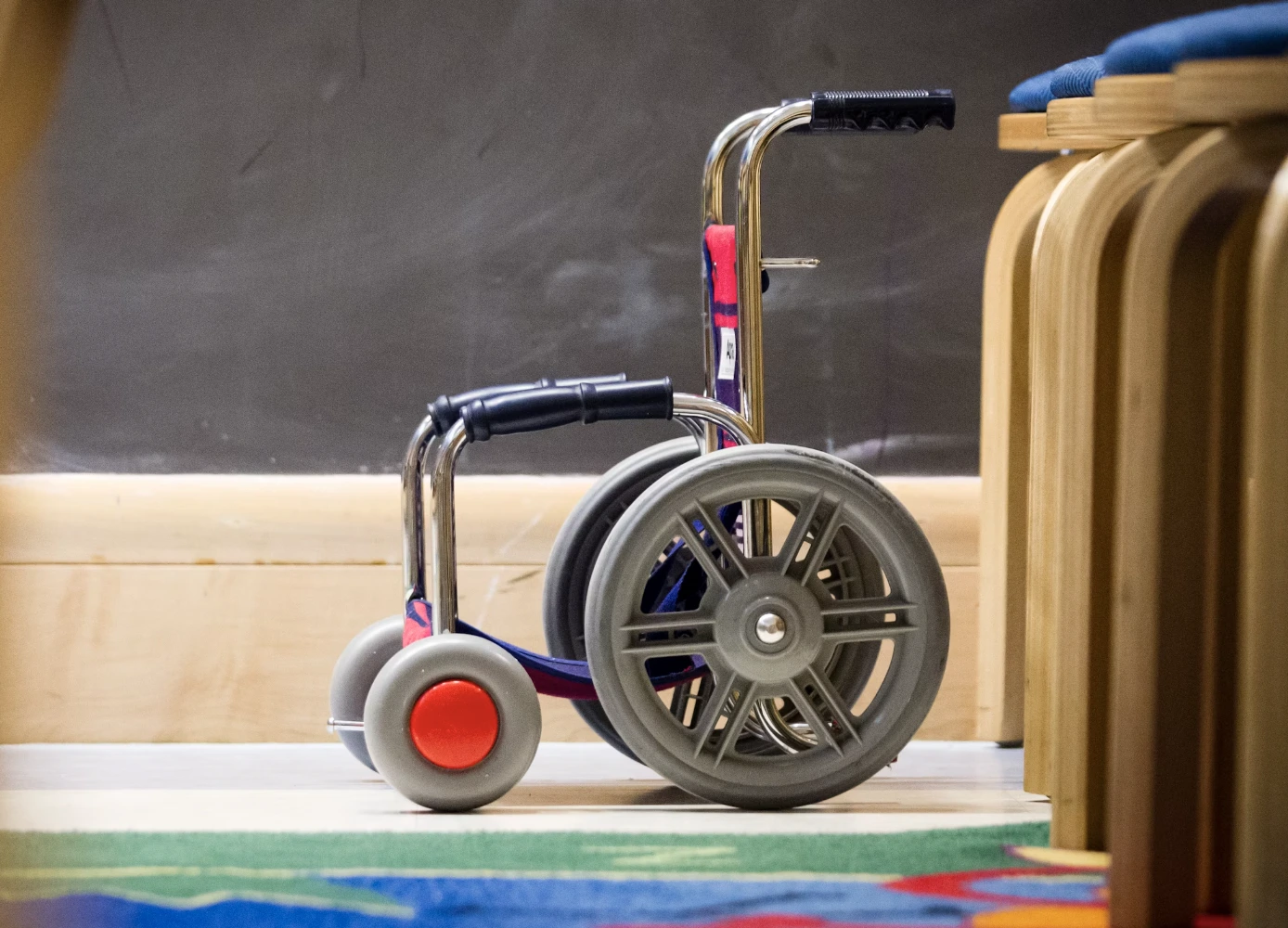
Image by National Cancer Institute, from Unsplash
Smart Wheelchair Enhances Mobility With AI-Driven Shared Control
- Written by Kiara Fabbri Former Tech News Writer
- Fact-Checked by Justyn Newman Former Lead Cybersecurity Editor
A new smart wheelchair, the CoNav Chair, described in a paper on the arXiv preprint platform, features a shared control system that combines autonomous navigation with user input to enhance mobility, trust, and efficiency for people with disabilities (PWD).
In a Rush? Here are the Quick Facts!
- It reduces abrupt turns, improving comfort compared to manual or fully autonomous systems.
- It has higher success rates and fewer collisions in complex environments.
- The system integrates LiDAR, cameras, and sensors for real-time situational awareness.
Researchers designed the Robot Operating System (ROS)-based wheelchair to bridge the gap between fully autonomous and manual control systems, which often lead to inefficiencies and reduced user trust. They
Unlike traditional powered wheelchairs (PWC), which can be difficult to operate, or autonomous wheelchairs that limit user control, the CoNav Chair allows users to override the navigation system when necessary.
This hybrid approach ensures smoother movement while preventing abrupt stops or inefficient route choices. The research team tested the system in real-world indoor environments, demonstrating its advantages over fully manual and autonomous modes.
The wheelchair integrates LiDAR sensors, a camera, an inertial measurement unit (IMU), and encoders, allowing it to map its surroundings and navigate obstacles efficiently. The shared control algorithm lets users guide the wheelchair while relying on its automated features for smoother and safer navigation.
The software is built on a ROS-based Simultaneous Localization and Mapping (SLAM) framework, which allows the wheelchair to construct a detailed 2D map of indoor environments. The system balances user input with AI-driven navigation, enhancing both efficiency and safety.
Experimental results demonstrated that the CoNav Chair significantly improves navigation efficiency compared to both manual and fully autonomous systems. It achieves shorter completion times and follows more direct routes than manual operation, allowing users to reach their destinations more quickly.
The shared control system enables smoother trajectories, reducing abrupt turns and enhancing overall comfort. Additionally, the wheelchair demonstrates higher success rates and fewer collisions, making it a more reliable option for navigating complex environments.
Manual control often led to more collisions due to user miscalculations, while autonomous systems sometimes struggled with sharp turns or obstacles. The CoNav Chair effectively combines the strengths of both approaches, allowing for user intervention when necessary while leveraging automation in simpler scenarios.
The CoNav Chair represents a significant step toward improving mobility solutions for PWD, offering a balance between autonomy and user control. By enhancing trust and navigation efficiency, this smart wheelchair has the potential to increase independence and social integration for individuals relying on mobility assistance.
