OpenAI, SoftBank, and Oracle Unveil $500 Billion ‘Stargate Project’ for Advanced AI Infrastructure
- Written by Andrea Miliani Former Tech News Expert
- Fact-Checked by Justyn Newman Former Lead Cybersecurity Editor
OpenAI, along with SoftBank, Oracle, and in collaboration with the White House, announced on Tuesday the Stargate Project, a joint venture backed by up to $500 billion to build infrastructure for developing advanced AI technologies in the United States within the next four years.
In a Rush? Here are the Quick Facts!
- OpenAI, SoftBank, Oracle, and other tech companies will work together in a new venture called Stargate, backed by the U.S. government.
- The new company expects to build new data centers with a $500 billion investment within the next four years.
- Stargate’s infrastructures will start building in Texas, and the project should generate over 100,000 jobs in the U.S.
According to OpenAI, the Stargate Project will support national security and re-industrialization in the country. OpenAI, SoftBank, Oracle, and MGX are the initial equity funders. SoftBank CEO Masayoshi Son will chair the new venture, as the Japanese company will assume financial responsibility, while OpenAI will focus on operational duties.
U.S. President Donald Trump publicly backed the project in a public announcement during a press conference along with Masayoshi Son, OpenAI’s CEO Sam Altman, and Oracle’s Chief Technology Officer Larry Ellis.
Trump described Stargate as “the largest AI infrastructure project by far in history,” and acknowledged the fierce competition in the market. He said the new company should soon create over 100,000 jobs in the U.S.
“We will begin deploying $100 billion immediately,” wrote OpenAI in a public announcement. “This infrastructure will secure American leadership in AI, create hundreds of thousands of American jobs, and generate massive economic benefit for the entire world.”
The infrastructure construction will begin in Texas and will count on other major tech companies like Microsoft, Nvidia, and Arm as key initial technology partners.
Microsoft and OpenAI have also announced updates on their business relationships. According to Microsoft’s press release , some key terms have changed.
While Microsoft and OpenAI will keep working together—even though Microsoft included OpenAI in its competitor’s list —, Microsoft is no longer the company’s exclusive cloud provider, and OpenAI could reach out to other companies if the reach computing capacity.
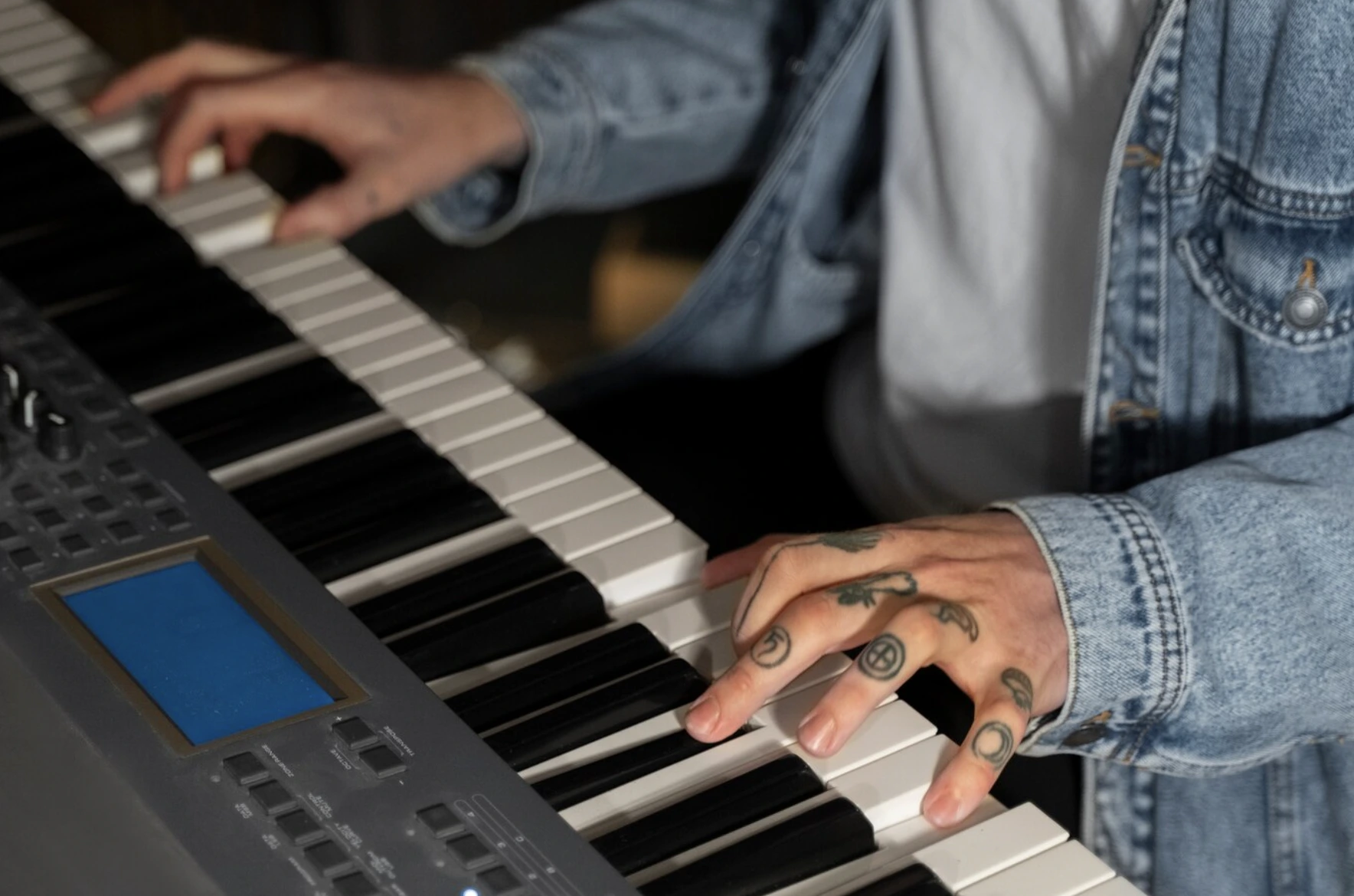
Image by Freepik
Hand Exoskeleton Boosts Pianists’ Skill
- Written by Kiara Fabbri Former Tech News Writer
- Fact-Checked by Justyn Newman Former Lead Cybersecurity Editor
A study published in Science Robotics explores how exposure to fast, complex finger movements using a hand exoskeleton can help expert pianists overcome the plateau commonly known as the “ceiling effect.”
In a Rush? Here are the Quick Facts!
- Passive training with exoskeleton improved performance in both trained and untrained hands.
- The intermanual transfer effect showed improved skills in the untrained hand.
- Neuroplastic changes reorganized motor patterns to enhance complex finger movements.
The ceiling effect happens when, despite extensive training, experts such as musicians or athletes can no longer improve their skills. This new study challenges this limitation by utilizing passive training that involves a robot-generated sensory experience.
Pianists, who had already reached a plateau in their finger speed, were exposed to movements they could not perform on their own using a hand exoskeleton. This exoskeleton moved individual fingers quickly and independently, allowing the participants to experience complex finger motions faster than they could achieve voluntarily.
Remarkably, the researchers report that this exposure helped them play faster and more efficiently, improving their piano performance beyond their prior limits. The passive training technique worked not only on the trained hand but also improved performance in the untrained hand.
The researchers explain that this is known as the “intermanual transfer effect,” where the motor skills learned with one hand transferred to the other, even without direct training of the second hand.
The key takeaway from the study is that passive exposure to unfamiliar movements can lead to neuroplastic changes. These changes reorganize the brain’s motor patterns to enhance skill performance.
While voluntary practice may fail to break the performance plateau, passive exposure to new, complex motions induces changes in how the brain processes and coordinates movements. This provides a solution to the limitation of reaching a skill ceiling.
Unlike previous robotic exoskeletons designed for rehabilitation or daily tasks, this technology focuses on enhancing fine motor skills without being worn on the body. It was specifically designed to provide fast, controlled, and precise finger movements, enabling experts to achieve impossible speeds.
The study’s findings suggest this technology could benefit not only musicians but also individuals with neurological disorders affecting hand dexterity.
This research opens up new possibilities for training in fields that require complex motor skills and could be crucial for applications in both performance enhancement and rehabilitation. The hand exoskeleton holds promise for improving motor learning and restoring capabilities in individuals with motor impairments.
While the study suggests significant advances, future research will be needed to explore the full range of benefits, including the underlying neuroplastic mechanisms that allow for such dramatic skill improvement.
