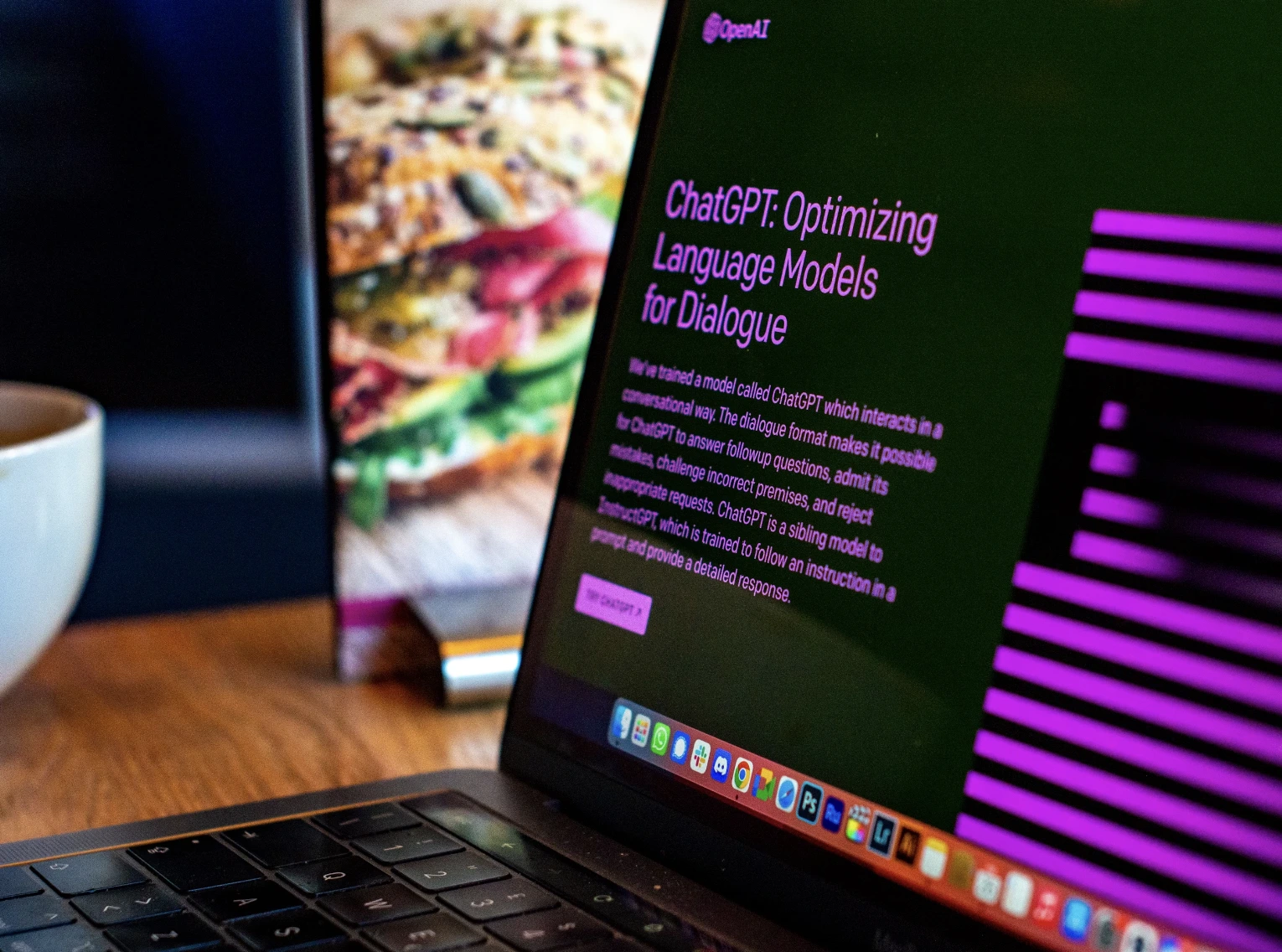
Image by Emilinao Vittoriosi, from Unsplash
OpenAI Pushes U.S. to Allow AI Training On Copyrighted Material
- Written by Kiara Fabbri Former Tech News Writer
- Fact-Checked by Sarah Frazier Former Content Manager
OpenAI, the company behind ChatGPT, is pushing the U.S. government to adopt policies that allow AI models to train on copyrighted material, arguing that this is essential for maintaining America’s global leadership in artificial intelligence.
In a Rush? Here are the Quick Facts!
- Claims restrictive copyright rules could give China an AI advantage.
- OpenAI faces lawsuits from authors and publishers over unauthorized use of copyrighted works.
- Proposes “AI Economic Zones” to speed up infrastructure and energy projects.
In a proposal submitted to the Trump administration’s “ AI Action Plan ,” OpenAI called for a copyright strategy that preserves the ability of AI models to learn from copyrighted works, claiming that restrictive rules could hand China an advantage in the AI race.
“America has so many AI startups, attracts so much investment, and has made so many research breakthroughs largely because the fair use doctrine promotes AI development,” OpenAI wrote in its proposal .
The company emphasized that limiting AI training to public domain content would stifle innovation and fail to meet the needs of modern society. OpenAI’s stance comes amid ongoing legal battles with content creators, including news outlets like The New York Times and authors who have sued the company for using their copyrighted works without permission.
Recently, the death of former OpenAI researcher and whistleblower Suchir Balaji continues to spark controversy as his family disputes the suicide ruling. Balaji, a key witness in a lawsuit against OpenAI, accused the company of copyright violations months before his death.
An independent autopsy revealed anomalies, including an unusual bullet trajectory, raising doubts about the official findings. His family has filed a lawsuit demanding transparency, while public figures like Elon Musk have questioned the circumstances.
Despite these lawsuits , OpenAI argues that its models transform copyrighted material into something new, aligning with the principles of fair use. “Our AI model training aligns with the core objectives of copyright and the fair use doctrine, using existing works to create something wholly new and different,” the company stated, as reported by Ars Technica.
The proposal also highlights concerns about China’s growing AI capabilities . OpenAI warned that if U.S. companies lose access to training data while Chinese firms continue to use it freely, “the race for AI is effectively over,” reports Ars Technica.
The company urged the U.S. government to shape international copyright policies to prevent other countries from imposing restrictive rules on American AI firms. Dr. Ilia Kolochenko, a cybersecurity expert, expressed skepticism about OpenAI’s proposals, calling them a “slippely slope.”
He argued that paying fair compensation to authors whose works are used for training AI models would be economically unviable for AI companies. “Advocating for a special regime or copyright exception for AI technologies is problematic,” Kolochenko told The Register .
In addition to copyright issues, OpenAI’s proposal includes recommendations for accelerating AI infrastructure development, such as creating “ AI Economic Zones ” to streamline permits for building data centers and energy facilities, as noted by The Register.
The company also called for federal agencies to adopt AI tools more aggressively, citing “unacceptably low” uptake in government departments. OpenAI’s push for fewer restrictions on AI training reflects broader debates about the balance between innovation and intellectual property rights.

Image by Ivan Radic, from Flickr
Cybercriminals Impersonate Booking.com In New Phishing Attack
- Written by Kiara Fabbri Former Tech News Writer
- Fact-Checked by Sarah Frazier Former Content Manager
Microsoft has identified an ongoing phishing campaign targeting hotel and hostel staff by impersonating the travel agency Booking.com.
In a Rush? Here are the Quick Facts!
- Microsoft warns of a phishing campaign targeting hotel staff via fake Booking.com emails.
- Hackers use a “ClickFix” method to bypass security filters and avoid detection.
- Booking.com confirms no security breach but warns partners about ongoing phishing scams.
Microsoft’s security team identified the campaign in December 2024, just before the busy holiday travel season. The scam is still active as of February 2025, affecting organizations across North America, Europe, Oceania, and parts of Asia.
The attackers send fake emails that appear to be from Booking.com, referencing negative guest reviews, urgent booking requests, or account verification needs. These emails contain links leading to a deceptive webpage designed to resemble Booking.com.
On this fake website, victims are prompted to complete a CAPTCHA verification, but instead of a real security check, they are instructed to open a special command window on their computer and paste in a provided code. This action downloads and executes malware that can steal sensitive information.
The malware delivered in this attack includes several well-known hacking tools, such as XWorm, VenomRAT, and AsyncRAT.
These programs allow cybercriminals to take control of infected devices, capture passwords, and commit financial fraud. Microsoft has linked this activity to a hacker group it calls Storm-1865, which has previously targeted e-commerce platforms and hotel guests using similar tactics.
The addition of this new method, known as ” ClickFix ,” shows how attackers are evolving to bypass security defenses. By making the victim take specific actions, such as copying and pasting code, they can avoid automatic detection by email filters and antivirus software.
A Booking.com spokesperson clarified that the attack does not involve a security breach on their platform.
“While we can confirm that Booking.com’s systems have not been breached, we are aware that unfortunately some of our accommodation partners and customers have been impacted by phishing attacks sent by professional criminals, with the criminal intent of taking over their local computer systems with malware,” they said, reported The Record .
Microsoft advises businesses to enforce multi-factor authentication, use email filtering tools to scan for phishing attempts, and ensure staff are trained to recognize suspicious emails. With cybercriminals constantly refining their tactics, staying vigilant against phishing attacks is crucial, especially in industries that handle sensitive customer data.
