OpenAI Launches New, Advanced GPT-4o Model: Soon Available For Everyone
- Written by Andrea Miliani Former Tech News Expert
- Fact-Checked by
OpenAI revealed a new, more advanced ChatGPT model called GPT-4o during the live OpenAI Spring Update event Monday night. The new GPT-4o is faster than GPT-4 and can simultaneously process text, audio, and images—it essentially can “see” through a device’s camera.
During the 26-minute-long live stream, OpenAI’s team showed in real-time the new features and capabilities of the new model. They also shared details about coming updates for previous versions, like the new desktop app.
“The big news today is that we are launching our new flagship model and we are calling it ChatGPT-4o,” said Mira Murati, Chief Technology Officer of OpenAI.
Murati explained that the new model and the new features for previous versions will be soon available for free and for everyone, including non-registered users. “We’ll be rolling them out over the next few weeks,” said Murati.
During the first demonstration, OpenAI’s team showed how GPT-4o can hold conversations using a female voice, be interrupted, answer fast and creatively—with a sense of humor—and even recognize emotions and give advice.
Later, the team presented different scenarios where GPT-4o can be used. They show how it can use the “vision” feature to help solve linear equations written on paper, understand code and graphics by sharing the screen through the desktop version, and assist in simultaneous translations in real-life conversations. GPT-4o can speak in multiple languages and different tones and styles of voice.
Finally, the experts showed how it can recognize human emotions, and also make mistakes. Throughout the demos, GPT-4o glitched a few times, confusing one of the presenters with a wood image and believing that the math problem was already handled when the team member hadn’t shown anything yet.
But GPT-4o quickly apologized and charmed the audience with its responses. “Oh, stop it, you are making me blush!” it replied when one of the research leaders, Barret Zoph, told GPT-4o how much they admired it.
Response To GPT-4o
OpenAI shared multiple short videos on X to demonstrate the different functions of the new GPT-4o model.
Several people on X associated it with the movie Her , where the protagonist Theodore Twombly, played by Joaquin Phoenix, falls in love with an AI virtual assistant voiced by Scarlett Johanson. “This is insane, when I saw these clips, I immediately remembered this movie!” commented one user. “This is literally Scarlett Johansson. How?!” wrote another.
While most users were impressed by the new features, others shared a few criticisms and concerns. “Dear @openai, your demo was super impressive and scary but the Italian accent was terrible :),” posted Massimo Banzi, co-founder of the robotic automation Arduino project.
“Really excellent but I would say that I think you may lose a lot of paid users if it’s only the limit cap that is different to the free version,” said another user .
In the following days, the new model and updates will be available to more people to test and experience the technology first hand.
Neuralink Says First Brain Chip Implant Encountered Mechanical Problem
- Written by Shipra Sanganeria Cybersecurity & Tech Writer
In a blog post released on May 8th, Elon Musk’s neurotechnology startup, Neuralink, revealed an issue with its brain chip implant and detailed the solution they used to fix it. In March, the first-ever Neuralink chip patient was shown to be able to control a computer mouse with his mind, despite this problem occurring in late February.
The announcement reveals that several threads of the brain implant had retracted from Noland Arbaugh’s brain, the 29-year-old quadriplegic participant. The problem led to a decrease in the amount of data that was retrieved during research and testing.
The retracted threads also resulted in reduced bits-per-second (BPS), which is used to measure the speed and accuracy with which a patient can control a computer cursor. A higher BPS score means better cursor control.
Neuralink did not disclose the cause or how many threads retracted, nor did it mention any safety concerns for Arbaugh. Adjusting an algorithm to be “more sensitive to neural population signals” improved the BPS rates, according to the announcement.
Despite the setback, Neuralink still managed to host a live demonstration of Arbaugh playing online chess on X in March. In another video on X , he was shown using the implant to play the racing video game Mario Kart using a Nintendo Switch.
Individuals within Neuralink expressed optimism about resolving these early-stage issues, according to the Wall Street Journal , which first reported the story. The problem was also reported to the US Food and Drug Administration (FDA) — which regulates clinical trials and approves commercialization of any medical device or technology.
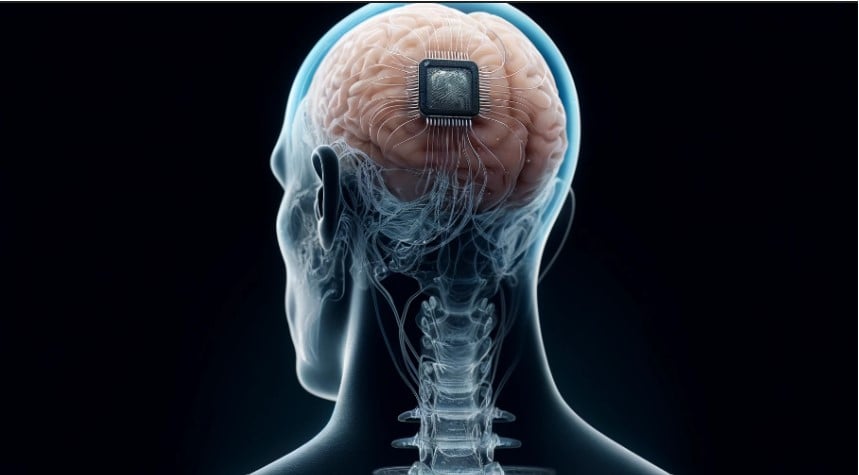
Neuralink’s N1 device, which is surgically implanted in the brain by the company’s proprietary surgical robot, aims to record and decode neuronal activity. The company’s aim is to grant digital autonomy to individuals coping with spinal cord injuries. But future plans involve extending its “Link’s functionality to the physical world to enable control of robotic arms, wheelchairs, and other technologies.”
In the months to come, the company is hoping to carry out two more implants, with a total of 10 planned for this year, according to the Wall Street Journal.
