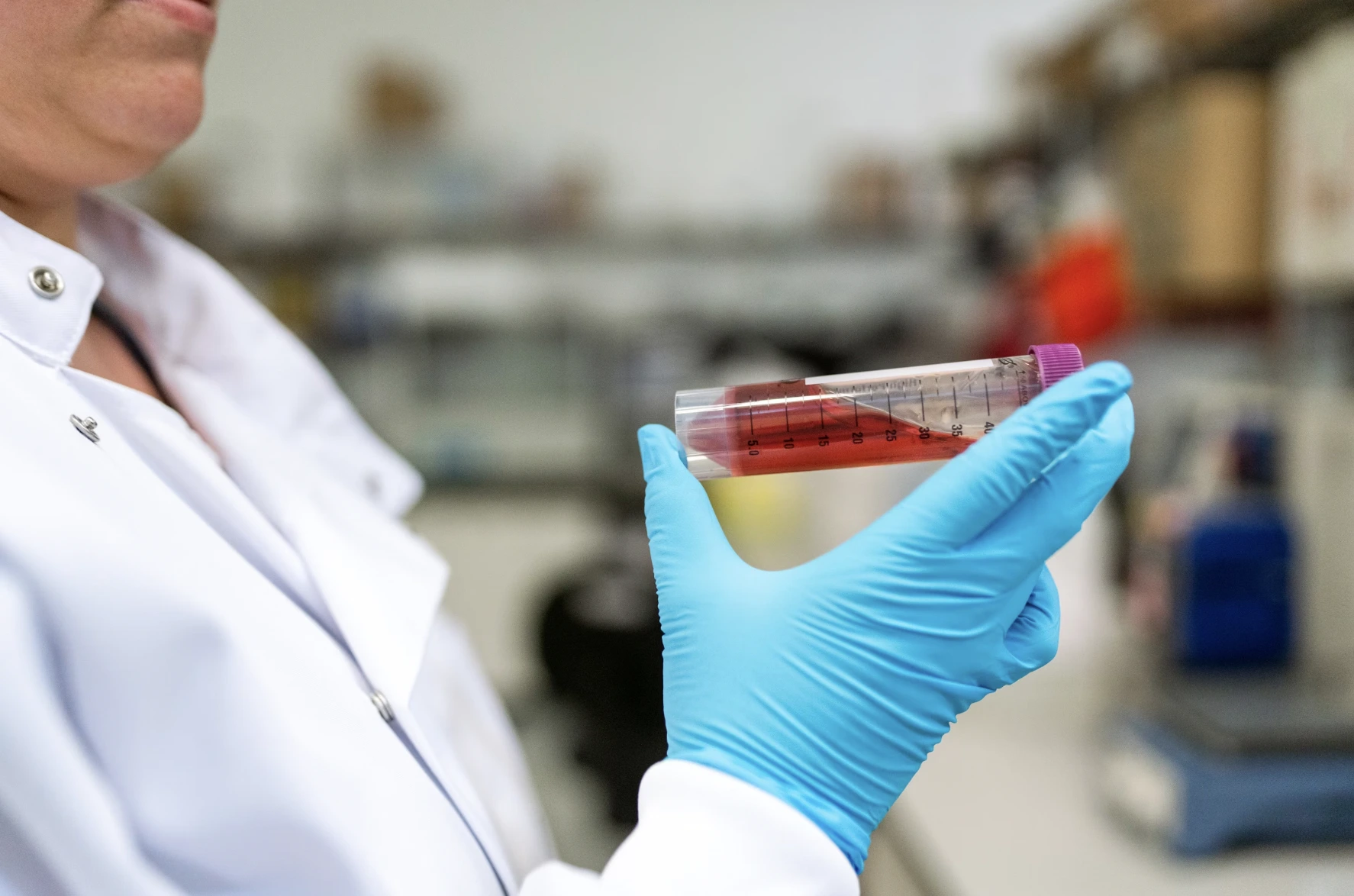
Image by TisisEngineering, from Unsplash
OpenAI Develops AI Model To Advance Longevity Science
- Written by Kiara Fabbri Former Tech News Writer
- Fact-Checked by Justyn Newman Former Lead Cybersecurity Editor
OpenAI has developed an AI model aimed at improving stem cell manufacturing, a collaboration with Retro Biosciences focused on longevity research, as first reported by MIT Technology Review .
In a Rush? Here are the Quick Facts!
- OpenAI developed GPT-4b micro to improve stem cell manufacturing for longevity research.
- GPT-4b micro was trained on protein sequences and interactions from multiple species.
- Early results show the model’s suggestions outperform traditional stem cell reprogramming methods.
The model, GPT-4b micro, marks OpenAI’s first venture into biological data and could significantly impact stem cell reprogramming, a key area in aging and regenerative medicine.
Retro Biosciences, a company funded by OpenAI CEO Sam Altman, studies the Yamanaka factors—proteins that can reprogram human skin cells into stem cells, capable of differentiating into various tissue types, as reported by MIT.
While this process offers potential applications in rejuvenating tissues and growing organs, it is currently inefficient, with less than 1% of cells undergoing successful reprogramming. GPT-4b micro was trained on protein sequences and interactions to suggest ways to optimize the Yamanaka factors, enhancing their effectiveness, as reported by MIT.
MIT further explains that early results show that the model’s suggestions led to improvements in the Yamanaka factors, with preliminary tests indicating a more than 50-fold increase in their efficiency.
The collaboration between OpenAI and Retro Biosciences started a year ago, and it is part of OpenAI’s broader efforts to explore how AI can contribute to scientific discovery.
Although OpenAI has not released the model for public use, the project showcases how AI can be applied to biological problems, offering a glimpse into the future of AI-driven research in areas like aging and regenerative medicine.
MIT notes that unlike Google’s AlphaFold, which focuses on protein folding, OpenAI’s model is tailored to the unique characteristics of the Yamanaka factors. It uses a focused dataset and a “few-shot” prompting technique to generate protein redesigns.
These alterations were tested in the lab, where researchers found that the model’s predictions often led to better outcomes than traditional methods.
The full impact of OpenAI’s model on stem cell research remains to be seen, but early results are promising. Experts in the field, including Harvard researcher Vadim Gladyshev, have expressed interest in the potential of AI to address longstanding challenges in cell reprogramming, as reported by MIT.
However, the model’s predictions are not yet fully understood, and the collaboration between OpenAI and Retro Biosciences is still in its early stages, noted MIT.
As OpenAI continues to explore the intersection of AI and biological sciences, the collaboration with Retro Biosciences serves as an example of how AI may soon play a role in accelerating discoveries in fields such as longevity and regenerative medicine.

Image by Nico Baum, from Unsplash
- Written by Kiara Fabbri Former Tech News Writer
- Fact-Checked by Justyn Newman Former Lead Cybersecurity Editor
In a Rush? Here are the Quick Facts!
- Amazon hired Covariant’s founders but kept its operations separate.
- Deal restricts Covariant from selling its technology freely, limiting competition.
- FTC is reviewing the complaint, and Amazon defends the structure as legal.
According to the filing, the $380 million deal exceeded the $119.5 million threshold that typically triggers premerger reporting requirements, reported The Post.
The complaint also highlights terms in the deal that allegedly restrict Covariant’s ability to sell its technology to other companies, turning it into a “zombie” company with limited prospects.
She emphasized that the arrangement aimed to enhance Covariant’s technology without limiting its competitive ability. The FTC has confirmed it is reviewing the complaint, but the agency declined to comment further.
These so-called “reverse acquihires” are raising concerns among regulators, who worry that such deals may limit competition and innovation, particularly in the rapidly developing AI industry.
