Photo by Cytonn Photography on Unsplash
OpenAI Cofounder’s Safe Superintelligence Startup Raises $1 Billion
- Written by Andrea Miliani Former Tech News Expert
- Fact-Checked by Justyn Newman Former Lead Cybersecurity Editor
According to a Reuters exclusive, the startup Safe Superintelligence (SSI) recently raised $1 billion in cash to develop its technology and systems. The new company was co-founded by Ilya Sutskever, former chief scientist and co-founder of OpenAI, Daniel Levy, a former OpenAI researcher, and Daniel Gross, an entrepreneur with experience in AI and a former key talent at Apple. SSI is focused on artificial intelligence safety and understanding and developing systems that “far surpass human capabilities” to prevent harm.
Big venture capital firms like Sequoia Capital, Andreessen Horowitz, SV Angel, and DST Global were among the main investors along with other investment partnerships like NFDG.
“It’s important for us to be surrounded by investors who understand, respect and support our mission, which is to make a straight shot to safe superintelligence and in particular to spend a couple of years doing R&D on our product before bringing it to market,” said Gross, SSI’s Chief Executive.
The startup will use the money raised to buy computing power and also hire new talents—mainly researchers and engineers—to expand its structure. It currently has only 10 employees and will focus on growing a small and trusted team between Palo Alto and Tel Aviv. The current valuation of the company is unknown but anonymous sources told Reuters that the number is around $5 billion.
“Building safe superintelligence (SSI) is the most important technical problem of our time,” states the company on its very simple website , “We have started the world’s first straight-shot SSI lab, with one goal and one product: a safe superintelligence. It’s called Safe Superintelligence Inc.” The statement was signed by the three cofounders on June 19 this year, after it was founded. They also invited more talents to join and shared the recent investment update reported by Reuters.
Other OpenAI cofounders and talents like Sutskever who also left OpenAI are developing new AI technologies. Just a few weeks ago, Andrej Karpathy, a former researcher at OpenAI, launched a new company, Eureka Labs , an AI-native educational platform.
Braille-Tip, A Pen To Address Declining Braille Literacy
- Written by Kiara Fabbri Former Tech News Writer
- Fact-Checked by Justyn Newman Former Lead Cybersecurity Editor
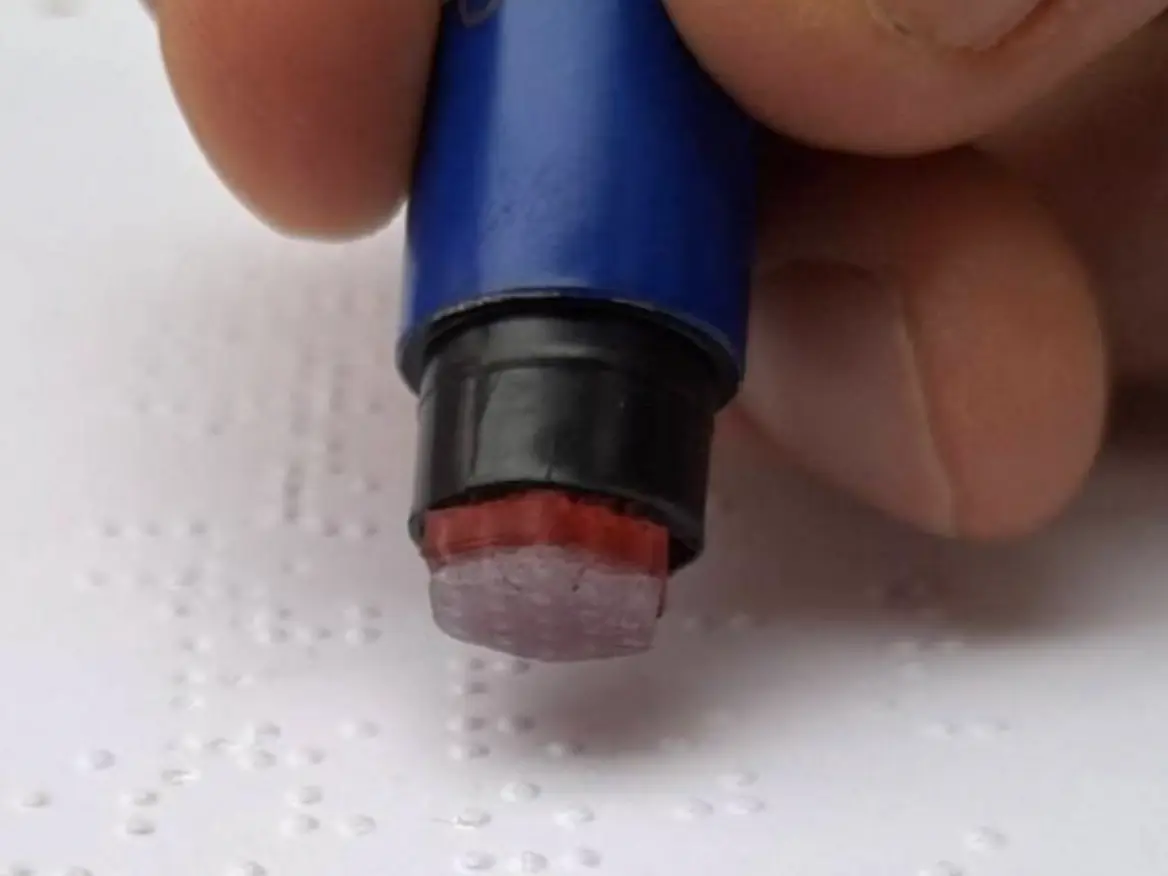
The University of Bristol announced today that its experts have developed a pen capable of converting Braille into English text.
In their research paper , the authors demonstrate the capabilities of a new device called Braille-tip. This compact, soft tactile sensor (11mm in diameter) can be attached to a standard pen and is designed to aid in reading and learning Braille.
It uses fluid channels to relay tactile information from 19 soft taxel membranes to a single camera. The Braille-tip prototype is made from silicone elastomer and tubing, and its sensory response is calibrated to detect 52 raised Braille dots on embossed cardboard.
Their results showed that the Braille-tip can successfully read Braille aloud with an 84.5% accuracy rate when used by hand.
Its small size and the dense arrangement of taxels make it suitable for high-precision, low-force tasks, suggesting potential for integration into everyday items.
The development of the Braille-tip comes at a time when Braille literacy is declining, despite significant demand for learning the language.
Over the past fifty years, braille literacy has sharply declined, with the percentage of individuals with vision loss who read braille hitting an all-time low. In 1960, nearly half of all blind students were fluent in braille, but by 2016, only 8.5% of these students identified as braille readers, according to WCBlind .
This decline is often attributed to a shortage of accessible learning resources, especially in areas outside major urban centers.
The U.S. is experiencing a nationwide shortage of qualified braille teachers . Due to varying state requirements for braille literacy, some students receive less than two to three hours of instruction per week .
Lead author Dr George Jenkinson stated, “This device, Braille-tip, was designed to aid people’s ability to learn independently, and will hopefully form part of the solution to increasing Braille literacy and allow people to reap the benefits of reading and writing.”
This is particularly significant because mathematical and scientific notations can only be fully understood by those proficient in Braille. As noted by Arielle Silverman, president of the Arizona Association of Blind Students.
Generally speaking, Braille literacy is correlated with higher academic achievement and improved employment outcomes for blind and low-vision adults, as reported recently by NPR .
As the need for effective Braille education remains critical, innovations like the Braille-tip may help to improve access and support efforts to reverse the current trends in Braille literacy.
