
Photo by Andrew Neel on Unsplash
OpenAI Co-founder John Schulman Leaves For Rival Anthropic
- Written by Andrea Miliani Former Tech News Expert
- Fact-Checked by Justyn Newman Former Lead Cybersecurity Editor
One of OpenAI’s cofounders, John Schulman, announced yesterday that he is quitting the company—after 9 years—to join its rival Anthropic.
“I’ve made the difficult decision to leave OpenAI. This choice stems from my desire to deepen my focus on AI alignment, and to start a new chapter of my career where I can return to hands-on technical work,” wrote Schulman on X . “ I’ve decided to pursue this goal at Anthropic, where I believe I can gain new perspectives and do research alongside people deeply engaged with the topics I’m most interested in.”
Schulman emphasized that OpenAI has been supportive regarding research and that this is a personal decision regarding his professional career. He explained that OpenAI is the only company he has truly ever worked for as he joined right after grad school, and that he is grateful and proud of the company and the team he worked with. He said he believes the company will thrive without him.
Sam Altman, OpenAI’s CEO, publicly replied to his message on the social media platform and thanked Schulman. “You are a brilliant researcher, a deep thinker about product and society, and mostly, you are a great friend to all of us,” wrote Altman, “We will miss you tremendously and make you proud of this place.”
Just two hours after Schulman shared his public announcement, Greg Brockman, President of OpenAI, shared on X that he is taking a sabbatical break. “I’m taking a sabbatical through end of year. First time to relax since co-founding OpenAI 9 years ago. The mission is far from complete; we still have a safe AGI to build.”
I’m taking a sabbatical through end of year. First time to relax since co-founding OpenAI 9 years ago. The mission is far from complete; we still have a safe AGI to build. — Greg Brockman (@gdb) August 6, 2024
According to TechCrunch, out of the 11 founders of OpenAI, there are only three remaining: Brockman, Altman, and Wojciech Zaremba. Schulman is not the first OpenAI talent to leave the company for their competitor Anthropic, Jan Leike, one of OpenAI’s lead safety researchers, did the same just a few months ago, in May .
These recent major changes in the AI startup have made people suspicious and curious about what is truly going on in OpenAI internally. Multiple users have shared different theories and fears on social media and platforms like Reddit .
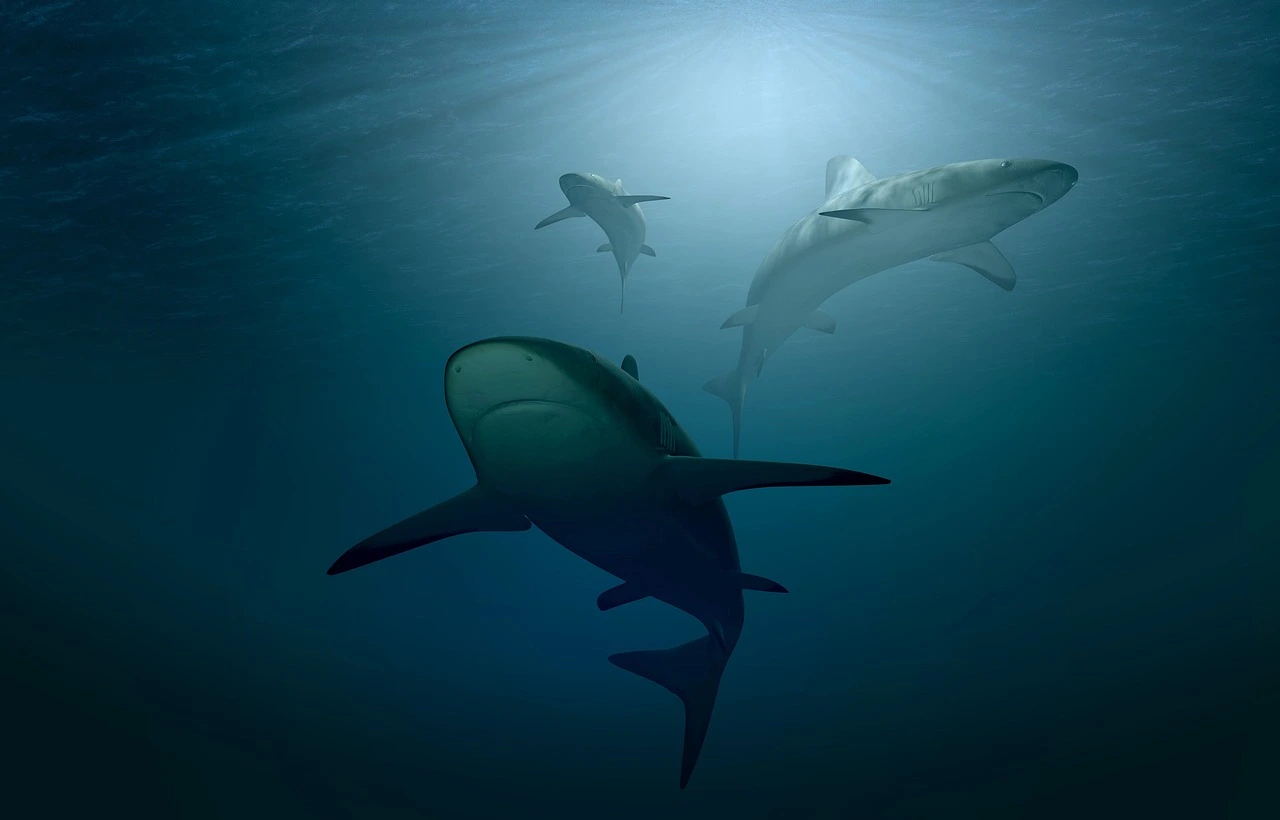
Image by PIRO4D, from Pixabay
Shark Skin Study Reveals Insights For Enhancing Aircraft And Boat Efficiency
- Written by Kiara Fabbri Former Tech News Writer
- Fact-Checked by Justyn Newman Former Lead Cybersecurity Editor
Researchers from Tokyo Institute of Technology have uncovered details about how great white sharks reduce drag, which could lead to advancements in aircraft and boat design. Their study explores how the shark’s unique skin structures—known as dermal denticles—play a key role in minimizing friction as the shark swims at various speeds.
The great white shark’s skin is covered with tiny tooth-like structures that help it move efficiently through water. These denticles vary in shape, size, and spacing, allowing the shark to maintain high speeds while hunting and to cruise long distances with minimal energy expenditure.
Previous research has used shark denticles as inspiration to develop riblets—small, unidirectional ridges—for aircraft and sailboats. However, Tokio Tech News reports that the variation in shape, size, and spacing of denticles across a shark’s body complicates the understanding. This variation makes it challenging to fully grasp how these factors collectively impact drag reduction.
This new study highlights how different ridge heights on these denticles contribute to this drag reduction. High middle ridges are particularly effective at slower speeds, aiding in efficient cruising, while lower side ridges become more important during high-speed hunting bursts.
By developing 3D models of these denticles, the Tokyo Tech team was able to analyze how the ridges’ height and spacing impact drag reduction. Their findings suggest that the combination of high and low ridges allows the shark to handle a wide range of swimming speeds efficiently.
Associate Professor Hiroto Tanaka, the study’s lead author, explains, “Our calculations suggest that the combination of high and low ridges of the denticles results from adapting to both slow and high swimming speeds, thereby offering robustness to various swimming conditions”
The researchers used a microfocus X-ray CT scanner . This scanner created detailed 3D models of the denticles. They then analyzed these models to understand how the denticles’ design affects drag reduction. The study builds on earlier fluid dynamics research. This research showed that the denticles’ ridges help lift turbulent vortices away from the shark’s skin. As a result, friction drag is reduced.
Tanaka further notes, “High ridges likely reduce drag at low swimming speeds, and high-low alternating ridges reduce drag at high swimming speeds, covering the full range of swimming speeds. Our calculation method also can be applied to other sharks including extinct species.”
This research not only highlights the efficiency of modern sharks, but also opens up potential for innovation in engineering fields. By mimicking the denticle structures found in sharks, engineers can design riblets for aircraft and boats that reduce drag and improve performance, much like how sharks achieve optimal swimming efficiency.
