
Photo by BoliviaInteligente on Unsplash
Nvidia is Working on New Flagship AI Chip Model For China
- Written by Andrea Miliani Former Tech News Expert
- Fact-Checked by Justyn Newman Former Lead Cybersecurity Editor
The news agency Reuters revealed the American technology company Nvidia is working on a new flagship AI chip model for the Chinese market. Three anonymous sources explained that the new chip version will consider the strict export controls in the United States to make it compatible.
Back in 2023, the U.S. tightened export controls to avoid providing China with tools that could lead to empowering its military capabilities; forcing Nvidia to create specific products for the Chinese market and decreasing its sales in the region.
“Nvidia will work with Inspur, one of its major distributor partners in China, on the launch and distribution of the chip which is tentatively named the `B20’,” explained Reuters. Nvidia hasn’t made an official announcement on this new development.
A few months ago, in March, Nvidia announced that its new AI chips would be more affordable. The new generation series was named Blackwell and will be mass-produced by the end of this year to supply major AI and cloud computing companies.
According to Reuters, the new processors will be 30 times faster than previous models and will be better at tasks like processing chatbot answers. Nvidia’s sales have rapidly increased this year, with competitive prices to gain leverage against the company’s main competitor, the Chinese giant Huawei.
Nvidia’s top and most advanced product in the Chinese market at the moment is the H20 chip, and it’s about to hit over 1 million sales in China. The new advanced products for the Asian region could increase friction with the U.S. government as Biden’s administration has been restricting chipmaking equipment to China and reaching out to allies, like the Netherlands and Japan, to join the mission.
Official statements and more details on the new AI chip models should be announced soon.
Nvidia has also been recently accused of using YouTube videos to train AI models without permission , along with other major tech companies like Apple, Salesforce, and Anthropic.
Inspired by Electric Eels, Researchers Develop Stretchy and Self-Healing Batteries
- Written by Kiara Fabbri Former Tech News Writer
- Fact-Checked by Justyn Newman Former Lead Cybersecurity Editor
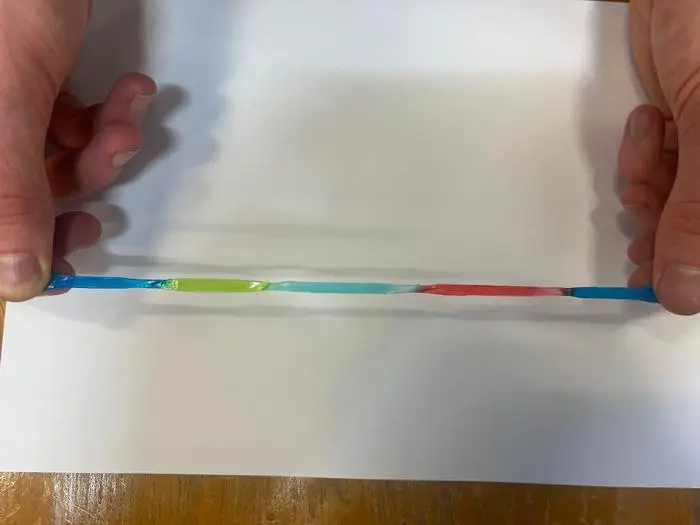
Researchers at the University of Cambridge have developed a novel type of battery – soft, stretchable, and even self-healing – offering exciting possibilities for wearable tech, soft robotics, and even medical implants. Their findings were published on the 17th of July in the journal Science Advances.
Inspired by the electric eel’s ability to generate electricity, the team created jelly-like batteries with a layered structure that conducts electricity. These “jelly batteries” can stretch over ten times their original length without losing conductivity.
This innovation represents a significant leap forward, as traditionally, high conductivity and stretchability have been opposing properties in materials.
However the researchers were able to overcome this challenge by making these batteries from hydrogels, 3D networks of polymers that contain over 60% water. The secret lies in tiny molecules called cucurbiturils, which act like molecular handcuffs. These handcuffs create strong, reversible bonds between the hydrogel layers, allowing the battery to be stretched without falling apart or losing its ability to conduct electricity.
Whilst conventional electronics rely on rigid metallic materials with electrons as charge carriers, the jelly batteries use ions to carry charge, similar to electric eels.
Additionally, despite their softness, hydrogels are surprisingly tough. They can be squished and bounce back to their original shape, and even heal themselves after being damaged.
The key advantage of the jelly batteries lies in their soft, tissue-like properties, making them highly promising for future implants in the human body. Professor Oren Scherman , who led the research, explains , “We can customise the mechanical properties of the hydrogels so they match human tissue, […] Since they contain no rigid components such as metal, a hydrogel implant would be much less likely to be rejected by the body or cause the build-up of scar tissue.”
To see if these jelly batteries can truly live up to their potential in medicine, the researchers are planning next-stage experiments in living organisms. These tests will involve placing the hydrogels in living organisms to assess their safety and effectiveness for various medical applications.
