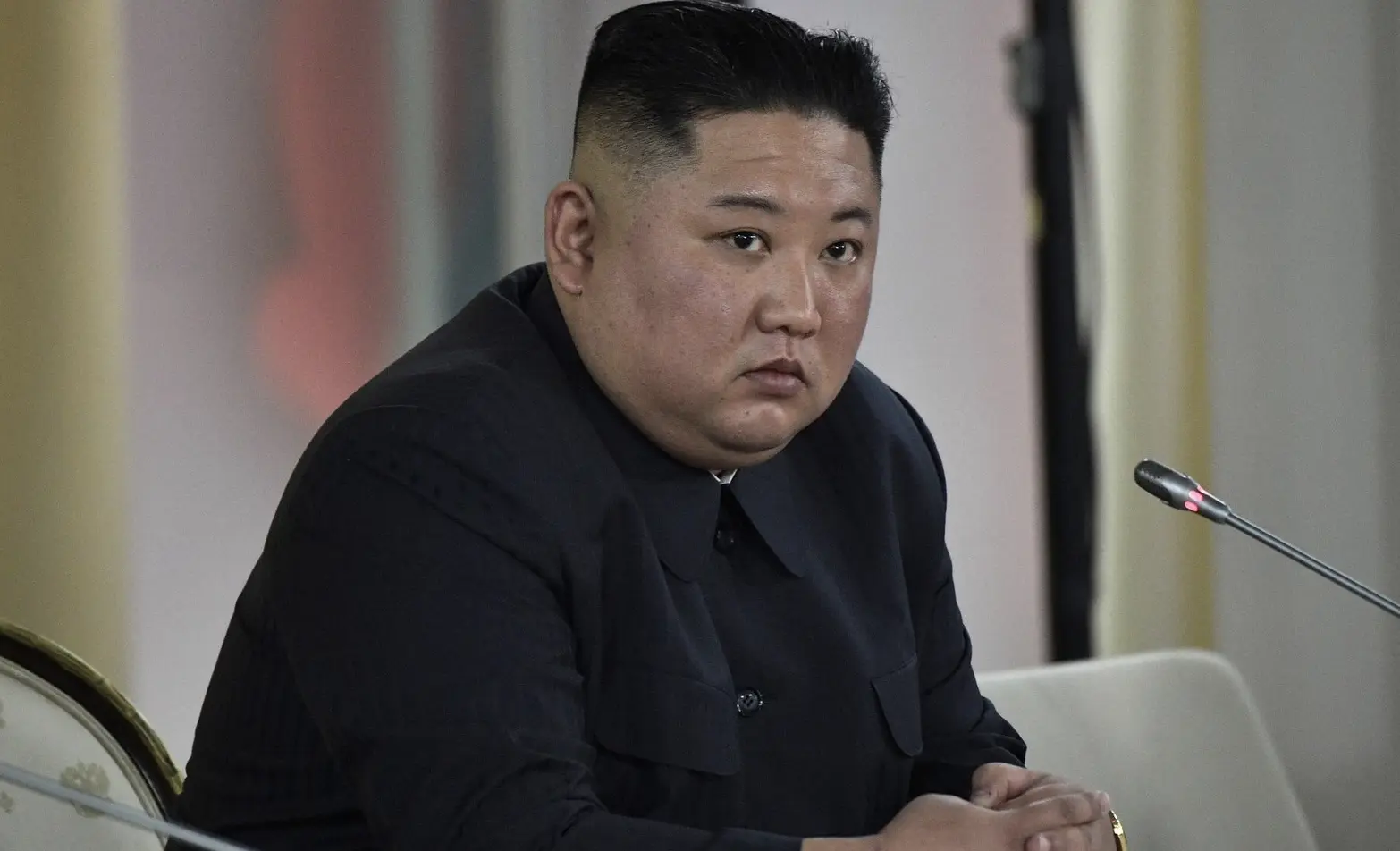
Image by The Presidential Press and Information Office, from Wikimedia Commons
North Korea Unveils Suicide Drones In Test Overseen By Kim Jong Un
- Written by Kiara Fabbri Former Tech News Writer
- Fact-Checked by Justyn Newman Former Lead Cybersecurity Editor
Kim Jong Un, North Korean leader, oversaw a recent performance test of newly developed drones, as reported by state media on KCNA Watch reported Monday.
The test, conducted by the Drone Institute under the Academy of Defence Sciences on August 24, aimed to evaluate the capabilities of these drones for military use, KCNA said.
The test involved drones designed for various military purposes, including ground and sea attacks. The drones were flown along pre-set routes, demonstrating their effectiveness in combat scenarios.
Kim Jong Un reportedly emphasized the need for diverse drone capabilities, including suicide drones for infantry and special operations, strategic reconnaissance drones, and multi-purpose attack drones.
Photos released by KCNA show pixelated white suicide attack drones striking and destroying mock targets resembling a South Korean K-2 tank. This marks the first time North Korea has revealed images of these types of weapons, as the North Korea Times pointed out.
KCNA stated that Kim urged the continued development of underwater weapons, such as nuclear torpedoes and unmanned underwater attack vehicles. He also called for the use of artificial intelligence in advancing drone technology and outlined the steps needed to achieve these goals.
Aljazeera reports that Pyongyang has increased its tactical warfare capabilities, focusing on short-range missiles and heavy artillery targeting South Korea, following significant progress in its long-range ballistic missile and nuclear programs, despite international sanctions.
The AP notes that the drone test occurred concurrently with the Ulchi Freedom Shield drills , a large-scale exercise being conducted by the United States and South Korean militaries. The drills will continue until Thursday.
The exercises, aimed at improving readiness against North Korean threats, include computer-simulated war games, live-fire training, and a three-day combined aerial drill involving 60 warplanes that began on Monday, AP said.

OpenAI, Adobe, Microsoft, and Elon Musk Support Different California AI Bills
- Written by Andrea Miliani Former Tech News Expert
Microsoft, Open AI, Abode, and businessman Elon Musk have recently supported new California bills regarding artificial intelligence, but not all the same ones.
According to TechCrunch , OpenAI, Microsoft, and Adobe have shared letters agreeing with the bill AB 3211 which requires businesses to label AI-generated content. Elon Musk, on the other hand, has supported bill SB 1047, which focuses on AI safety and requires businesses to document and create safeguards.
Both bills will receive a final vote by the end of the month and will affect most AI companies. However, SB 1047, recently amended to comply with certain companies’ requirements, has been the most controversial bill .
Elon Musk shared a public post on X , supporting the safety measures on SB 1047. “This is a tough call and will make some people upset, but, all things considered, I think California should probably pass the SB 1047 AI safety bill,” wrote Musk, “For over 20 years, I have been an advocate for AI regulation, just as we regulate any product/technology that is a potential risk to the public.”
Musk’s statements surprised many in the industry, as his companies could be subject to the new requirements and measures of SB 1047. Other tech giants like OpenAI, Google, and Meta have opposed this bill.
OpenAI and Microsoft could support bill AB 3211, which was also amended to align more with these companies’ requirements, to encourage lawmakers to approve this bill instead of SB 1047.
Bill AB 3211 requires watermarks in metadata—many companies are already complying as it is also invisible—on AI-generated images, audio clips, and videos, and online platforms to display a visible watermark for users to recognize AI-generated content as well.
The SB 1047 bill, on the other hand, includes sanctions on companies if their technologies cause major harm to society. Last week, OpenAI said this bill “makes no sense ” and has stopped expanding its office in San Francisco.
