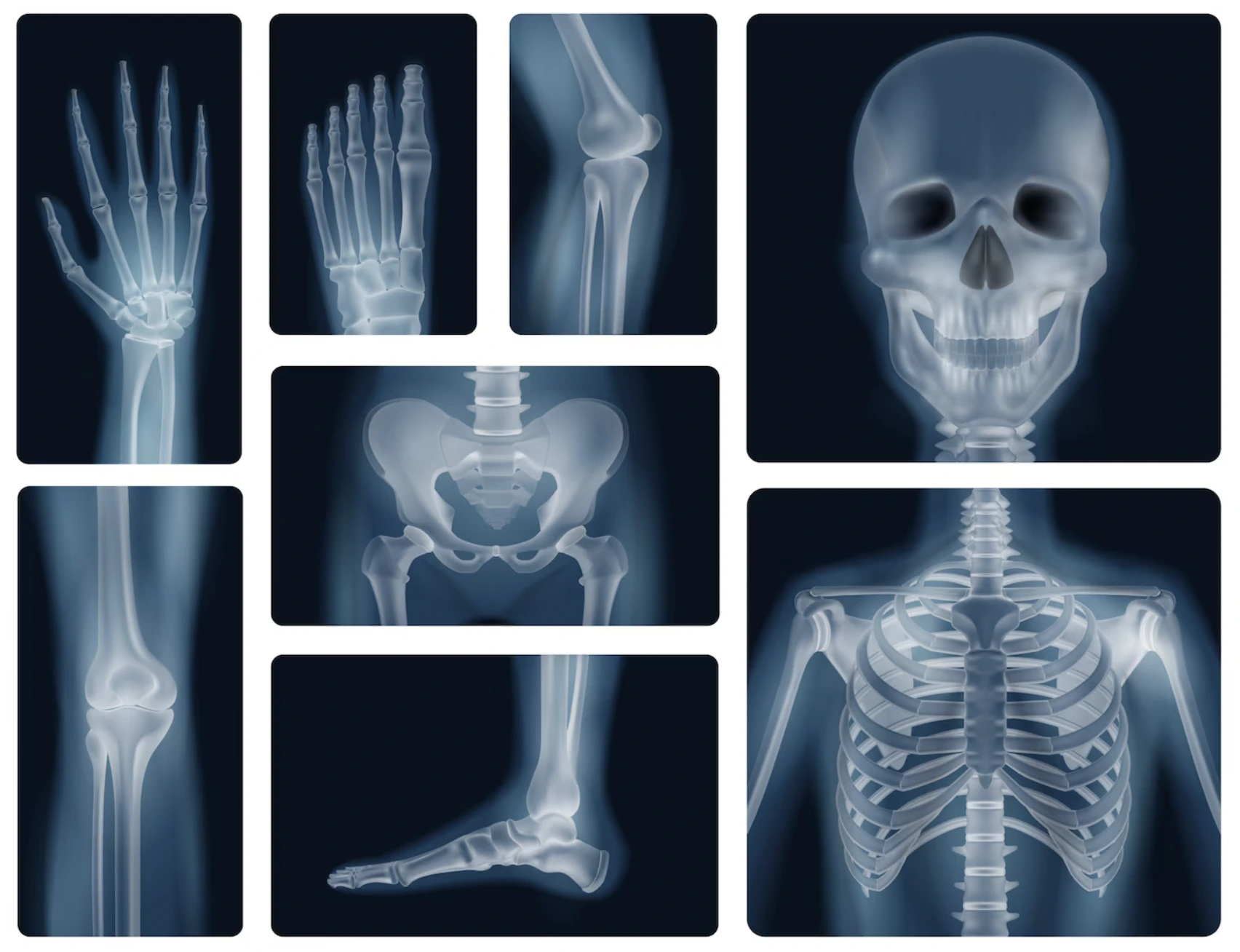
Image by macrovector, from Freepik
NHS To Use AI for Fracture Detection Amid Staffing Shortages
- Written by Kiara Fabbri Former Tech News Writer
- Fact-Checked by Justyn Newman Former Lead Cybersecurity Editor
In a Rush? Here are the Quick Facts!
- NHS approved AI to improve fracture detection in X-rays
- AI scans cost £1 and aim to reduce diagnostic errors in emergency departments.
- AI technology assists but does not replace human interpretation
The NHS has been given the green light by the National Institute for Health and Care Excellence (Nice) to begin using AI technology to improve fracture detection in X-rays, as reported today by The Guardian .
This breakthrough could benefit millions of patients across England by offering a £1 AI scan to check for suspected broken bones. The AI scan aims to reduce the number of missed fractures, a frequent issue in emergency departments, noted The Guardian.
Missed or late-diagnosed fractures make up about 10% of cases in A&E units and urgent care centres, making it one of the most common medical errors, according to The Guardian.
Nice stated that these missed diagnoses can lead to severe complications, including reduced health-related quality of life, and in some instances, life-changing or life-threatening consequences.
Nice notes that the NHS has also incurred significant costs in damages, litigation, and additional treatments due to these mistakes. In light of these pressures, AI is being introduced to support doctors in ensuring that fractures are correctly identified and treated in a timely manner.
Nice emphasized the root of the problem, stating, “Radiologists may not have time to formally report on X-rays for suspected fractures in the ED before a diagnosis is made, leaving diagnoses to be made based only on interpretation by a less-specialised/skilled ED clinician. This contributes to an issue of missed fractures.”
With emergency services facing high demand and staffing shortages, vacancy rates for radiologists stand at 12.5%, while radiographers face a 15% shortfall. Meanwhile, the number of patients requiring diagnostic tests has surged by over 25% in the last five years, as noted by Nice.
The implementation of AI, however, is not meant to replace human expertise, but rather to complement it. According to Nice, “The clinical decision support technology is not intended to be used in isolation to make a diagnosis, but instead to support interpretation by a trained professional.”
This collaboration between human professionals and AI aims to reduce the occurrence of missed fractures and improve patient outcomes by ensuring quicker and more accurate diagnoses, noted Nice.
Additionally, it could help alleviate the workload for radiologists, allowing them to focus on more complex cases where their expertise is most needed. AI could also help streamline the diagnostic process, reducing the number of patient recalls and unnecessary treatments, according to Nice.
Mark Chapman, the director of HealthTech at Nice, told The Guardian, “These AI technologies are safe to use and could spot fractures which humans might miss given the pressure and demands these professional groups work under.”
The use of AI in medical imaging is gaining momentum globally. Last month, researchers at MIT announced a new AI tool called ScribblePrompt , designed to speed up the process of analyzing medical images such as MRIs and X-rays.
This news comes after a month that NHS Wythenshawe Hospital in Manchester announced the introduction of a robotic tool to improve early lung cancer detection , potentially reducing diagnosis and treatment time by months.
This move comes as part of a broader trend of incorporating AI into healthcare. Beyond fracture detection, AI is being applied in other areas of medical diagnosis.
Recent examples include using AI to diagnose diseases through tongue image analysis and monitor Parkinson’s disease progression .
The potential of AI in healthcare is increasingly evident, offering solutions to both improve accuracy in diagnoses and relieve some of the pressures faced by overburdened healthcare systems.
Photo by Kumpan Electric on Unsplash
South Korean Researchers Develop “Flying Shopping Cart” Called Palletrone
- Written by Andrea Miliani Former Tech News Expert
- Fact-Checked by Justyn Newman Former Lead Cybersecurity Editor
In a Rush? Here are the Quick Facts!
- Researchers from the Seoul National University of Science and Technology created the Palletrone
- The hovering aircraft can carry up to 3 kilograms and can be pushed by humans keeping level in flight
- Researchers are exploring the technology’s potential including flying taxis and aerial bases for drones
South Korean researchers from the Seoul National University of Science and Technology developed a new prototype of a “flying shopping cart” called Palletrone to carry objects in the air.
According to the report shared by Reuters today, the device works like a transport drone but has a mounted platform supported by a multi-rotor drone capable of self-correcting to keep level in flight and can be gently pushed by someone to guide its path.
The hovering aircraft can help move up to 3 kilograms—6.6 lbs—across stairs or uneven terrains in a smooth flight and respond to human control, the same way we would use a shopping cart.
Professor Lee Seung-jae explained to Reuters that the research team is interested in its application for reliable horizontal transportation with stability and guaranteeing it would not roll or sway.
“The Palletrone can be more than a flying shopping cart,” said Lee. The professor said they have been studying its potential for uncrewed flying taxis, or as aerial stations for drones to change batteries without going back to the ground.
The Palletrone has limitations for commercial use, like the battery size. It would require larger batteries to transport heavier objects across long distances. In the meantime, the researchers have used it to deliver medicines, food, cargo, and other supplies.
Automation Letters and EEE Robotics published the researcher’s work earlier this year, the new technology is gaining popularity, especially among sci-fi advocates.
Reuters shared a video on social media to show how the new Palletrone can perform.
WATCH: A new aerial cargo transportation platform called ‘Palletrone’ has been developed by South Korean researchers who say the technology maintains its stability while being pushed or pulled by a person, even with added weight on top https://t.co/ubsIPfZtvP pic.twitter.com/Vp4UvMfV5j — Reuters Tech News (@ReutersTech) October 22, 2024
