
New Vayu One Robot Promises Cost-Effective E-Commerce Deliveries
- Written by Kiara Fabbri Former Tech News Writer
- Fact-Checked by Justyn Newman Former Lead Cybersecurity Editor
On July 23rd, San Francisco-based Vayu Robotics introduced the world’s first on-road delivery robot. This is set to mark a significant step forward in the e-commerce industry. The company claims its AI-powered robot can drastically reduce the cost of delivering online purchases.
The Vayu One , a compact, self-driving vehicle, is designed to navigate sidewalks and bike paths, carrying packages up to 100 pounds. Traditional delivery robots rely on expensive lidar sensors and specialised software for navigation. Vayu Robotics has taken a different approach, using AI and standard cameras to guide its robot. This approach, according to Vayu Robotics, makes the robot more affordable and adaptable to various environments.
Vayu Robotics CEO Anand Gopalan stated , “The unique set of technologies we have developed at Vayu have allowed us to solve problems that have plagued delivery robots over the past decade, and finally create a solution that can actually be deployed at scale and enable the cheap transport of goods everywhere”
A major e-commerce company has already placed an order for 2,500 Vayu One robots, signalling a potential industry shift. While this partnership remains undisclosed, it highlights the growing interest in autonomous delivery solutions.
However, the Vayu One does come with limitations. Customers will need to meet the robot on the sidewalk to retrieve their packages, which could pose challenges for residents of high-rise buildings or those with mobility issues. Additionally, the robot’s ability to operate safely and efficiently in complex urban environments remains to be fully tested.
As e-commerce continues to expand, the pressure to find more cost-effective delivery methods intensifies. Vayu Robotics’ innovative approach could potentially reshape the industry, but its long-term impact and widespread adoption will depend on factors such as regulatory approvals, public acceptance, and the robot’s overall performance in real-world conditions.
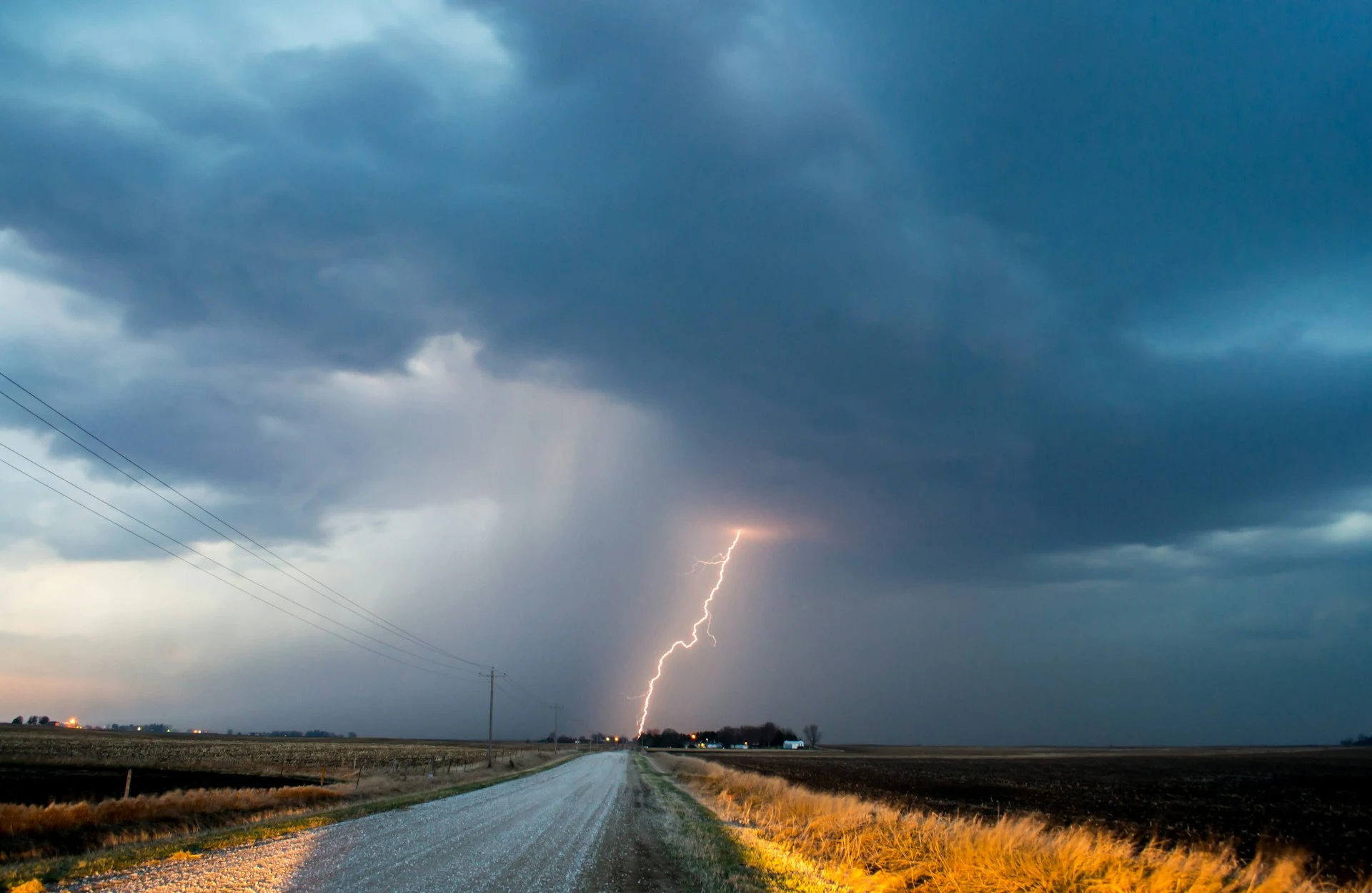
Photo by NOAA on Unsplash
Google Builds New AI-Powered Weather Prediction Model
- Written by Andrea Miliani Former Tech News Expert
- Fact-Checked by Justyn Newman Former Lead Cybersecurity Editor
Researchers at Google built a new weather prediction model called NeuralGCM that combines traditional science and machine learning technologies to provide accurate data on future weather conditions. The study has been published in Nature this Tuesday.
The research is currently available for download and has been made in partnership with the European Centre for Medium-Range Weather Forecasts (ECMWF), Google DeepMind London, Earth, Atmospheric and Planetary Sciences at the Massachusetts Institute of Technology, and the School of Engineering and Applied Sciences at Harvard University.
According to the MIT Technology Review , the new technology could improve precision and significantly reduce the current cost as it requires less computational power.
For over 50 years, general circulation models (GCMs) have been the main tools to analyze Earth’s atmosphere and predict forecasts. However, these methods can be expensive and considerably slow. Machine learning, on the other hand, has been used to process historical data and quickly provide good predictions, but it has issues with long-term forecasts. Google’s team has found a way to combine both technologies making the most of the advantages of each.
“It’s not sort of physics versus AI. It’s really physics and AI together,” said Stephan Hoyer, an AI researcher at Google Research, to MIT Technology Review.
However, it won’t make a big difference for regular weather application users as the new tool is not intended for short-term predictions, it has been developed for long-term predictions and to anticipate extreme weather conditions that could be years away.
“With prescribed sea surface temperature, NeuralGCM can accurately track climate metrics for multiple decades, and climate forecasts with 140-kilometer resolution show emergent phenomena such as realistic frequency and trajectories of tropical cyclones,” states the document.
NeuralGCM will be open source and useful for scientists and people interested in climate conditions like agricultural planners or insurance companies.
