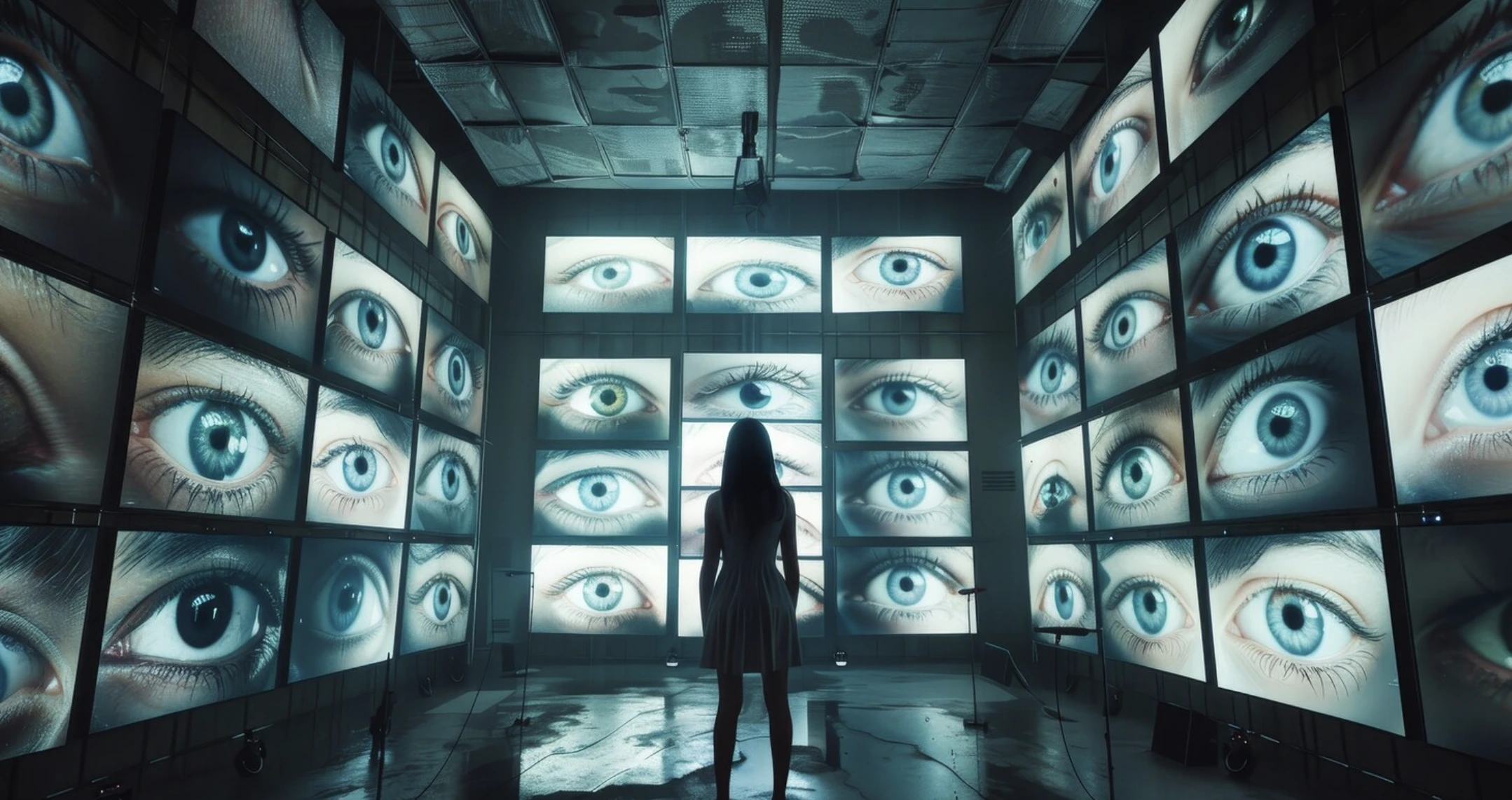
Image from Freepik
New Report Exposes Widespread Viewer Surveillance In Streaming Television
- Written by Kiara Fabbri Former Tech News Writer
- Fact-Checked by Justyn Newman Former Lead Cybersecurity Editor
In a Rush? Here are the Quick Facts!
- CTV industry utilizes extensive surveillance to target viewers with personalized ads.
- Major companies like Comcast and Disney employ advanced data-gathering technologies.
- Political campaigns may exploit CTV data for covert ad targeting this election year.
A new report from the Center for Digital Democracy (CDD) reveals that the Connected TV (CTV) streaming industry in the United States has established a vast surveillance system that transforms televisions into sophisticated monitoring devices.
The report, titled How TV Watches Us: Commercial Surveillance in the Streaming Era, details how CTV companies harvest extensive viewer data to deliver targeted advertising, often without proper consumer consent.
The CDD report outlines alarming trends in CTV operations, showing that major streaming platforms, device manufacturers, and data brokers are creating comprehensive digital profiles on viewers. This data includes identity information, viewing habits, purchasing behaviors, and a myriad of other online and offline activities.
Popular Free Ad-Supported Streaming Television (FAST) channels like Tubi and Pluto TV are particularly highlighted as key players in monetizing viewer data through advanced marketing techniques.
The report stresses that surveillance mechanisms are built directly into smart TVs, with Automatic Content Recognition (ACR) and other monitoring software capturing highly granular data on viewers.
“The transformation of television in the digital era has taken place over the last several years largely under the radar of policymakers and the public, even as concerns about internet privacy and social media have received extensive media coverage,” the report explains.
“The U.S. CTV streaming business has deliberately incorporated many of the data-surveillance marketing practices that have long undermined privacy and consumer protection in the ‘older’ online world of social media, search engines, mobile phones and video services such as YouTube.”
“CTV has become a privacy nightmare for viewers,” explained report co-author Jeff Chester, who is the executive director of CDD.
“It is now a core asset for the vast system of digital surveillance that shapes most of our online experiences. Not only does CTV operate in ways that are unfair to consumers, it is also putting them and their families at risk as it gathers and uses sensitive data about health, children, race and political interests,” Chester noted.
“Regulation is urgently needed to protect the public from constantly expanding and unfair data collection and marketing practices,” he added, “as well as to ensure a competitive, diverse and equitable marketplace for programmers.”
As political ads are expected to proliferate this election year, CDD warns that these surveillance practices could allow for covert, personalized political campaigns that exacerbate polarization in the United States. Chester emphasizes the urgent need for regulatory action to protect consumer privacy and ensure a fair marketplace.
The CDD is urging the Federal Trade Commission (FTC), the Federal Communications Commission (FCC), and California regulators to investigate these practices and implement robust regulations. The report’s authors call for a policy framework that prioritizes consumer rights, promotes civic engagement, and fosters diverse creative expression within the television industry.
In the wake of these revelations, Chester and Dr. Kathryn C. Montgomery, report co-author, emphasize that policymakers must address these issues to ensure that digital technologies serve democratic values and protect citizens from intrusive surveillance.
The CDD is taking steps to bring these concerns to the forefront by submitting letters to key regulatory bodies, highlighting the need for immediate action in an era where privacy and consumer protection are increasingly at risk.

image by Cyano66, from Istockphoto
AI Chatbot To Represent Congressman In Upcoming Debate
- Written by Kiara Fabbri Former Tech News Writer
- Fact-Checked by Justyn Newman Former Lead Cybersecurity Editor
In a Rush? Here are the Quick Facts!
- Bentley Hensel created an AI chatbot, DonBot, for a debate with Don Beyer.
- DonBot simulates Beyer’s policy positions using his public statements and campaign materials.
- Legal experts say Beyer has limited options to stop the AI debate.
Bentley Hensel, an independent congressional candidate in Virginia, has created an AI chatbot, DonBot, to stand in for Democratic incumbent Don Beyer in an upcoming debate, should Beyer not appear, as reported today by Reuters .
Hensel’s move, reported today by Reuters, comes after Beyer declined additional debate invitations ahead of the November election. The debate is scheduled to stream online on October 17.
The AI chatbot, DonBot, is modeled after Beyer and was created without the congressman’s permission. The bot is trained on Beyer’s public statements, campaign material, and Federal Election Commission data, using an API from OpenAI, the company behind ChatGPT, notes Reuters.
According to Ruters, the bot is designed to simulate Beyer’s positions on policy issues without misleading voters. Hensel insists this modern-day “empty chair” tactic is necessary for transparency and to give voters access to Beyer’s stances, even if the congressman himself doesn’t show up.
The debate will feature Hensel, another independent candidate David Kennedy, against DonBot. Republican candidate Jerry Torres, who is also running for the seat, has not confirmed his participation. Should Torres not attend, Hensel has indicated he will create an AI version of him as well, according to Reuters.
A spokeswoman for Beyer confirmed that the congressman participated in a candidate forum in September but has no plans to attend the upcoming debate. She noted that Beyer has been a strong advocate for regulating AI, including preventing the technology from being used to spread election misinformation, noted Reuters.
Legal experts consulted by Reuters suggest that Beyer would have limited legal options to prevent the debate, as long as the AI likeness is not used for commercial purposes or to deceive voters, reported REuters.
Despite Beyer’s significant lead in the race, Hensel says the use of AI in the debate is a final effort to gain visibility and push for greater openness in the electoral process, noted Reuters.
The debate aims to attract attention in what’s otherwise considered a predictable race, given Beyer’s dominant position in the polls. Hensel and Kennedy acknowledge the unconventional move is both a publicity effort and an experiment in transparency.
Ultimately, this debate presents a case study in the evolving nature of political communication, as candidates navigate the challenges posed by technology and public expectations.
Hensel’s initiative could reshape how future campaigns approach debates and voter engagement, highlighting the potential for AI to either enhance transparency or introduce new complexities into the electoral process.
