Image by fullvector, from Freepik
New Report Assesses Generative AI’s Potential Benefits For EU Economy
- Written by Kiara Fabbri Former Tech News Writer
- Fact-Checked by Justyn Newman Former Lead Cybersecurity Editor
In a Rush? Here are the Quick Facts!
- Generative AI could boost EU GDP by €1.2-1.4 trillion in ten years.
- 74% of workers recognize the productivity benefits of generative AI.
- Enhanced innovation and talent development are essential for AI adoption.
In an announcement today, Google revealed findings from a report by Implement Consulting Group, which estimates that generative AI could add between €1.2 trillion and €1.4 trillion to the European Union’s GDP over the next decade.
This potential growth equates to an annual increase of approximately 8%. The report highlights that generative AI can boost productivity across multiple sectors, helping Europe enhance its competitiveness in the global economy.
The study emphasizes the necessity for the EU to foster innovation, invest in skills development, and establish clear regulatory frameworks to fully harness the benefits of generative AI.
In this context, the European Union’s Artificial Intelligence Act , which came into force in early August, is meant to mark a significant advancement in the regulation of AI technologies within the EU.
With Europe currently lagging behind the United States in economic growth, leveraging AI technology could provide a crucial opportunity for advancement.
Key findings from the Implement Consulting Group study indicate that the economic benefits of generative AI stem from three primary sources.
These include increased productivity from collaboration with AI, the automation of routine tasks that frees up time for more strategic activities, and the reallocation of resources toward value-creating endeavors.
Job implications are also noteworthy. The report suggests that 61% of jobs in the EU will likely involve interaction with generative AI, while 32% are expected to remain unaffected.
The report states that only 7% of jobs face a high risk of automation, although new roles in the AI-driven economy are anticipated to replace those lost. The report suggest that this shift parallels historical transitions seen with the advent of technologies such as commercial aviation and the internet.
Additionally, the study reports that 74% of workers in European countries recognize the productivity-enhancing effects of generative AI, with 43% expecting a positive impact on their jobs.
The report underscores that generative AI could transform various sectors, particularly in services, which represent 80% of its economic potential.
Despite the EU’s strengths in foundational drivers for AI adoption, there remains an urgent need for enhanced innovation, talent development, research, and commercialization efforts.
Credit: Future You; Melanie Gonick, MIT
AI Lets Users Converse With Their Future Selves
- Written by Kiara Fabbri Former Tech News Writer
- Fact-Checked by Justyn Newman Former Lead Cybersecurity Editor
In a Rush? Here are the Quick Facts!
- MIT researchers developed an AI system called “Future You” for self-reflection.
- Future You simulates a 60-year-old version of users based on their input.
- The system is aimed at helping young people make better life decisions and reduce anxiety.
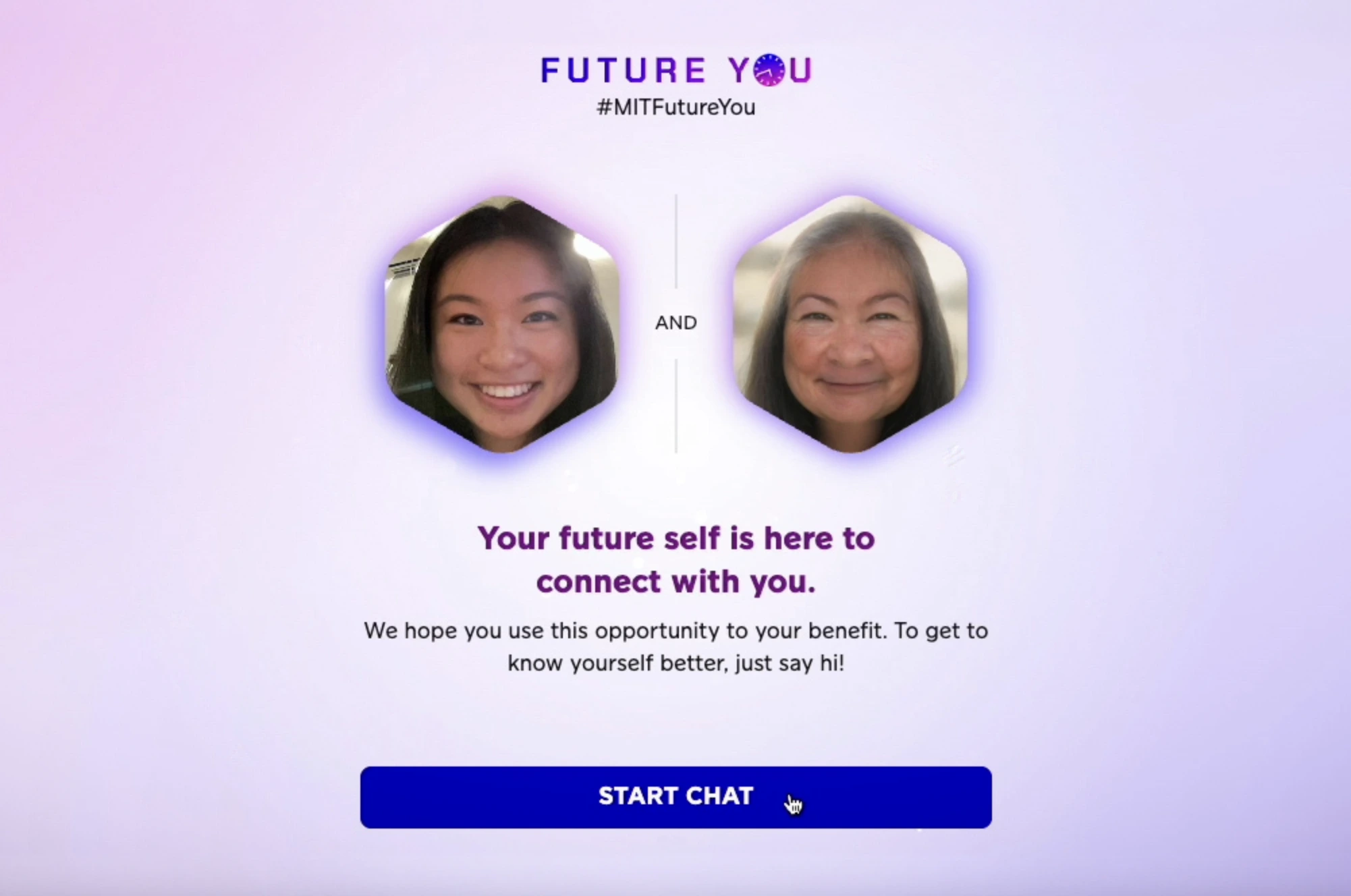
MIT News announced today that MIT researchers have developed a system enabling users to engage in text-based conversations with an AI simulation of their future selves.
This system, known as “ Future You ,” aims to help young people reduce anxiety, and make better life decisions by strengthening their sense of connection to their future selves.
Future You uses a large language model to create a personalized AI version of the user at age 60, based on information the user provides about their current life and future goals.
The simulation responds to questions about potential future experiences, offering guidance or reflections on challenges the user might face. The goal is to help people think more critically about their current choices, and the long-term impact they could have.
“We don’t have a real time machine yet, but AI can be a type of virtual time machine. We can use this simulation to help people think more about the consequences of the choices they are making today,” says Pat Pataranutaporn, co-lead author of a paper on Future You.
The announcement states that studies indicate individuals who feel a stronger connection to their future selves are more likely to make better long-term decisions, such as saving money or prioritizing academic success.
To evaluate the effectiveness of Future You, researchers conducted study involving 344 participants. Some individuals interacted with the system for 10 to 30 minutes, while others engaged with a generic chatbot or completed surveys.
Participants engaging with Future You reported a stronger connection to their future selves and reduced anxiety. The researchers are now refining the system to encourage meaningful discussions, rather than trivial ones.
The researchers aim to also implement safeguards to prevent misuse, such as companies manipulating future outcomes for marketing.
The announcement explains that the concept of connecting with one’s future self has roots in psychology dating back to the 1960s. The researchers argue that early techniques, such as writing letters to one’s future self, lacked the interactivity that modern AI technologies now provide.
Despite the system’s benefits, the realism of the simulation could become problematic if it takes a negative turn. To avoid this, Future You warns users that it represents just one possible version of their future, emphasizing that they have the power to shape their own lives.
Changing the answers to the questionnaire will lead to a completely different conversation, highlighting the flexibility of their future outcomes.
Moving forward, the researchers plan to explore new applications, like career exploration, while ensuring the tool fosters personal growth without becoming a dependency.
