Image by macrovector, from Freepik
New Photonic Processor Promises Faster, More Energy-Efficient AI Computations
- Written by Kiara Fabbri Former Tech News Writer
- Fact-Checked by Justyn Newman Former Lead Cybersecurity Editor
Researchers from MIT have developed a new photonic chip that could significantly improve the speed and energy efficiency of artificial intelligence AI computations, as reported on Monday in a press release by MIT .
In a Rush? Here are the Quick Facts!
- MIT developed a photonic chip for faster, more energy-efficient AI computations.
- It completes computations in under half a nanosecond with 92% accuracy.
- The technology could improve AI applications like navigation, telecommunications, and scientific research.
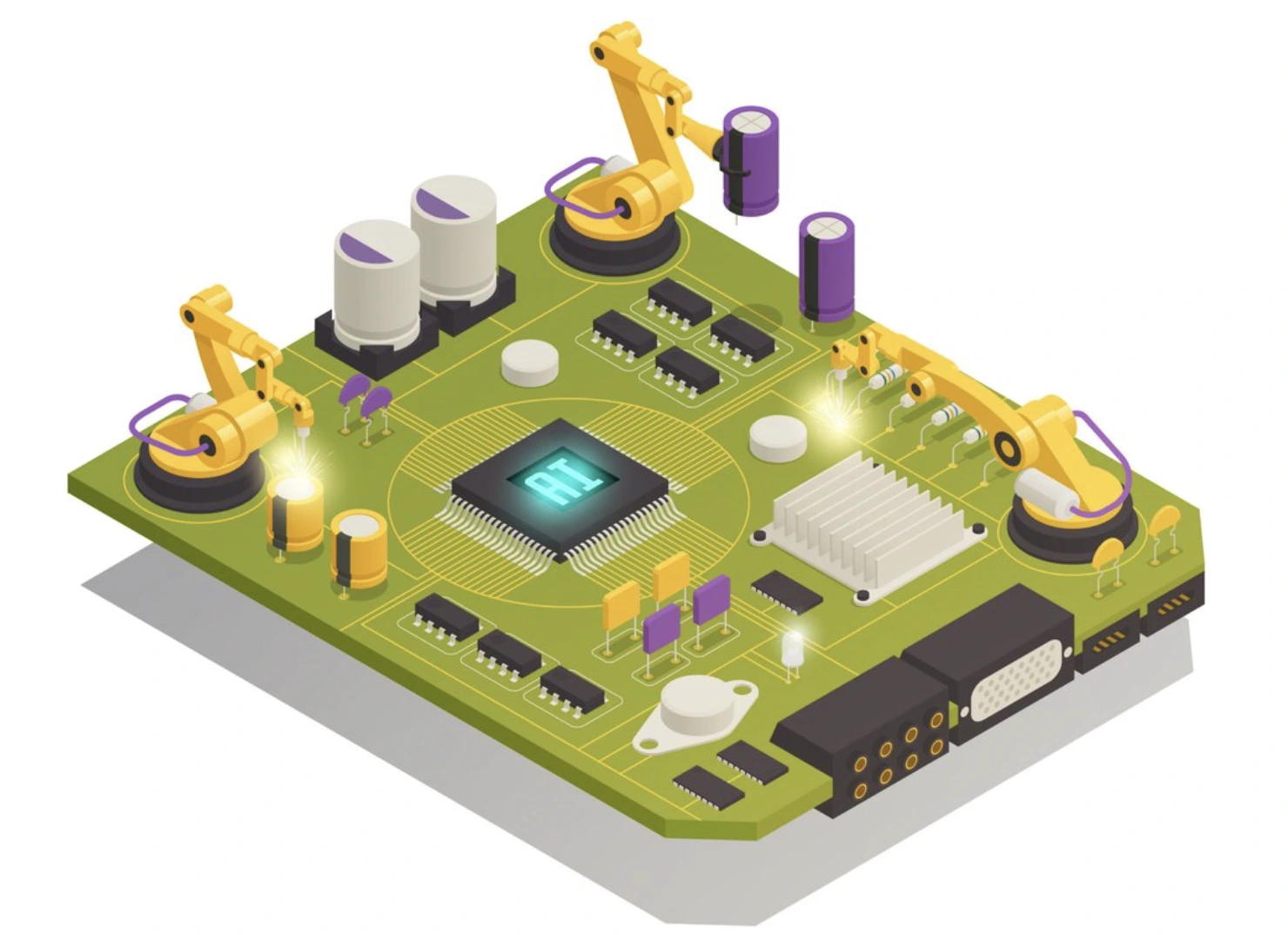
This chip uses light to perform the essential operations of deep neural networks, a type of machine learning model, offering a faster alternative to traditional electronic processors. Deep neural networks are used in a wide range of AI applications, from image recognition to natural language processing, said MIT.
These models require significant computational power, and as they grow more complex, they can exceed the capabilities of conventional electronic hardware.
The new photonic processor, however, addresses this challenge by leveraging light to perform computations instead of electricity, which allows it to run more efficiently, according to MIT.
The photonic chip performs key tasks like matrix multiplication, a crucial operation in deep learning, using light. This process, which would typically be handled by electrical circuits, is accomplished optically on the chip, says MIT.
As a result, the chip is able to complete these computations in less than half a nanosecond, achieving more than 92% accuracy. This performance is on par with traditional electronic hardware but with much greater energy efficiency, as reported by MIT.
One of the challenges in creating this chip was incorporating nonlinear operations, which are essential for deep learning models to recognize complex patterns, explained MIT.
Light alone is not typically suited for these operations, so the researchers designed specialized components called nonlinear optical function units (NOFUs) that enable the chip to perform these tasks by combining light and minimal electrical input, according to MIT.
This advancement could have important implications for AI applications that require fast processing, such as in navigation, telecommunications, and scientific research.
The ability to perform machine learning tasks in real-time with minimal energy use opens up possibilities for more efficient and scalable AI systems. The chip was fabricated using standard semiconductor manufacturing processes, which means it could be produced at scale using existing technology.
MIT says that future work will focus on integrating the chip with other systems, such as cameras and communication devices, to further explore its practical applications.
Overall, this new photonic processor represents a step forward in the development of more efficient, faster AI systems, which could lead to advancements in various fields, including autonomous vehicles, medical diagnostics, and more.
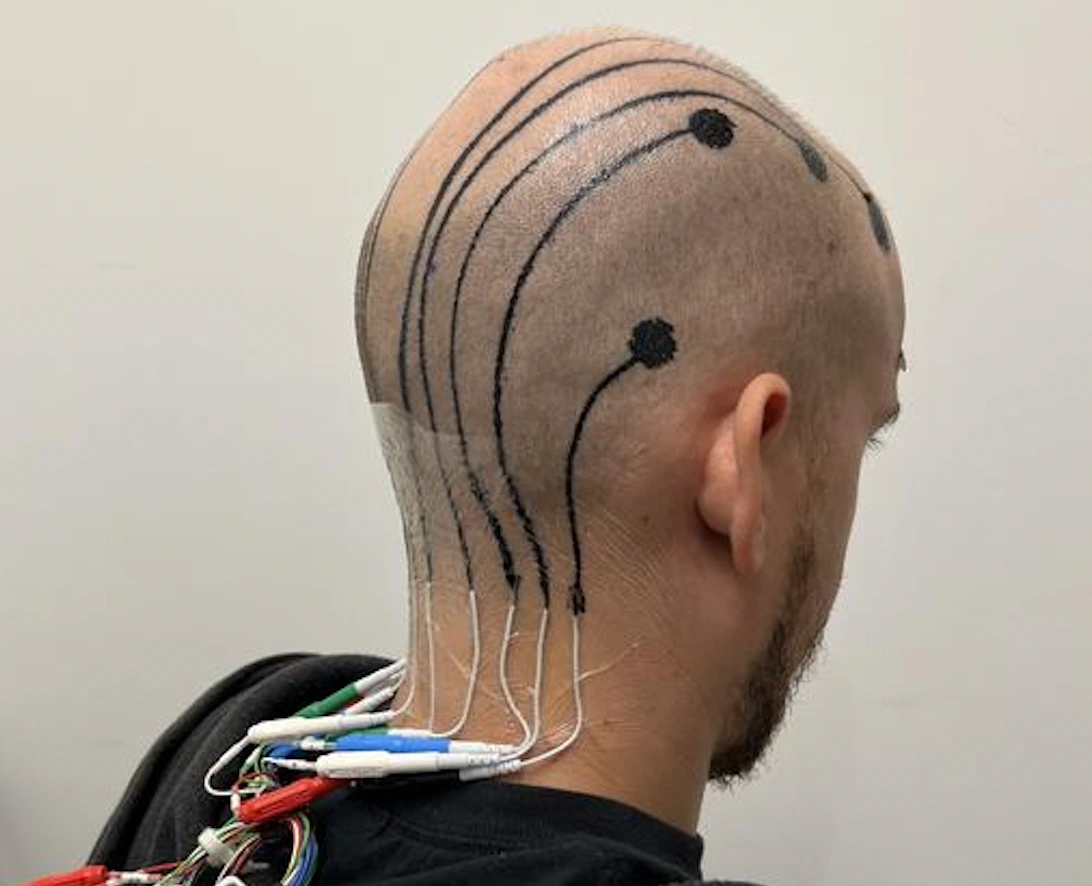
Image by Nanshu Lu, from Eurekalert
New E-Tattoos To Replace Traditional EEG Systems
- Written by Kiara Fabbri Former Tech News Writer
- Fact-Checked by Justyn Newman Former Lead Cybersecurity Editor
Researchers have developed a groundbreaking liquid ink that can be printed directly onto the scalp, creating electronic tattoos (e-tattoos) to measure brain activity.
In a Rush? Here are the Quick Facts!
- Researchers developed liquid ink for printing e-tattoos to monitor brain activity.
- E-tattoos eliminate discomfort and complexity of traditional EEG setups.
- E-tattoos maintain stable brainwave monitoring for over 24 hours.
This innovation, detailed in Cell Biomaterials on Monday, eliminates the discomfort and complexity of traditional electroencephalography (EEG) setups, offering new possibilities for neurological diagnostics and brain-computer interfaces.
Traditional EEG systems rely on labor-intensive electrode placement, conductive gels, and bulky cables, often leading to signal degradation and patient discomfort during extended use.
The new e-tattoo technology, designed by a team led by Nanshu Lu from the University of Texas at Austin, simplifies the process by using biocompatible ink that flows through hair to adhere directly to the scalp.
Using an inkjet printer, researchers can precisely apply the e-tattoo ink to predetermined locations on the scalp. Once dried, the ink forms thin-film sensors capable of capturing brainwaves without the need for adhesives or lengthy preparation.
This new approach addresses these challenges by utilizing advanced materials and non-contact, on-body digital printing to create e-tattoos.
This breakthrough technology provides a comfortable and efficient solution for long-term, high-quality brain activity monitoring, eliminating the drawbacks of conventional EEG systems.
“Our innovations in sensor design, biocompatible ink, and high-speed printing pave the way for future on-body manufacturing of electronic tattoo sensors, with broad applications both within and beyond clinical settings,”
said Nanshu Lu, the paper’s co-corresponding author at the University of Texas at Austin, as reported by EurekAlert .
Tests on participants demonstrated that e-tattoos performed as well as conventional electrodes, with superior durability. While gel-based electrodes dried out and failed after six hours, e-tattoos maintained stable connectivity for over 24 hours.
The ink’s adaptability also allows for the integration of signal-conducting lines, replacing standard wires in EEG setups. This adjustment significantly reduces noise interference. In future iterations, researchers aim to embed wireless transmitters directly into the e-tattoos, paving the way for a fully wireless EEG system.
E-tattoos are already used on various parts of the body to measure signals like heart activity and muscle fatigue, but applying them to hairy areas like the scalp posed a challenge until now, as noted by EurekALert.
The breakthrough ink formulation overcomes this hurdle, broadening the applications of e-tattoo technology. This innovation not only streamlines EEG tests but also opens doors for more practical and widespread use of brain-monitoring technologies in clinical and non-clinical settings.
