
Photo by William Bayreuther on Unsplash
New Drone Tech Company Theseus Raises $4.3 Million After Going Viral on Social Media
- Written by Andrea Miliani Former Tech News Expert
- Fact-Checked by Sarah Frazier Former Content Manager
The new drone tech company, Theseus, founded in 2024, announced this Thursday that it raised $4.3 million during a seed funding round. The new investment will be used to develop its Micro Visual Positioning System, an innovative solution for drones to operate autonomously in GPS-denied locations.
In a rush? Here are the quick facts:
- Theseus announced it raised $4.3 million in a seed funding round this Thursday.
- The founders went viral on X last year after sharing their hackathon achievement on X.
- The company will use the new investment to keep developing Micro VPS, a system that allows drones to fly autonomously without a GPS signal.
According to the announcement , the investment round was led by First Round Capital and had the participation of other investors such as Lux Capital and Y Combinator.
“We’re rapidly developing solutions to urgent operational needs by engaging directly with operators and iterating at the pace of a tech company,” states the post. “GPS jamming is the first defense problem we’ve solved, but this is just the start.”
According to TechCrunch , the young founders of Theseus went viral on social media last year, after one of the three, Ian Laffey, shared a post on X showcasing its team’s achievement during a hackathon of building a drone for less than $500 that could fly without a GPS signal.
we designed, 3d printed and built a <$500 drone with that calculates GPS coordinates without a signal using a camera + google maps in 24h pic.twitter.com/8P2QoQMNbW — Ian Laffey (@ilaffey2) February 18, 2024
The system, designed by Carl Schoeller, Sacha Lévy, and Laffey—all under 25 at the time—, offers an important solution in the industry by making it possible for drones to fly autonomously using just Google Maps and a camera.
After the viral post in February 2024, the three engineers applied for Y Combinator, joined the Spring 2024 cohort, and founded the San Francisco-based company.
Theseus’s main product is its Micro Visual Positioning System (VPS), which considers current hardware and software technology to build cheap and efficient drones.
“Micro VPS works by looking at the ground and comparing camera images to a large database of satellite maps stored onboard,” wrote the team in the announcement. “By correlating features between the two, our Micro VPS accurately determines the drone’s position and relays that information just like a regular GPS.”
The team has been working in collaboration with the United States Special Operations Command and operators who can deploy the system. With the new funding, the company will be able to hire new talent, expand, and keep developing Micro VPS.
Other countries like China have also been developing drone technologies in multiple fields, such as the use of drones for cloud seeding , and Ukraine has been using drones to collect data to train AI-powered systems.
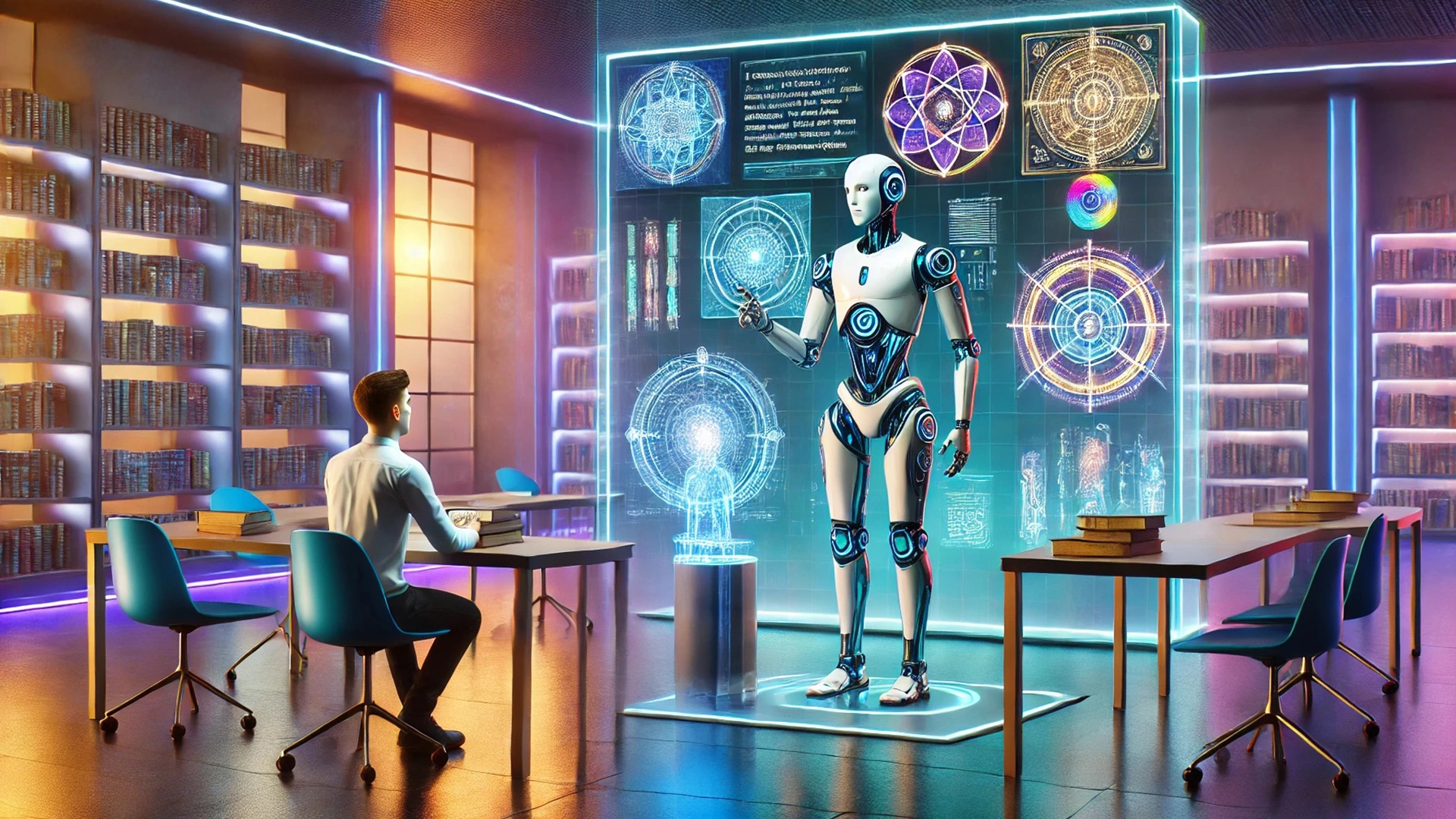
Image generated with OpenAI
Opinion: How AI Is Transforming Global Education In 2025
- Written by Andrea Miliani Former Tech News Expert
- Fact-Checked by Sarah Frazier Former Content Manager
Generative AI initially sparked fear in education, with bans and plagiarism concerns dominating headlines. However, schools and universities are now shifting toward embracing and integrating AI, using it for teaching, tutoring, and curriculum development.
When generative AI models started emerging from Large Language Models and entering the academic field, they sparked panic across classrooms worldwide. It feels like it was yesterday (or rather, today, as this concern hasn’t truly vanished) that all we could think about was students cheating with AI and using ChatGPT to pass every exam.
In 2023, just a few months after ChatGPT launched, we saw headlines saying that New York City schools banned AI chatbots , that the platform was blocked from many schools’ networks in the United States and Australia, and multiple universities started updating policies to include generative AI in their plagiarism regulations.
A haze of fear, confusion, and distrust settled over educational institutions. Was it the Chatbot or the student who wrote that brilliant essay? Should we embrace this new technology? What would the consequences be?
While many schools and universities continue to “demonize” chatbots—and rightly raise concerns about the importance of critical thinking—I’ve noticed a shift in how AI is perceived in educational settings over the past few months.
Now, in 2025, not only have I observed a more open-minded attitude toward these tools, but also a rapid adoption and surprising integration of AI concepts and applications.
From six-year-old kids learning about LLMs at public schools, to teachers using ChatGPT to prepare lessons, to AI tutors, to Anthropic and Google developing specialized AI models for learning, generative AI is significantly transforming education globally this year.
Chatbots Shift From Banned To Required
In less than two years, we went from heated debates on how to punish students for using generative AI to what’s the earliest age we can teach them to use the technology.
One after another, reputable institutions started jumping into the generative AI era and suggesting innovative courses despite criticism and ethical concerns. Last December, UCLA announced its first AI course in the humanities , a comparative literature class, and more students were interested in AI tools to enhance academic performance and gain confidence in the technology.
But China, without a doubt, has been one of the fastest nations to adopt and integrate AI literacy into its educational institutions. After DeepSeek’s breakthrough in the United States and the world a few months ago, in January, Chinese organizations and the government acknowledged the power of the tool, and by February, the country’s leading universities were already imparting DeepSeek courses and expanding AI-focused undergraduate programs .
Chinese institutions didn’t limit their AI literacy to adults. Beijing schools announced this year that they will be teaching young students in primary and secondary schools, starting at 6 years old, how to use AI chatbots, AI ethics, and the basics of generative AI technology.
#NewsInPhoto Starting this fall semester, all #Beijing primary and secondary schools will offer #AI courses, with each student getting at least eight class hours annually. According to a 2024 directive from the Ministry of #Education , this educational initiative aims to nurture… pic.twitter.com/6b0sfGl9AB — China Daily (@ChinaDaily) April 16, 2025
While other countries and regions across the world haven’t been as quick, committed, and strategic about AI learning as China, I’ve seen the increasing interest and adoption of the technology in the classrooms, not only in the news, but also from close professionals in the field and firsthand experiences.
A Powerful Tool For Teachers
I have a couple of friends who are teachers, there are a few teachers in my family as well, and I worked as an assistant professor for two semesters, so I am familiar with a common problem in the profession: working non-compensated extra hours.
Sometimes, a teacher’s job is not limited to the time they spend explaining different topics to students in front of a board or webcam. There is a lot of planning, thinking, editing, revisions, and corrections that might not make it into the official paid hours. And there are multiple ways AI can help educators be more efficient.
I was recently talking to a friend who teaches English and Philosophy to teenagers, and he told me was truly enjoying the support from the chatbot. “It’s great,” he said. “I can craft cool tests and prepare interesting classes based on the things they are currently interested in.”
A textbook can supply valuable foundations for multiple topics, but it could never keep up with the latest TikTok trend or viral phenomena, like ChatGPT’s Studio Ghibli-style images . Teachers can now ask Perplexity or ChatGPT to help craft activities for a philosophy class debate and discuss whether it’s ethical to use AI to mimic a distinctive human style like Ghibli’s or not. Ironic, I know.
There are thousands of ways educators can now use AI to support lessons, and there seem to be new AI features and especially designed tools for them every week.
Specialized AI Tools
A few days ago, Anthropic launched ‘Claude for Education’ a specialized AI program for higher education in which the AI startup addresses one of the main concerns among experts in the field: critical thinking.
One of the major criticisms of the use of AI models is having a technology that provides answers and all the information required without allowing the student the time to think, solve problems, and develop new skills. Anthropic has created a solution, in partnership with institutions like the London School of Economics and Political Science and Northeastern University, Champlain College, to develop tailored learning programs that even consider Socratic questioning and special learning guides.
And it’s not just Anthropic. Google also recently launched the AI learning tool “Learn About” to engage in interactive conversations with users, considering textbook-like information, and answer big questions like “What causes the northern lights?” MIT has also been teaching children how to build “Little Language Models” through an educational tool.
And the power doesn’t lie solely in the hands of teachers and the companies developing these technologies. Curious students of all ages, genders, sexes, and geographic locations are gaining access to information and knowledge that was once exclusive to those who could afford such lessons.
With a bit of cleverness and determination, a senior in Argentina can fulfill their dream of learning Italian with their private AI tutor, or a bored teenager in Canada can learn Chinese through practical guides and interactive processes that can go even further than premium Duolingo.
AI is already an essential part of the present
Generative artificial intelligence is already part of the core curriculum of many educational institutions globally. That initial rejection of the technology is becoming a thing of the past.
AI is now here to stay, and the benefits—and consequences—of its use (or non-use) are almost palpable. It’s no longer about lacking sufficient resources or access to new technologies; they are now literally at our fingertips through apps on our mobile devices and computers.
The greatest challenge facing educators and leaders of educational institutions is finding the fortitude to process the latest advancements, understand how the new tools work, and integrate specialized systems that provide real value—all while considering potential risks for students, responding to the urgency and pressure from governments and prestigious educational models, and steering toward the healthiest and most beneficial path discernible at this moment.
