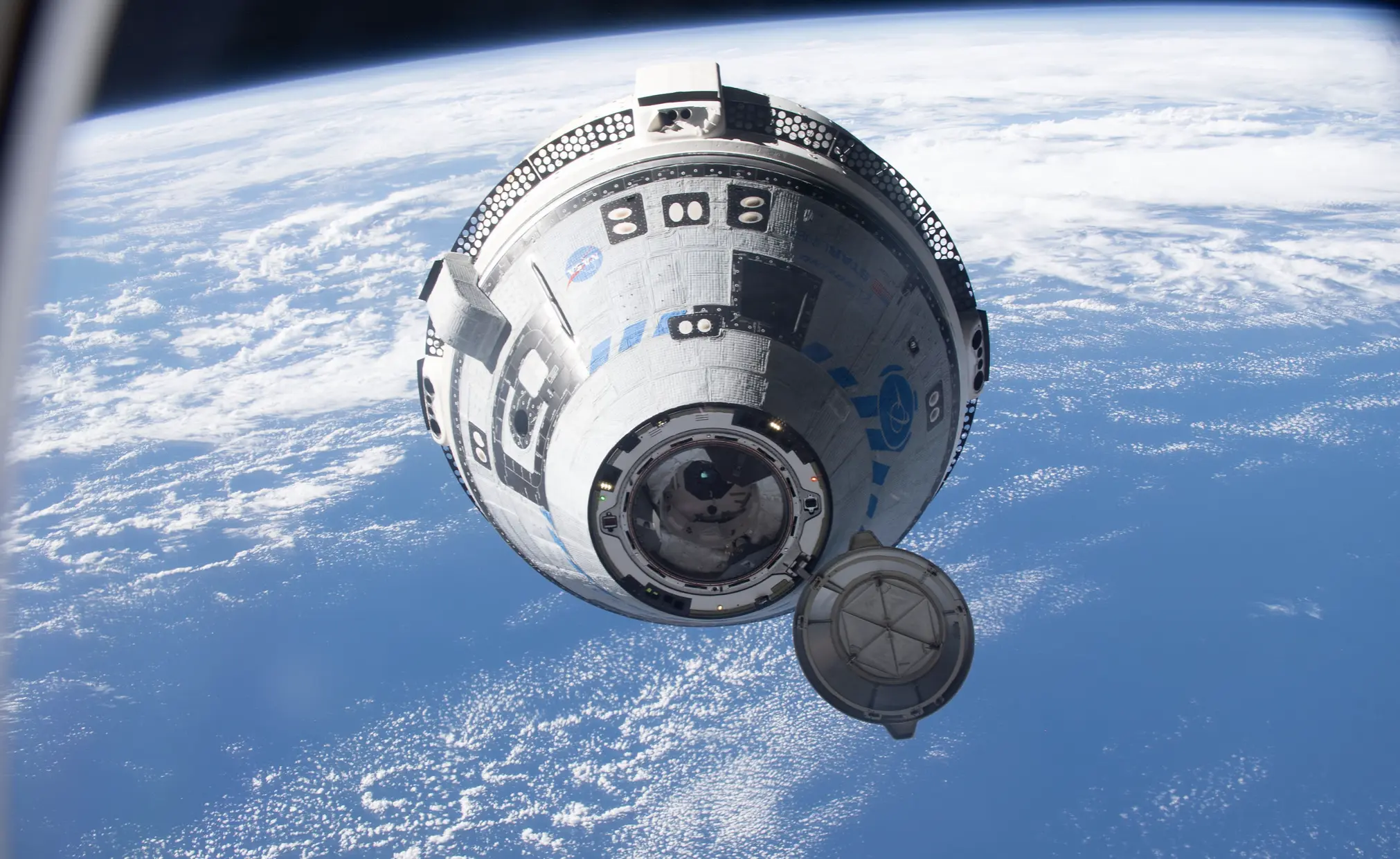
Image by NASA Jhonson, from Flickr
NASA Returns Spacecraft Without Crew Due to Technical Issues
- Written by Kiara Fabbri Former Tech News Writer
- Fact-Checked by Justyn Newman Former Lead Cybersecurity Editor
The Boeing Starliner capsule returned to Earth without any astronauts aboard on Saturday, as announced by NASA . This marked the end of the Crew Flight Test (CFT), Starliner’s first-ever astronaut mission.
NASA astronauts Butch Wilmore and Suni Williams launched on June 5 aboard Starliner for the agency’s Boeing Crewed Flight Test from Cape Canaveral Space Force Station in Florida.
However, on June 6, as Starliner approached the space station, NASA and Boeing identified helium leaks and issues with the spacecraft’s reaction control thrusters. After careful consideration, NASA decided to prioritize safety and return Starliner without its crew.
Despite the issues, NASA’s Space Operations Mission Directorate expressed optimism about the knowledge gained from the mission. A spokesperson from NASA headquarters stated, “Even though it was necessary to return the spacecraft uncrewed, NASA and Boeing learned an incredible amount about Starliner in the most extreme environment possible.”
The journey to this point has not been without its challenges, as reported by The Guardian . There were two previous launch attempts that were aborted due to technical issues. On the first attempt, a problem was found with a valve on the second stage of the rocket. On the second attempt, a computer tripped an automatic hold just minutes from liftoff.
Even after successfully launching, helium leaks continued to trouble the spacecraft. While NASA determined that the spacecraft remained stable, the leaks were a significant concern, noted The Guardian.
Boeing’s struggles with Starliner are seen as a setback not only for the company but also for the U.S. space program, which aims to have multiple private companies support its missions.
According to The New York Times (TNYT), Boeing’s performance issues, including past challenges with its commercial airplane division, have raised concerns about its commitment to quality and safety.
The commercial space sector has been rapidly expanding, driven by companies like SpaceX, led by Elon Musk, and Blue Origin, founded by Jeff Bezos. TNYT further notes that Boeing, alongside SpaceX, remains one of the few companies with the technical and financial capacity to support NASA’s most demanding projects.
Despite the challenges faced by Starliner, NASA remains committed to working with Boeing to ensure the success of future missions. The agency recognizes the importance of having multiple private companies capable of supporting its efforts in space exploration.

Image by Stock Snap, from Pixabay
North Korean Hackers Using Fake LinkedIn Job Offers
- Written by Kiara Fabbri Former Tech News Writer
- Fact-Checked by Justyn Newman Former Lead Cybersecurity Editor
North Korean threat actors have been using LinkedIn to target developers through fake job recruiting schemes, as reported today by Hacker News . The attackers utilize coding tests as an initial method to infect victims, as highlighted in a report by Google-owned Mandiant .
North Korean recruiting-themed schemes have been widely used to deliver malware, including fake video conferencing apps, targeting job seekers on platforms such as LinkedIn and Upwork . After making initial contact, hackers guide victims to download malicious software via messaging apps like Telegram.
Mandiant’s researchers explained that recent crypto exchange heists are connected to a broader pattern of social engineering. In these schemes, developers are contacted under the pretense of job offers.
They showcase an example of an engineer who was sent a ZIP file containing malware disguised as a Python coding challenge, compromising the user’s macOS system with secondary malware. This malware persisted through macOS launch agents, further endangering the user’s system.
These tactics aren’t limited to developers. Finance professionals have also been targeted. In another incident, Mandiant observed a malicious PDF sent as part of a fake job offer for a senior position at a cryptocurrency exchange.
The PDF installed RUSTBUCKET, a backdoor malware that collects system data and runs files. It stayed active by posing as a “Safari Update” and connected to a command-and-control server.
According to the FBI , these types of cyberattacks are carefully planned. Hackers use personal information and build rapport with victims to make their schemes more convincing. Once contact is established, attackers may spend significant time engaging with their targets to foster trust.
To mitigate these risks, the FBI suggests verifying contact identities through different platforms, avoiding storing cryptocurrency wallet information on internet-connected devices, and using virtual machines for any pre-employment tests. They also recommend blocking unauthorized downloads and limiting access to sensitive information.
If you suspect your company has been targeted, the FBI advises disconnecting the affected devices from the internet and filing a detailed complaint with the FBI’s Internet Crime Complaint Center.
