Image by American Life League, from Flickr
Massive HHS IT Cuts Leave US Health Data at Risk, Workers Say
- Written by Kiara Fabbri Former Tech News Writer
- Fact-Checked by Sarah Frazier Former Content Manager
After slashing IT staff, HHS faces a cybersecurity crisis that could leave sensitive health data and critical systems exposed, workers urgently warn.
In a rush? Here are the quick facts:
- Core cybersecurity contracts risk expiring without staff to renew them.
- CSIRC, HHS’s cyber nerve center, may lose funding and its facility.
- Remaining staff report chaos, delays, and no leadership direction from DOGE appointees.
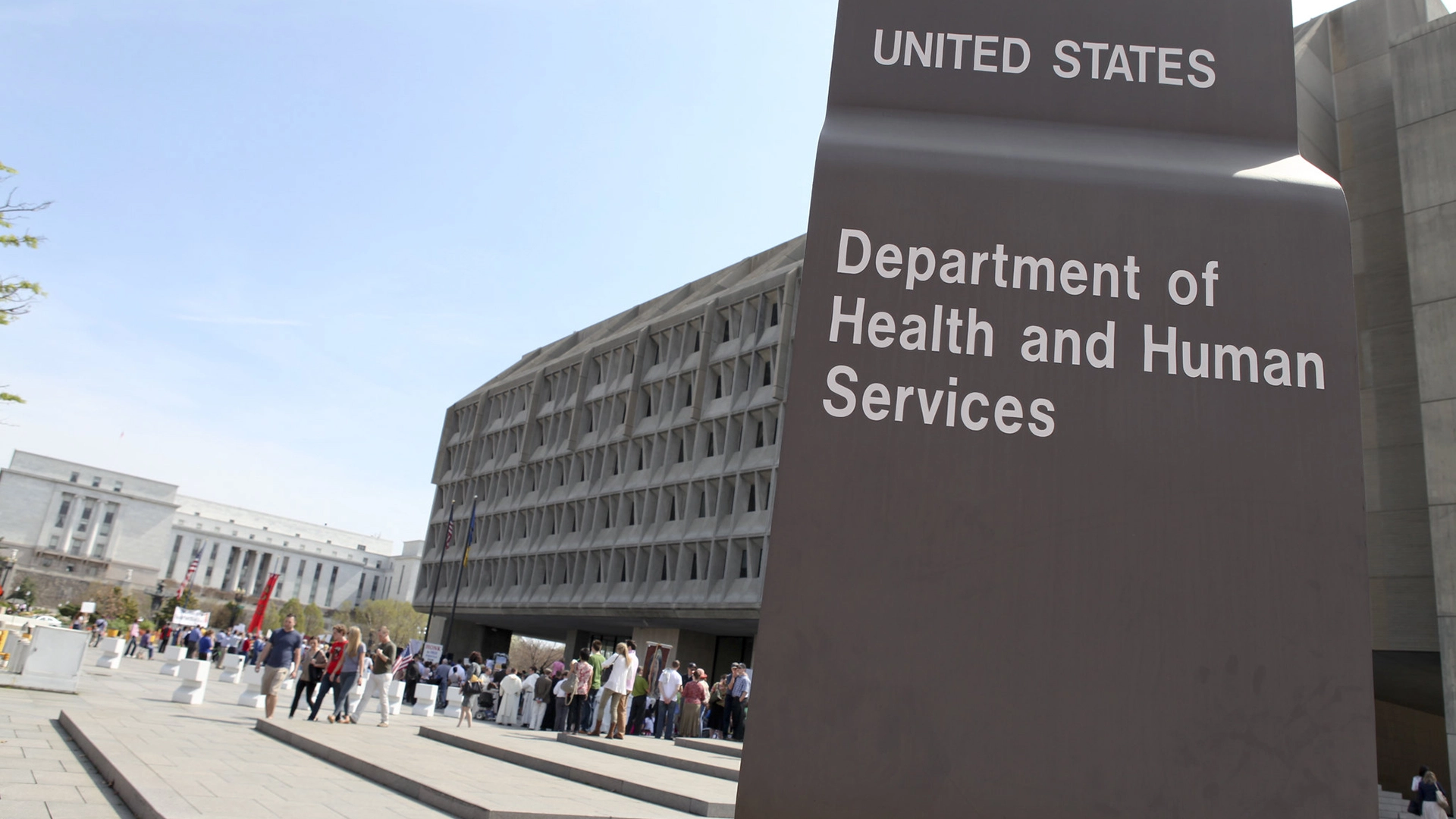
The digital backbone of the United States health system is facing a critical threat, current and former Department of Health and Human Services (HHS) workers warn, as first reported by WIRED .
The elimination of hundreds of IT and cybersecurity personnel through a sweeping reduction in force (RIF) has resulted in the dismissal of essential staff who managed contracts and network protection, thus endangering vital health data and systems, according to WIRED.
“Pretty soon, within the next couple of weeks, everything regarding IT and cyber at the department will start to operationally reach a point of no return,” one former staffer who worked at HHS for over a decade said to WIRED.
WIRED reports that the Office of the Chief Information Officer (OCIO) suffered a disruption that impacted half of its operations, including the complete Immediate Office of the CIO, which managed essential cybersecurity contracts and renewals for more than 100 external contractors.
The security operations of the Computer Security Incident Response Center (CSIRC), which functions as HHS’s main cybersecurity center, were managed by numerous employees.
The loss of oversight raises concerns that cybersecurity contracts expiring in June won’t be renewed in time. “It is the department’s nerve center,” the source said, as reported to WIRED. “It has direct links to DHS, CISA, Defense Health Agency, and the intelligence community,” the source added.
WIRED argues that the pending departure of CIO Jennifer Wendel, combined with the lack of direction from incoming leadership, such as Clark Minor, a software engineer with no federal experience, adds to the instability. Sources say Minor has not issued any transition plans or guidance.
In the meantime, basic services are already falling apart. One staffer said travel systems have reverted to pre-2004 processes due to a lack of support, as reported by WIRED.
“If the US health system lost CMS, FDA, NIH, and CDC functionality indefinitely without warning… this would be an unprecedented systemic shock,” one OCIO worker said to WIRED.
Despite these concerns, HHS has denied the risks. “Essential operations at HHS, including contract management and cybersecurity oversight, remain staffed and functional,” a spokesperson told WIRED.
Still, current employees describe a leaderless environment: “This ship has no captain whatsoever, and I’m playing in the band while the Titanic sinks.”

Photo by Shutter Speed on Unsplash
Meta Faces Antitrust Trial Over Its Social Media Empire In The U.S.
- Written by Andrea Miliani Former Tech News Expert
- Fact-Checked by Sarah Frazier Former Content Manager
Meta’s antitrust trial, one of the biggest over the past few years, began this Monday. The company’s CEO, Mark Zuckerberg, attended court to defend his company against the Federal Trade Commission’s (FTC) accusation that Meta built a monopoly through its acquisitions of Instagram and WhatsApp.
In a rush? Here are the quick facts:
- Meta’s antitrust trial began this Monday and is expected to last 8 weeks.
- The FTC is accusing Meta of illegally building a social media monopoly after purchasing Instagram and WhatsApp.
- If the U.S. government wins the case, Meta can be ordered to sell the platforms.
According to the New York Times , the trial—expected to last eight weeks—is taking place in the U.S. District Court for the District of Columbia. Zuckerberg took the witness stand on Monday, defended his company, and challenged the government’s definitions of the social media market and its accusations.
The FTC alleges that Meta—then Facebook—purchased its rivals, Instagram in 2012 for $1 billion and WhatsApp in 2014 for $19 billion, above the market’s value, to cement its dominance in the social media market, and breaking the law.
If the U.S. government wins the trial, it will force Meta to sell Instagram and WhatsApp, affecting the company’s business model, structure, and its 3.5 billion users. However, legal experts consider the case complex and challenging for the FTC to win.
In a blog post shared this Sunday by Jennifer Newstead, Meta’s Chief Legal Officer, the company’s team referred to the lawsuit as “weak” and a case that “ignores reality.”
Newstead explained that the acquisitions of WhatsApp and Instagram were reviewed and approved by the FTC over a decade ago, with no indication of monopolistic intent. She also noted that platforms like YouTube and TikTok are now major competitors, capturing more user attention.
“It’s absurd that the FTC is trying to break up a great American company at the same time the Administration is trying to save Chinese-owned TikTok,” wrote Newstead. “And, it makes no sense for regulators to try and weaken U.S. companies right at the moment we most need them to invest in winning the competition with China for leadership in AI.”
