
Image by Master1305, from Freepik
Malicious Facebook Ads Target Bitwarden Users With Fake Security Update
- Written by Kiara Fabbri Former Tech News Writer
- Fact-Checked by Sarah Frazier Former Content Manager
- Reader’s Comments 1
There is a new Facebook ad campaign that tricks Bitwarden users into installing malware, collecting personal and business data via fake updates.
In a Rush? Here are the Quick Facts!
- Malicious ads led users to install a harmful browser extension from a Google Drive link.
- The malware collects personal and business data, including Facebook account and payment details.
- The attack uses browser Developer Mode to bypass security checks and install the extension.
Bitdefender Labs has uncovered a new cyber attack targeting users of the popular password manager, Bitwarden.
This malicious campaign, which began on November 3, 2024, uses deceptive Facebook ads to trick users into installing harmful browser extensions. The ads, which appear to be legitimate, urge users to update their Bitwarden extension due to a supposed security issue.
Bitdefender explains that the campaign begins with a fake ad on Facebook, which creates a sense of urgency by using Bitwarden’s branding and alarming language like “Warning: Your Passwords Are at Risk!”
When users click on the ad, they are redirected to a fraudulent website that mimics the official Chrome Web Store.
On this site, users are prompted to download an extension by clicking a link to a Google Drive file. This file contains a zip archive that, when unzipped, installs the malicious extension.
The installation process bypasses the browser’s security features, says Bitdefender. Users are tricked into enabling Developer Mode and manually loading the extension into their browser.
Once installed, the extension gains extensive permissions, allowing it to monitor and modify the user’s online activities.
Bitdefender says that the malware particularly targets Facebook accounts, collecting personal information, business details, and even credit card information tied to Facebook’s ad accounts.
Once installed, the malware starts to harvest Facebook cookies and other sensitive data. It then transmits the stolen information to a server controlled by the attackers. This data could lead to financial losses for individuals and businesses whose Facebook accounts are targeted.
To protect against this type of attack, Bitdefender suggests that users should avoid installing extensions from unofficial sources, especially those promoted through ads on social media.
Always update extensions through trusted sources like the Chrome Web Store, and carefully review the permissions requested by any extension. Users should also be cautious about any ad that creates a sense of urgency or asks for immediate action.
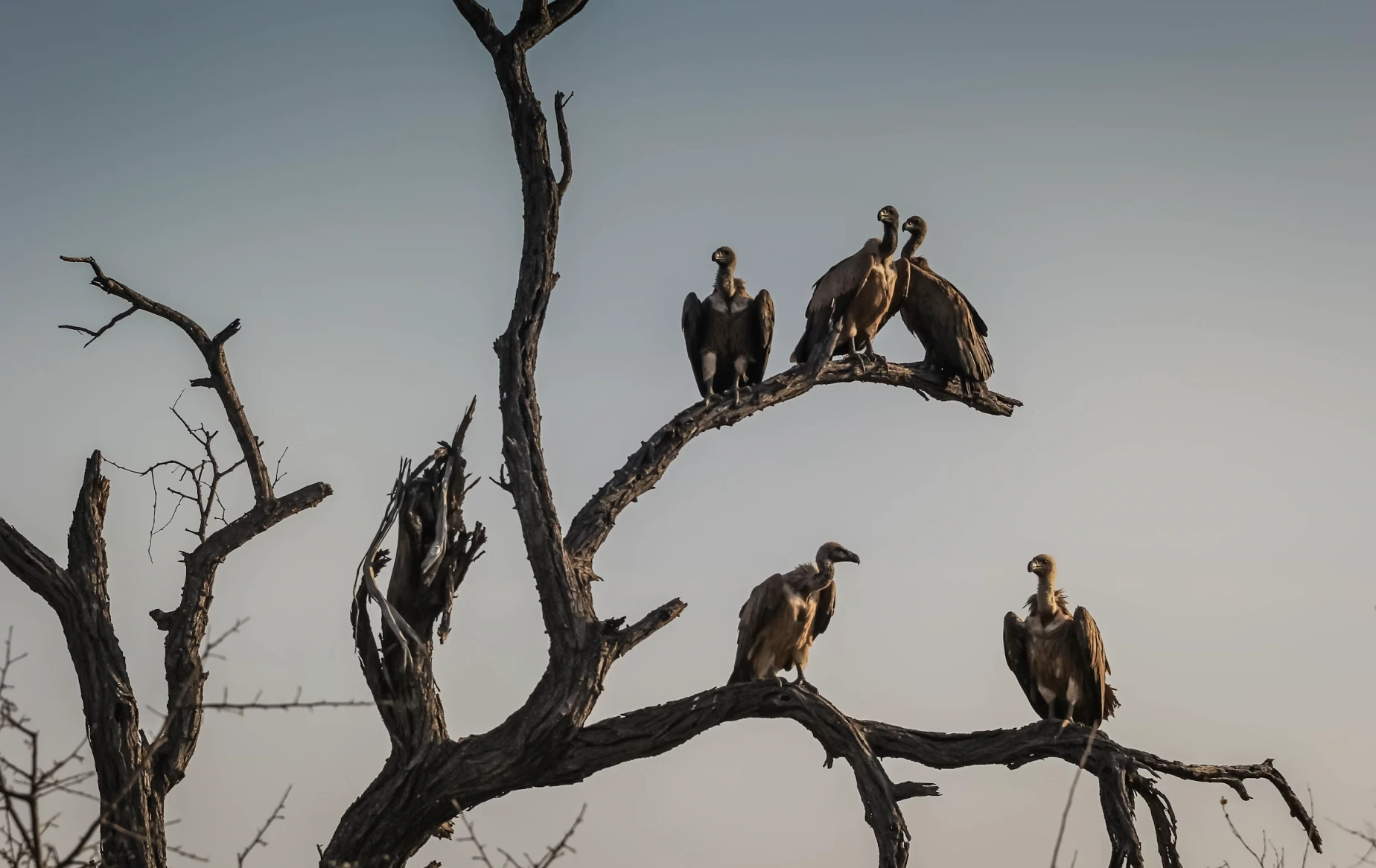
Image by Casey Allen, From Unsplash
AI-Enhanced Vultures Could Revolutionize Wildlife Conservation And Disease Detection
- Written by Kiara Fabbri Former Tech News Writer
- Fact-Checked by Sarah Frazier Former Content Manager
Scientists use vultures and AI to track carcasses, monitor wildlife mortality, detect diseases, and uncover illegal activities across vast landscapes.
In a Rush? Here are the Quick Facts!
- Vultures’ scavenging behavior is combined with AI to identify carcass locations.
- Researchers attached bio-loggers to 29 vultures for data collection.
- AI achieved 92% precision in identifying carcass locations.
Scientists have developed a method to track animal carcasses in vast landscapes using AI with vultures as natural detectors. The study was published in the Journal of Applied Ecology.
By combining advanced bio-logging technology with the vultures’ innate scavenging behavior, the team has created a system that can help monitor wildlife mortality, detect disease outbreaks, and even uncover illegal wildlife killings.
The researchers developed the AI algorithm to automatically and accurately classify the behaviors of white-backed vultures using data from animal tags.
As scavengers, vultures are constantly searching for carcasses, and with the addition of a second AI algorithm, researchers can now automatically pinpoint carcasses across large landscapes using data from tagged vultures.
This study focused on African white-backed vultures, known for their ability to locate carcasses from high altitudes.
The research team attached bio-loggers to 29 vultures, both wild and captive, to record their movements and behaviors. The data collected from these birds was then analyzed using machine learning techniques to differentiate between six distinct behaviors, such as feeding or flying.
Using this data, the researchers applied a process called “clustering” to GPS data, grouping locations where vultures spent a lot of time.
The clusters were analyzed to determine whether they were associated with animal carcasses. This step was crucial because vultures often gather in groups around carcasses, making it difficult to pinpoint exact locations without technological help.
Once the clusters were identified, the researchers trained an AI algorithm to distinguish between areas with carcasses and those without.
The results were impressive: the model could correctly identify carcass locations with a high degree of accuracy, achieving 92% precision and 89% recall. In the field, teams used this data to investigate over 1,900 clusters, confirming the presence of carcasses in 580 of them.
The success of this approach demonstrates the potential of combining natural animal behavior with AI technology to solve complex environmental challenges.
This method is not only effective for vultures, but it can also be adapted to other species, allowing researchers to track a variety of ecological resources like water sources or roosting sites.
Furthermore, this system has broader applications in wildlife conservation. By detecting carcasses in the wild, researchers can track disease outbreaks in animals, or identify cases of environmental poisoning, such as cyanobacteria toxins that have killed elephants in Botswana.
The system could also be used to uncover illegal wildlife activities, such as poaching or unauthorized animal disposal.
One of the key advantages of this approach is that it doesn’t rely on large numbers of tagged vultures. The system works even if only one vulture is present at a carcass site, making it cost-effective and easier to implement across vast landscapes.
This flexibility is a significant improvement over previous methods that required multiple tagged vultures to confirm carcass locations.
In addition to carcass detection, the method can be adapted to monitor other wildlife behavior, such as nest identification during breeding seasons.
This versatility shows that the combination of vultures, bio-logging technology, and machine learning could be a powerful tool for understanding animal behavior and improving conservation efforts.
In conclusion, this study not only showcases how technology can harness an animal’s natural abilities to help monitor and protect wildlife.
With its potential applications for conservation, disease tracking, and illegal activity detection, this research offers a new way forward for wildlife management and environmental monitoring.
