
Image by Maxime, from Unsplash
Las Vegas Explosion: Military Soldier Behind Cybertruck Attack, Seven Injured
- Written by Kiara Fabbri Former Tech News Writer
- Fact-Checked by Justyn Newman Former Lead Cybersecurity Editor
Law enforcement officials have identified the driver of the Tesla Cybertruck that exploded outside the Trump International Hotel in Las Vegas on January 1 as Matthew Livelsberger, a 37-year-old active-duty U.S. Army soldier from Colorado Springs, reported today Reuters .
In a Rush? Here are the Quick Facts!
- Explosion killed driver and injured seven others; authorities believe it was a suicide.
- Livelsberger, an Army Special Operations member, was on approved leave at the time.
- Investigators are exploring terrorism links, but no definitive conclusions have been made.
Reuters reportes that the blast left the driver dead and seven others with minor injuries. Authorities believe Livelsberger acted alone and died by suicide before explosives in the vehicle detonated. Livelsberger, a member of the Army Special Operations Command, had been on approved leave at the time of his death.
The explosion, which occurred around 8:40 a.m. local time, followed the rental of the Cybertruck in Denver and a journey through several cities, including Albuquerque and Flagstaff, before reaching Las Vegas, according to Reuters.
We have now confirmed that the explosion was caused by very large fireworks and/or a bomb carried in the bed of the rented Cybertruck and is unrelated to the vehicle itself. All vehicle telemetry was positive at the time of the explosion. https://t.co/HRjb87YbaJ — Elon Musk (@elonmusk) January 1, 2025
Videos showed the vehicle exploding outside the Trump hotel.
The blast caused damage primarily inside the truck as the explosion “vented out and up,” sparing the Trump hotel doors just a few feet away, the sheriff explained to the AP .
CNN notes that the explosion shared similarities with the New Orleans vehicle attack earlier Wednesday, including a symbolic target on New Year’s Day, a truck rented through Turo, and a suspect with a military background. The FBI has said there is no evidence linking the explosion to the New Year’s Day truck attack in New Orleans, which killed 15 people, says Reuters.
Investigators are also exploring whether the Las Vegas blast could be connected to terrorism, though no definitive conclusions have been made. Livelsberger’s body was severely burned, and authorities are awaiting confirmation from DNA and medical records, reported Reiters.
Investigators found two handguns, military identification, a passport, and personal belongings in the vehicle. Livelsberger had no criminal record, and it remains unclear why he carried out the explosion. He was awarded a Bronze Star for valor and had completed five combat deployments to Afghanistan, as reported by Reuters.
Kenny Cooper, a special agent in charge at the Bureau of Alcohol, Tobacco, Firearms, and Explosives, noted to the AP, “The level of sophistication is not what we would expect from an individual with this type of military experience.”
Reuters says that while it’s still unknown why the explosion occurred. The AP reported that an anonymous law enforcement official revealed that investigators learned through interviews that the suspect may have had a confrontation with his wife over relationship issues shortly before renting the Tesla and purchasing the guns.
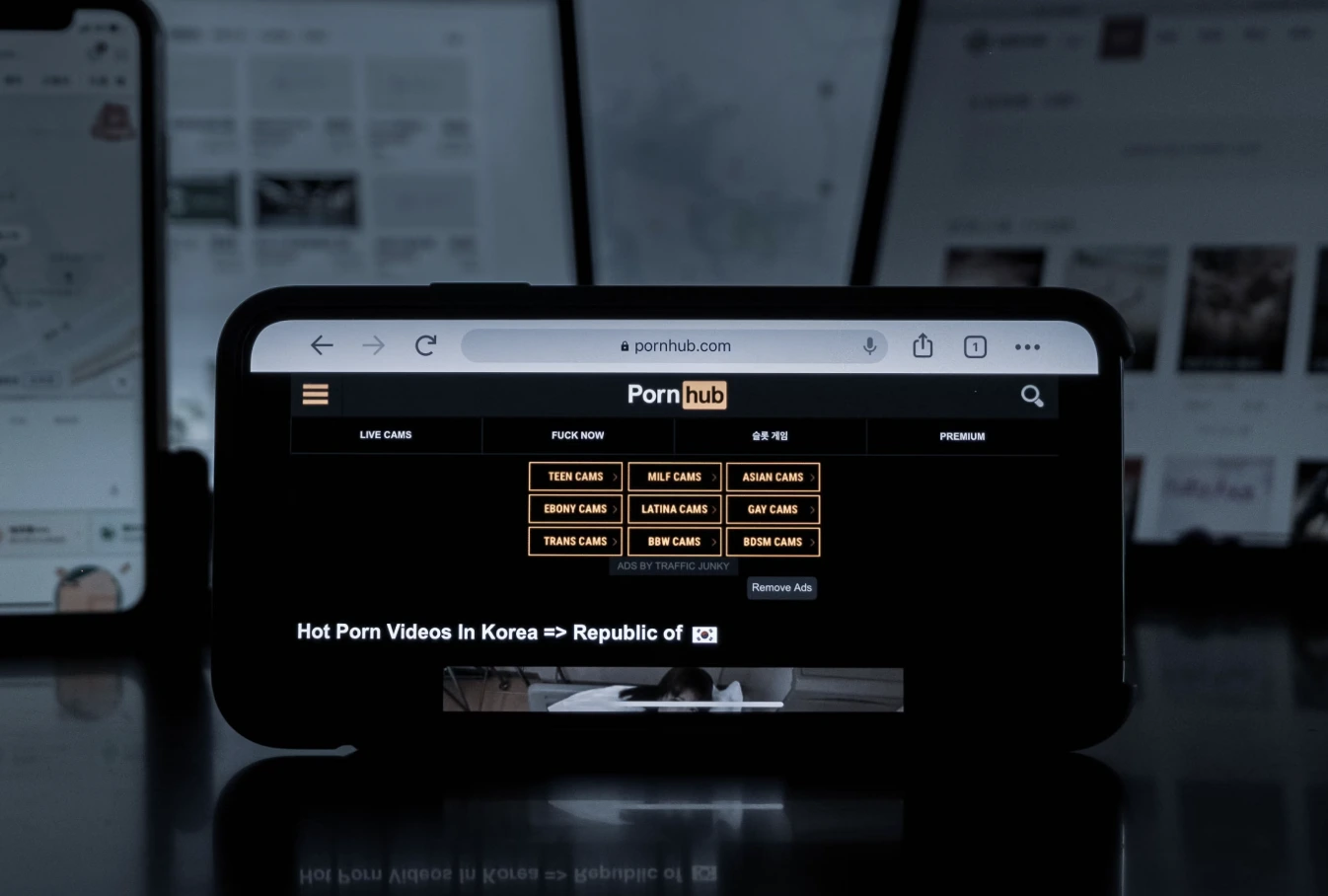
Image by Shane uchi, from Unsplash
Pornhub Blocks Access In 17 States Over Privacy Risks
- Written by Kiara Fabbri Former Tech News Writer
- Fact-Checked by Justyn Newman Former Lead Cybersecurity Editor
Nearly two years ago, Louisiana passed a law that set off a wave of similar measures across the southern United States, changing how people access adult content online. Today it was reported by 404 Media that three additional states have joined the 17 already affected by age verification laws, blocking access to Pornhub.
In a Rush? Here are the Quick Facts!
- Louisiana’s 2022 law led to adult websites requiring government ID for access.
- Louisiana traffic to Pornhub dropped 80%, driving users to unregulated platforms.
- Legal challenges and vetoes question the constitutionality of these restrictions.
These restrictions, intended to protect children, are raising significant concerns about privacy and censorship for adults.
404 Media explains how the trend began with Louisiana’s “Act 440,” introduced by state representative Laurie Schegel, a counselor specializing in “sex addiction.” The law mandates that websites with adult content should verify users’ ages with government-issued IDs.
Noncompliance can lead to steep fines and lawsuits. Rather than risk these penalties while compromising user privacy, Aylo—the parent company of Pornhub and its network of sites—has chosen to block access in states with these regulations, as noted by 404 Media.
The list of affected states includes Virginia, Montana, North Carolina, Arkansas, Utah, Mississippi, Texas, Nebraska, Idaho, Kansas, Kentucky, Indiana, Alabama, Oklahoma, Florida, Tennessee, and South Carolina. Georgia is next in line, with its own age verification law set to take effect in July.
404 Media says that Louisiana offers a preview of how these laws play out in practice. There, users must verify their age through a state-issued digital driver’s license app before accessing sites like Pornhub.
However, the policy has backfired. Aylo reported that traffic to its sites in Louisiana plummeted by 80%, with many users turning to less regulated platforms lacking basic safeguards against harmful content, according to 404 Media.
This workaround trend isn’t unique to Louisiana. In Florida and other states with similar laws, people are increasingly using VPNs (virtual private networks) to bypass access restrictions , as indicated by spikes in related Google searches.
Critics argue these laws create more problems than they solve. Forcing websites to collect sensitive personal information, such as government IDs, exposes users to significant privacy risks. At the same time, banning access to well-moderated platforms only pushes users toward unregulated and potentially harmful alternatives.
Aylo has been vocal in its opposition to these measures. In a statement, the company emphasized its support for age verification in principle but criticized the implementation of these laws as “ineffective, haphazard, and dangerous.”
404 Media notes that some states are pushing back against these measures. Arizona Governor Katie Hobbs vetoed a similar bill, arguing it violated First Amendment protections. Meanwhile, legal challenges to these laws are gaining momentum.
In Florida, the Free Speech Coalition has filed a lawsuit, describing the regulations as invasive and a threat to online privacy and freedom, as reported by 404 Media.
“These laws create a substantial burden on adults who want to access legal sites without fear of surveillance,” Alison Boden, Executive Director of the Free Speech Coalition, stated in a recent press release .
“Despite the claims of the proponents, HB3 is not the same as showing an ID at a liquor store. It is invasive and carries significant risk to privacy. This law and others like it have effectively become state censorship, creating a massive chilling effect for those who speak about, or engage with, issues of sex or sexuality.”
